Journey of the Universe: The Unfolding of Life (Coursera)

Offered by Yale University,
Journey of the Universe: The Unfolding of Life (Coursera)

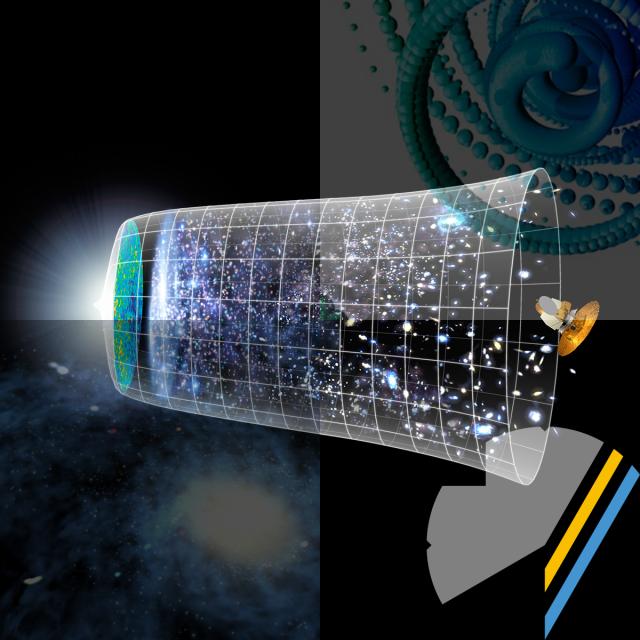
Journey of the Universe weaves together the discoveries of the evolutionary sciences together with humanities such as history, philosophy, art, and religion. The course draws on the Emmy-award winning film, Journey of the Universe, and the book from Yale University Press. Journey explores cosmic evolution as a creative process based on connection, interdependence, and emergence. It examines a range of dynamic interactions in the unfolding of galaxies, Earth, life, and human communities. It investigates ways in which we understand evolutionary processes and the implications for humans and our ecological future.

Class Deals by MOOC List - Click here and see Coursera's Active Discounts, Deals, and Promo Codes.

The Journey course, thus, is based on a new integration that is emerging from the dialogue of the sciences and humanities. Journey tells the story of evolution as an epic narrative, rather than as a series of facts separated by scientific disciplines. This changes our perception so that we begin to see ourselves as an integral part of this narrative. By situating ourselves within this story we can better appreciate the complexity and beauty of processes such as self-organizing dynamics, natural selection, emergence, symbiosis, and co-evolution. As we discover these intricate processes of evolution, we awaken to the beauty and complexity of our natural environment at this critical juncture in our planetary history.
Course 1 of 3 in the Journey of the Universe: A Story for Our Times Specialization.

Syllabus

WEEK 1
Welcome to Journey of the Universe: The Unfolding Life
Learn what this course is about, who's teaching it, and other ways you can explore this topic. Meet and greet your peers as well!
Introduction - Beginning of the Universe
In module two, we explore how humans are part of the larger universe story.

WEEK 2
The Formation of Galaxies and Stars
This module explores many of the world's greatest stories and how they begin with a journey, a quest to answer life's most intimate questions like where do we come from and why are we here?

WEEK 3
Our Solar System and Life’s Emergence
Here we look at several major milestones in scientific discovery that expanded our knowledge of the solar system.

WEEK 4
Living and Dying and the Passion of Animals
Now we invite you to think about the coevolution of the human with other species within this broad time scale. Completing this module may change the way that you understand what it means to be human!

WEEK 5
From the Origin of the Human to Becoming a Planetary Presence
In this module, we hope you come to understand the human species to be “planetary” in a way that other species are not.

WEEK 6
Rethinking Matter and Time within the Emerging Earth Community
What does it mean to you to live in cosmological time? How is thinking like this different than your previous understanding of time? What implications does it have for your understanding of yourself and your sense of your relation to the world around you? This module explores answers to these questions.
Go to Class
MOOC List is learner-supported. When you buy through links on our site, we may earn an affiliate commission.

Related Courses

Film, Images & Historical Interpretation in the 20th Century: The Camera Never Lies (Coursera) Coursera
University of London,Royal Holloway, University of London

Film, Images & Historical Interpretation in the 20th Century: The Camera Never Lies (Coursera)

This course is a short taster on the topic of the use of Images, Film, and their use in historical interpretation in the 20th century. It is primarily provided for those who have a general interest in history that draws on photojournalism as primary evidence, and films based on historical events.

Aug 10th 2026
5-12 Weeks
Global Warming II: Create Your Own Models in Python (Coursera) Coursera
University of Chicago

Global Warming II: Create Your Own Models in Python (Coursera)

This class provides a series of Python programming exercises intended to explore the use of numerical modeling in the Earth system and climate sciences. The scientific background for these models is presented in a companion class, Global Warming I: The Science and Modeling of Climate Change. This class assumes that you are new to Python programming (and this is indeed a great way to learn Python!), but that you will be able to pick up an elementary knowledge of Python syntax from another class or from on-line tutorials.

Aug 10th 2026
5-12 Weeks
Introduction to the Orbital Perspective (Coursera) Coursera
University of Florida,University of Arizona,Drexel University

Introduction to the Orbital Perspective (Coursera)

The goals of this course are to develop the student’s critical thinking skills, global awareness, and ability to work as an integral part of a team in an increasingly complex global job market. The course provides a foundation in such skills as team building, collaboration, and elevated empathy using real-world scenarios from some of world’s most effective collaborative projects including the Earthrise-2068 Project.

Aug 17th 2026
5-12 Weeks
Organising an Empire: The Assyrian Way (Coursera) Coursera
Ludwig-Maximilians-Universität München

Organising an Empire: The Assyrian Way (Coursera)

Discover the mighty kingdom of Assyria, which came to be the world’s first great empire three thousand years ago. From the 9th to the 7th centuries BC, during the imperial phase of Assyria’s long history, modern day northern Iraq was the central region of a state reaching from the Mediterranean Sea to the Persian Gulf, and incorporating what is now Iraq, Syria, and Lebanon, as well as half of Israel, and wide parts of south-eastern Turkey, and Western Iran.

Aug 10th 2026
5-12 Weeks
Global Diplomacy – Diplomacy in the Modern World (Coursera) Coursera
University of London,SOAS University of London

Global Diplomacy – Diplomacy in the Modern World (Coursera)

The Global Diplomacy course is a unique offering to the MOOC environment. Bringing together cutting edge research in the broad fields of Diplomatic and International Studies, award winning distance learning delivery and the instructors previous experience of delivering a successful MOOC. Please see the volume Global Diplomacy: Theories, Types and Models authored with Dr Alison Holmes, (Westview, 2016), and the Understanding Research Methods MOOC from Coursera.

Aug 10th 2026
5-12 Weeks
Arctic Economy (Coursera) Coursera
University of Alberta,UiT The Arctic University of Norway

Arctic Economy (Coursera)

Arctic communities have diverse histories and roles in local, regional and global economies. However, the scope and scale of globalization has increased so quickly that vulnerable Arctic communities are facing new kinds of challenges to their survival. In this 3-week MOOC, a unique collaboration between the University of Alberta and UiT The Arctic University of Norway, you will investigate the challenges faced by Indigenous, North American, Russian and Nordic Arctic communities in a modern world. So join us as we venture above the 60th parallel North, and explore how these fascinating communities adjust to change while maintaining their ways of life, socio-economic histories, and cultural traditions.

Aug 17th 2026
4 Weeks
What Is Contemporary Art? (Coursera) Coursera
The Museum of Modern Art

What Is Contemporary Art? (Coursera)

What is contemporary art? In this course, you’ll consider this question through more than 70 works of art made between 1980 and the present, with a focus on art from the past decade. You’ll hear directly from artists, architects, and designers from around the globe about their creative processes, materials, and inspiration.

Aug 17th 2026
5-12 Weeks
Emergence of Life (Coursera) Coursera
University of Illinois at Urbana-Champaign

Emergence of Life (Coursera)

How did life emerge on Earth? How have life and Earth co-evolved through geological time? Is life elsewhere in the universe? Take a look through the 4-billion-year history of life on Earth through the lens of the modern Tree of Life. This course will evaluate the entire history of life on Earth within the context of our cutting-edge understanding of the Tree of Life. This includes the pioneering work of Professor Carl Woese on the University of Illinois Urbana-Champaign campus which revolutionized our understanding with a new "Tree of Life."

Aug 10th 2026
5-12 Weeks
From the Big Bang to Dark Energy (Coursera) Coursera
The University of Tokyo

From the Big Bang to Dark Energy (Coursera)

We have learned a lot recently about how the Universe evolved in 13.7 billion years since the Big Bang. More than 80% of matter in the Universe is mysterious Dark Matter, which made stars and galaxies to form. The newly discovered Higgs-boson became frozen into the Universe a trillionth of a second after the Big Bang and brought order to the Universe.

Aug 10th 2026
4 Weeks