Philosophy, Science and Religion: Religion and Science (Coursera)

Philosophy, Science and Religion: Religion and Science (Coursera)

Philosophy, Science and Religion mark three of the most fundamental modes of thinking about the world and our place in it. Are these modes incompatible? Put another way: is the intellectually responsible thing to do to ‘pick sides’ and identify with one of these approaches at the exclusion of others? Or, are they complementary or mutually supportive? As is typical of questions of such magnitude, the devil is in the details. For example, it is important to work out what is really distinctive about each of these ways of inquiring about the world. In order to gain some clarity here, we’ll be investigating what some of the current leading thinkers in philosophy, science and religion are actually doing.

Class Deals by MOOC List - Click here and see Coursera's Active Discounts, Deals, and Promo Codes.

This course, entitled ‘Religion and Science’, is the third of three related courses in our Philosophy, Science and Religion Online series. The course will address five themes, each presented by an expert in the area.

  1. Science, Religion, and the Origin of the Universe (Professor Tim Maudlin, NYU )
  2. Buddhism and Science (Professor Graham Priest, CUNY)
  3. Evolution and Design (Dr Kevin Scharp, St Andrews)
  4. Sin Suffering and Salvation: Evolutions Thorny Issues (Dr Bethany Sollereder, Oxford)
  5. Human Uniqueness in Science, Theology, and Ethics (Professor David Clough, Chester)

The first and second courses in the Philosophy, Science and Religion series, 'Science and Philosophy' and 'Philosophy and Religion' were launched in 2017 and you can sign up to these at any time. It is not necessary to have completed these courses to follow this course. However, completing all three courses will give you a broader understanding of this fascinating topic. Look for:
Philosophy, Science and Religion I: Science and Philosophy
Philosophy, Science and Religion II: Philosophy and Religion
Upon successful completion of all three courses, students will:
(1) Understand the main parameters at stake in the current debate between science and religion.
(2) Have some familiarity with the relevant areas of science that feature in the debate—including cosmology, evolution, and the neurosciences—and will have begun to engage with them conceptually.
(3) Have encountered key philosophical approaches to the interface between science and religion, and will have had the opportunity to engage them in practice.
(4) Have embarked constructively in cross-disciplinary conversations.
(5) Have demonstrated an openness to personal growth through a commitment to dialogue across intellectual and spiritual boundaries.

Syllabus

WEEK 1
Introduction to the Course

WEEK 2
Science, Religion and the Origins of the Universe
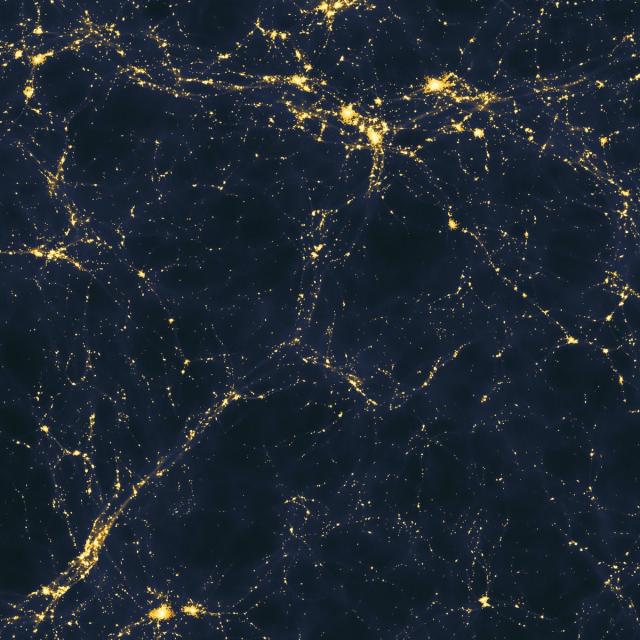
In this module Tim Maudlin, Professor of the Foundations of Physics at New York University (NYU) discusses stories and theories of the origins of the cosmos from the perspectives of various religions, philosophy, and Science. He then explains what our physics tells us and compares this to the origins stories.

WEEK 3
Buddhism and Science
In this module Graham Priest, Distinguished Professor of Philosophy at City University of New York (CUNY) outlines the background and basic ideas of Buddhism. After considering whether Buddhism is compatible with science, he goes on to explain how some aspects of Buddhist thought are relevant to contemporary logic and science.

WEEK 4
Evolution and Design
In this module Kevin Scharp, Reader in Philosophy at the University of St Andrews introduces one of the most common arguments for Intelligent Design and considers whether it is a genuine scientific competitor to, or can even be made compatible with, evolutionary theory. He then presents the Fine-Tuning Argument for the existence of God and its criticisms.

WEEK 5
Sin, Suffering and Salvation: Evolution’s Thorny Issues
In this module Bethany Sollereder, Postdoctoral Fellow in Science and Religion at the University of Oxford considers questions that arise in Christian Theology as a result of accepting evolutionary theory.

WEEK 6
Human Uniqueness in Science, Theology and Ethics
In this module David Clough, Professor of Theological Ethics at Chester University investigates three ways in which the question of human uniqueness prompt questions at the interface of theology and science. It asks ‘Are we alone in the Universe?’, ‘Where did we come from?’ and ‘Are we just animals?’ before going on to consider the ethical implications of a theological approach that engages these questions seriously.
Go to Class
MOOC List is learner-supported. When you buy through links on our site, we may earn an affiliate commission.

Related Courses

Religious Transformation in Early China: the Period of Division (Coursera) Coursera
The Chinese University of Hong Kong

Religious Transformation in Early China: the Period of Division (Coursera)

This sequence of four courses will propose a multi-disciplinary approach to the study of Chinese cultural history conceived of as a succession of modes of rationality (philosophical, bureaucratic, and economic). The focus will be on the moments of paradigm shift from one mode of rationality to another. For each of these moments, cultural facts and artifacts—thought, literature, ritual—will be examined in relationship to changing social, political, and economic systems.

Oct 5th 2026
5-12 Weeks
Introduction to Philosophy (Coursera) Coursera
University of Edinburgh

Introduction to Philosophy (Coursera)

This course will introduce you to some of the main areas of research in contemporary philosophy. Each module a different philosopher will talk you through some of the most important questions and issues in their area of expertise. We’ll begin by trying to understand what philosophy is – what are its characteristic aims and methods, and how does it differ from other subjects? Then we’ll spend the rest of the course gaining an introductory overview of several different areas of philosophy.

Oct 5th 2026
5-12 Weeks
Charles Darwin: El origen del evolucionismo moderno (Coursera) Coursera
Universidad Nacional Autónoma de México

Charles Darwin: El origen del evolucionismo moderno (Coursera)

Este curso está dirigido a cualquier persona que desee conocer de manera general qué es y cómo se ha explicado la evolución de las especies. Será de gran interés para alumnos, profesores y profesionales del área de ciencias biológicas y de la salud que deseen conocer los antecedentes históricos, así como los fundamentos centrales de la teoría de Charles Darwin, que configuraron el pensamiento evolutivo moderno.

Oct 5th 2026
4 Weeks
Philosophy of Science (Coursera) Coursera
University of Pennsylvania

Philosophy of Science (Coursera)

For the last four centuries, scientists have aimed to provide us with an understanding of the world around us. By all appearances, science has made substantial progress during this time. But is this progress real or illusory? And if it is real, how has this progress been made? This four-week course will consider these important questions.

Oct 5th 2026
4 Weeks
Teaching in University Science Laboratories (Developing Best Practice) (Coursera) Coursera
University of Amsterdam

Teaching in University Science Laboratories (Developing Best Practice) (Coursera)

This course is developed to improve the effectiveness of laboratory classes in higher education. It aims to support teachers to improve their teaching skills for active learning in university science laboratory courses. It will show you how laboratory sessions can differ with respect to their aim and expected learning outcomes, how to engage students for learning and how to cope with their different levels of pre-knowledge and experience and probe their understanding. Last but not least it will show how you could assess students in laboratory courses.

Sep 28th 2026
5-12 Weeks
The Science of Stem Cells (Coursera) Coursera
American Museum of Natural History

The Science of Stem Cells (Coursera)

What promise do stem cells hold for the treatment of medical conditions? In this five-part online course you will explore the history and basic biology of stem cells, learn about new research techniques, and find out how stem cells could lead to cures for diseases and to individualized medicine.

Oct 5th 2026
5-12 Weeks
Analyzing the Universe (Coursera) Coursera
Rutgers University

Analyzing the Universe (Coursera)

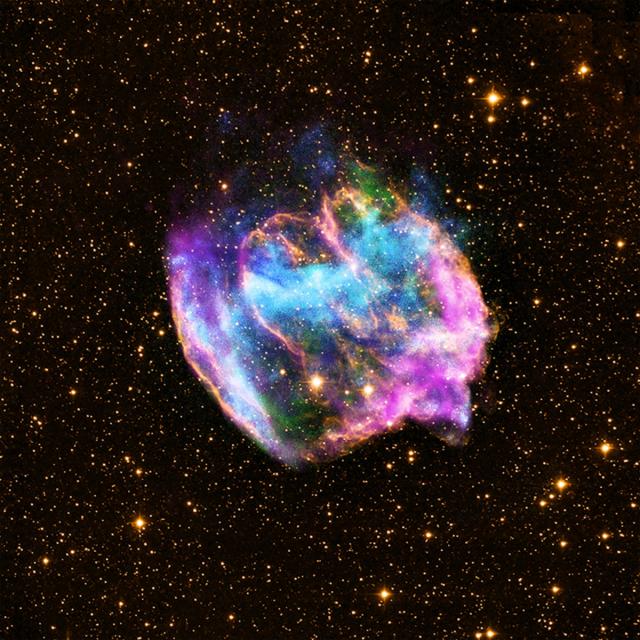
Using publicly available data from NASA of actual satellite observations of astronomical x-ray sources, we explore some of the mysteries of the cosmos, including neutron stars, black holes, quasars and supernovae. We will analyze energy spectra and time series data to understand how these incredible objects work. We utilize an imaging tool called DS9 to explore the amazing diversity of astronomical observations that have made x-ray astronomy one of the most active and exciting fields of scientific investigation in the past 50 years.

Sep 28th 2026
5-12 Weeks
Paleontology: Ancient Marine Reptiles (Coursera) Coursera
University of Alberta

Paleontology: Ancient Marine Reptiles (Coursera)

Paleontology: Ancient Marine Reptiles is a four-lesson course teaching a comprehensive overview of the evolutionary changes that occur when air-breathing terrestrial animals return to water. This course examines the diversity, adaptations, convergence, and phylogenetic relationships of extinct marine reptiles. Students will explore three major groups of marine reptiles: ichthyosaurs, plesiosaurs, and mosasaurs.

Sep 30th 2026
4 Weeks
Climate Change and Water in Mountains: A Global Concern (Coursera) Coursera
University of Geneva

Climate Change and Water in Mountains: A Global Concern (Coursera)

What is climate change? How are mountain regions affected by the evolution of water resources and their uses? What kind of risks need to be considered? Mountains are recognized as particularly sensitive physical environments where intense and rapid changes have in the past, and may increasingly in the future, place pressure on their resource base.

Oct 5th 2026
5-12 Weeks
Intellectual Humility: Theory (Coursera) Coursera
University of Edinburgh

Intellectual Humility: Theory (Coursera)

Faced with difficult questions people often tend to dismiss and marginalize dissent. Political and moral disagreements can be incredibly polarizing, and sometimes even dangerous. And whether it’s Christian fundamentalism, Islamic extremism, or militant atheism, religious dialogue remains tinted by arrogance, dogma, and ignorance. The world needs more people who are sensitive to reasons both for and against their beliefs, and are willing to consider the possibility that their political, religious and moral beliefs might be mistaken. The world needs more intellectual humility.

Sep 28th 2026
3 Weeks