Through Engineers' Eyes: Engineering Mechanics by Experiment, Analysis and Design (FutureLearn)

Through Engineers' Eyes: Engineering Mechanics by Experiment, Analysis and Design (FutureLearn)

Learn the techniques of Engineering Mechanics, use them to interpret experiments and apply them to design. When you design anything, how do you know that the design will work? You need Engineering Mechanics - the science-based analysis that engineers use to predict how their designs will perform, so they can meet their responsibilities for performance and safety.

Class Deals by MOOC List - Click here and see FutureLearn's Active Discounts, Deals, and Promo Codes.

It starts with physics - forces, equilibrium, acceleration, gravity - but then engineers adapt it to their own purposes.
In this free online course, you will learn analytical skills, use them to understand experiments, and apply them in design. You will be living in the engineer’s world.

An unusual approach to learning Engineering Mechanics
Each of the seven weeks of this course has:

  • an introduction to set the scene;
  • experiments to introduce physical reality;
  • analysis videos, paper and pencil tutorials and in some weeks on-line Adaptive Tutorials to help you develop insights and skills;
  • a design activity to give you engineering context (except Week 1);
  • and a review process to consolidate your learning.

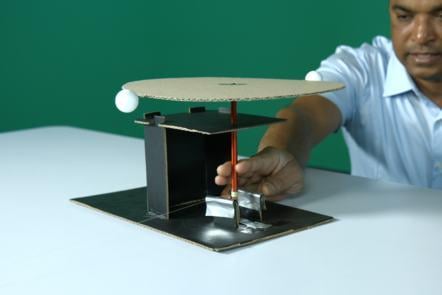
Experiments will be a special feature. You can do them yourself using common household items such as rubber bands, paper clips, string and cardboard, a toy vehicle. Videos and downloadable instructions will guide you. We hope you’ll do some of them, but if not, you can get what you need from watching the videos.
Adaptive Tutorials will be another special feature. They provide a personalised learning experience through virtual ‘learning by doing’ activities that adapt to your progress.
Here are two examples of typical weekly activities:
Week 3 - the experiments and analysis will present tools for finding forces by applying equilibrium, and for the design activity you will specify the size of a bolt that acts as a pin on a fold-out frame.
Week 6 - the experiments will explore various types of resistance to motion, the analysis will introduce concepts of work and energy, and for the design activity, you will estimate the power requirement and range of an electric car.
A life-changing experience
On completing this course you will have:

  • learnt how to manipulate forces as vectors;
  • learnt techniques and skills in using free-body diagrams and equilibrium to analyse and predict forces;
  • understood centres of gravity, friction and various types of resistance;
  • and apply these capabilities to design.

And by living in the world of the engineer, you will see how they operate effectively and safely. You will have begun to develop “Engineers’ Eyes”.


Go to Class
MOOC List is learner-supported. When you buy through links on our site, we may earn an affiliate commission.

Related Courses

Big History - From the Big Bang until Today (Coursera) Coursera
University of Amsterdam

Big History - From the Big Bang until Today (Coursera)

Welcome to this Big History course! In this course, renowned scientists and scholars from the University of Amsterdam and beyond will take you on a journey from the Big Bang until today while addressing key questions in their fields. After completing this journey you will have developed a better understanding of how you and everything around you became the way they are today.

Jun 8th 2026
4 Weeks
Self Awareness and the Effective Leader (Coursera) Coursera
Rice University

Self Awareness and the Effective Leader (Coursera)

Part of being an effective leader is learning how to play to your strengths and overcome characteristics that don't lend to good leadership practices. During the course, you will examine your own strengths and learn ways to use them in a leadership role. Learn to manage stress and solve problems creatively. Throughout the course, you will also build a tool kit of useful techniques that you can begin using right away in your engineering career.

Jun 8th 2026
5-12 Weeks
Understanding Superstructures (FutureLearn) FutureLearn
University of Liverpool

Understanding Superstructures (FutureLearn)

Discover the mechanics behind the natural and man-made structures that make up our world with this free online course. Despite being surrounded by both man-made and natural structures, we don’t often think about what it takes to keep them standing. This course will introduce the mechanics of solids and structures that govern the performance of these essential structures.

No sessions available
5-12 Weeks
Through Engineers' Eyes - Introducing the Vision: Engineering Mechanics by Experiment, Analysis and Design (FutureLearn) FutureLearn
UNSW Sydney - University of New South Wales

Through Engineers' Eyes - Introducing the Vision: Engineering Mechanics by Experiment, Analysis and Design (FutureLearn)

Learn the basic techniques of engineering mechanics and use them to interpret experiments and make designs that will work. When you design anything, how do you know that the design will work? Engineering mechanics is the science-based analysis that engineers use to predict how their designs will perform. It is vital to ensure engineers can meet their responsibilities for performance and safety.

No sessions available
4 Weeks
The Modern World, Part One: Global History from 1760 to 1910 (Coursera) Coursera
University of Virginia

The Modern World, Part One: Global History from 1760 to 1910 (Coursera)

This is a survey of modern history from a global perspective. Part One begins with the political and economic revolutions of the late 1700s and tracks the transformation of the world during the 1800s. Part One concludes as these bewildering changes seem to be running beyond the capacity of older institutions to handle them. Throughout the course we try to grasp what is happening and ask: Why? And the answers often turn on very human choices.

Jun 8th 2026
5-12 Weeks
Network Analysis in Systems Biology (Coursera) Coursera
Icahn School of Medicine at Mount Sinai

Network Analysis in Systems Biology (Coursera)

An introduction to data integration and statistical methods used in contemporary Systems Biology, Bioinformatics and Systems Pharmacology research. The course covers methods to process raw data from genome-wide mRNA expression studies (microarrays and RNA-seq) including data normalization, differential expression, clustering, enrichment analysis and network construction. The course contains practical tutorials for using tools and setting up pipelines, but it also covers the mathematics behind the methods applied within the tools.

Jun 8th 2026
5-12 Weeks
Engineering the Future: Creating the Amazing (FutureLearn) FutureLearn
University of York

Engineering the Future: Creating the Amazing (FutureLearn)

Learn more about the fascinating world of engineering, and discover where an engineering degree could take you. Learn what key skills and knowledge you need to study engineering. Engineering has played an immeasurable role in the advancement of our society and planet. On this course, you will get an introduction to the study of engineering, and find out why, as an engineer, you have the potential to change the world.

May 9th 2022
3 Weeks
Understanding Quantum Computers (FutureLearn) FutureLearn
Keio University

Understanding Quantum Computers (FutureLearn)

Explore the key concepts of quantum computing and find out how it’s changing computer science with this introductory course. In this course, we will discuss the motivation for building quantum computers, cover the important principles in quantum computing, and take a look at some of the important quantum computing algorithms.

Available now
3 Weeks
Engineering Maintainable Android Apps (Coursera) Coursera
Vanderbilt University

Engineering Maintainable Android Apps (Coursera)

Engineering Maintainable Android Apps, which is a 4 week MOOC that shows by example various methods for engineering maintainable Android apps, including test-driven development methods and how to develop/run unit tests using JUnit and Robotium (or equivalent automated testing frameworks for Android), as well as how to successfully apply common Java/Android software patterns to improve the extensibility and clarity of Android apps.

Jun 8th 2026
4 Weeks
Getting a Grip on Mathematical Symbolism (FutureLearn) FutureLearn
Loughborough University

Getting a Grip on Mathematical Symbolism (FutureLearn)

Want to be an engineer or scientist? Lack mathematical confidence? Learn to think mathematically and explore essential concepts. This course is aimed at those who aspire to study science or engineering foundation courses at university level. It draws upon the experience of staff from the Mathematics Education Centre at Loughborough University - a centre that has specialised for many years in mathematics teaching and mathematics support for science and engineering students who find the transition to university mathematics particularly challenging.

No sessions available
3 Weeks
Gravity! The Big Bang, Black Holes and Gravitational Waves (FutureLearn) FutureLearn
Université Paris Diderot

Gravity! The Big Bang, Black Holes and Gravitational Waves (FutureLearn)

Gravity runs the Universe. This free online course explains why, exploring gravitational waves, black holes and the Big Bang. What is gravity? This fundamental force is the common theme between concepts as intriguing as the Big Bang, black holes, dark energy, space-time, gravitational waves and the expansion of the Universe. If these concepts pique your interest, this free online course is for you. It doesn’t require any background in physics or mathematics, just a simple curiosity about the Universe and our place in it.

No sessions available
5-12 Weeks