Digestion, Micturition, and Reproduction (Coursera)

Offered by MedCerts,
Digestion, Micturition, and Reproduction (Coursera)

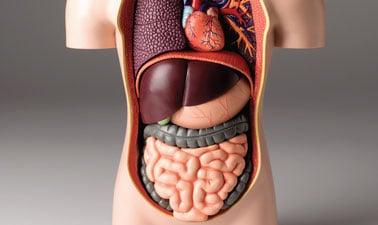
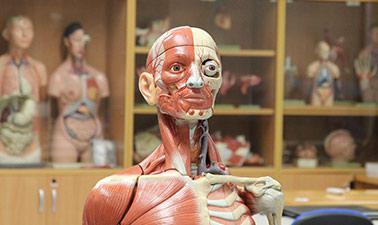
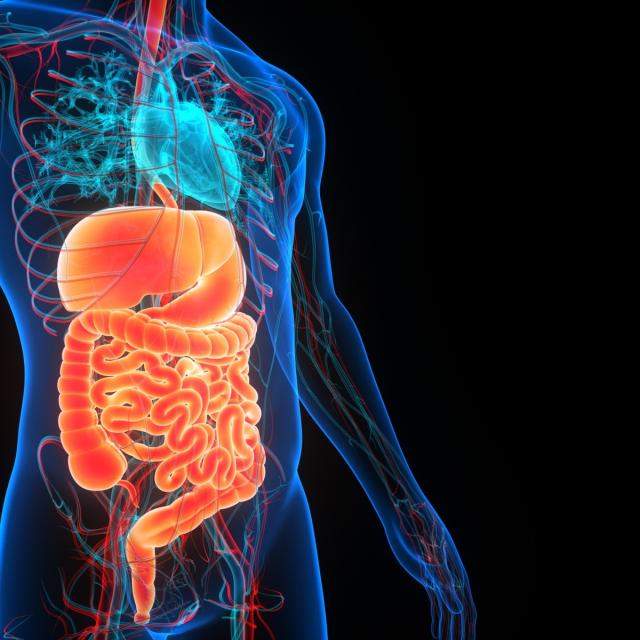
In this course on Digestion, Micturition, and Reproduction, you will learn about the wonderful diversity of the digestive, urinary, and reproductive systems and the medical language that is used to describe these systems. Throughout each Lesson, the roots of terms are explained to help students understand how medical terminology works in healthcare and to increase their knowledge and understanding of the material discussed.

Class Deals by MOOC List - Click here and see Coursera's Active Discounts, Deals, and Promo Codes.

This course will provide you with a better understanding and working knowledge of medicine that is required for understanding of medical records used for multiple purposes and job duties in the medical field. Lessons include: Digestive System, Urinary System, and Reproductive System.
Course 5 of 5 in the Human Anatomy and Medical Terminology Fundamentals Specialization.

What You Will Learn

  • Recognize the structure and function of the digestive, urinary, and reproductive systems
  • Gain an understanding of the medical language related to the digestive, urinary, and reproductive systems
  • Discuss major diseases of the digestive, urinary, and reproductive systems, as well as related symptoms

Go to Class
MOOC List is learner-supported. When you buy through links on our site, we may earn an affiliate commission.

Related Courses

Sex from Molecules to Elephants (Coursera) Coursera
Hebrew University of Jerusalem

Sex from Molecules to Elephants (Coursera)

Sexual reproduction can be defined as the sort of reproduction by which each organism arises from the fusion of two cells. This generally implies, with some exceptions, that each organism has two parents. This description might sound trivial it is however not at all. Before the appearance of sex, organisms reproduced solely by division. One cell divided into two cells, no partners, no fusion, just simple cell division.

Jun 1st 2026
5-12 Weeks
Tratando los síntomas urinarios por HPB (Coursera) Coursera
Universidad de los Andes

Tratando los síntomas urinarios por HPB (Coursera)

El curso Tratando los síntomas urinarios por Hiperplasia Prostática Benigna (HPB) es un curso completamente integral en donde se abordarán todos los aspectos necesarios para entender la frecuencia de los síntomas en nuestra sociedad, la necesidad que tienen los pacientes para buscar ayuda en una patología que afecta mucho la calidad de vida.

May 18th 2026
4 Weeks
Alimentación: la relación entre la comida, el intestino y el cerebro (FutureLearn) FutureLearn
EIT Food,EIT,University of Turin

Alimentación: la relación entre la comida, el intestino y el cerebro (FutureLearn)

El intestino y el cerebro están muy estrechamente vinculados. Averigüe cómo afecta la dieta a su cerebro y cómo afecta el cerebro a su dieta. En los últimos años, la importancia del vínculo entre el intestino y el cerebro ha quedado patente. En este curso explorará esta compleja relación.

Jan 3rd 2022
5-12 Weeks
Anatomy: Cardiovascular, Urinary, and Respiratory Systems (edX) EdX
University of Michigan,MichiganX

Anatomy: Cardiovascular, Urinary, and Respiratory Systems (edX)

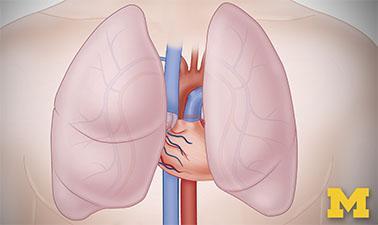
Learn the multifaceted structures and functions of the cardiovascular, urinary, and respiratory systems. This course is a primer for the cardiovascular, respiratory, and urinary systems in which students learn the pertinent details of the structures and functions through a combination of lectures, videos, labeling activities and quizzes.

Self Paced
Self-Paced
Statistical Shape Modelling: Computing the Human Anatomy (FutureLearn) FutureLearn
University of Basel

Statistical Shape Modelling: Computing the Human Anatomy (FutureLearn)

Learn the technology of modelling, as used in computational face recognition or in surgeries, with this free online course. Statistical shape models are one of the most important technologies in computer vision and medical image analysis. With this technology, the computer learns the characteristic shape variations of an object or organ. The model resulting from this analysis may then be used in implant design, image analysis, surgery planning and many other fields.

Feb 21st 2022
5-12 Weeks
Medical Terminology I (Coursera) Coursera
Rice University

Medical Terminology I (Coursera)

This course will discuss the importance of learning medical language as well as introduce basic word parts and concepts applied in medical terminology. We will also learn about common organization and terms seen in medical records before moving into system-specific terms for the integumentary system (skin), musculoskeletal system (muscles and bones), and urinary (kidneys).

Jun 1st 2026
4 Weeks
Anatomy of the Chest, Abdomen, and Pelvis (Coursera) Coursera
Yale University

Anatomy of the Chest, Abdomen, and Pelvis (Coursera)

Human structure is important to all of us as it has been for millennia. Artists, teachers, health care providers, scientists and most children try to understand the human form from stick figure drawings to electron microscopy. Learning the form of people is of great interest to us – physicians, nurses, physician assistants, emergency medical services personnel and many, many others. Learning anatomy classically involved dissection of the deceased whether directly in the laboratory or from texts, drawings, photographs or videos. There are many wonderful resources for the study of anatomy. Developing an understanding of the human form requires significant work and a wide range of resources.

May 11th 2026
4 Weeks
Anatomy & Physiology: Support & Movement (Coursera) Coursera
Rice University

Anatomy & Physiology: Support & Movement (Coursera)

The second course begins the systems-based approach to human anatomy and physiology at the organ, organ system, and organism level. Three major body systems related to support and movement will be explored in detail: the skeletal and muscular systems. Course material will cover both the structure (anatomy) and function (physiology) of each system with direct application to human development and disease.

Jun 1st 2026
4 Weeks
Dentistry 101 (Coursera) Coursera
University of Michigan

Dentistry 101 (Coursera)

Dentistry 101 is an introduction to the exciting and diverse field of dentistry through the lens of its many practitioners. If you’re interested in exploring dentistry as a profession, or if you’re ready to pursue a career in it and want to prepare yourself for dental school and the profession that lies ahead, Dentistry 101 will help you better envision the paths you can take.

Jun 3rd 2026
4 Weeks
Understanding Medical Research: Your Facebook Friend is Wrong (Coursera) Coursera
Yale University

Understanding Medical Research: Your Facebook Friend is Wrong (Coursera)

How can you tell if the bold headlines seen on social media are truly touting the next big thing or if the article isn't worth the paper it's printed on? Understanding Medical Studies, will provide you with the tools and skills you need to critically interpret medical studies, and determine for yourself the difference between good and bad science. The course covers study-design, research methods, and statistical interpretation. It also delves into the dark side of medical research by covering fraud, biases, and common misinterpretations of data. Each lesson will highlight case-studies from real-world journal articles.

May 18th 2026
5-12 Weeks