EdX

Human Anatomy and Physiology II (edX)

Human Anatomy and Physiology II (edX)

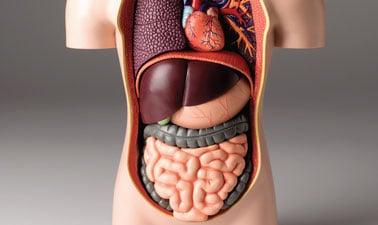
The second of two Anatomy and Physiology courses advances your knowledge of structure, function and interdependence of human body systems. Learn about the endocrine, circulatory, immune, respiratory, digestive, excretory and reproductive systems.

Class Deals by MOOC List - Click here and see EdX's Active Discounts, Deals, and Promo Codes.

An in-depth understanding of the human body is critical for anyone looking to work in healthcare. From terminology and identification to diseases and treatment, you can acquire the key foundational knowledge of the human body and seven of its 11 body systems: endocrine, circulatory, immune, respiratory, digestive, excretory and reproductive.
This course is the second of two examining the structure, function and interdependence of human body systems. The first course covers four of the 11 systems, including integumentary, skeletal, muscular and nervous systems.
You’ll also explore resources that walk you through the identification and treatment for different diseases.
As a verified track learner, you will have access to interactive case studies and will be able to check your understanding as you progress through the course materials with short quizzes and a final exam.
After this course, you should be able to:

  • Identify human body systems, organs, structures and their functions
  • Identify anatomical locations of systems within the human body in comparison to other organ systems
  • Use correct terminology to describe the location of human body systems and body cavities
  • Describe the process of how homeostasis is maintained in human body systems
  • Identify healthy and unhealthy functioning of human body systems
  • Identify disease conditions that impact the endocrine, circulatory, respiratory, digestive, immune, lymphatic, reproductive and urinary systems using scientific and evidenced-based research
  • Describe research that supports the cause and strategies for prevention, diagnosis and treatment of disease in human body systems

Prerequisites:
Human Anatomy and Physiology I BIO-205x. Prerequisite skills are limited college-level reading ability.

What you'll learn
Throughout this course, you’ll focus on seven of the 11 body systems: endocrine, circulatory, immune, respiratory, digestive, excretory and reproductive. After completing this course, you’ll be able to:

  • Describe the location and functions of human body systems using appropriate terminology
  • Analyze the interactions between human body systems for how they work together to achieve a healthy state
  • Analyze research on human body systems for identifying evidence-based prevention, diagnosis and treatment strategies for related diseased states
Go to Class
MOOC List is learner-supported. When you buy through links on our site, we may earn an affiliate commission.

Related Courses

Human Anatomy for Stroke (edX) EdX
The Hong Kong Polytechnic University,HKPolyUx

Human Anatomy for Stroke (edX)

The first MOOC to teach Human Anatomy from multiple healthcare professional perspectives through a case-based study of stroke. How is the human body structured? How are the different body systems interconnected with each other? If you are interested but layman to Human Anatomy, if you find the Human Anatomy textbooks are too difficult to read, or if you want to freshen up quickly your anatomy knowledge, this is the course for you.

Self Paced
Self-Paced
Sharks! (edX) EdX
University of Queensland,CornellX,Cornell University,UQx

Sharks! (edX)

Learn about the most fascinating animals on Earth, their sophisticated senses and how sharks and their relatives have impacted human history and culture. Did you know that you can track some sharks’ movements on Twitter? Or that the scales on their skin have influenced the way humans design boats, planes, and even swimsuits? Or that sharks have more senses than humans?

Jul 3rd 2023
4 Weeks
Cell Biology: Mitochondria (edX) EdX
HarvardX,Harvard University

Cell Biology: Mitochondria (edX)

A human-centered approach to the fundamentals of cell biology with a focus on the power plants of the cell - mitochondria. The cell is a powerful case study to help us explore the functional logic of living systems. All organisms, from single-celled algae to complex multicellular organisms like us, are made up of cells. In this course, you will learn the how and why of biology by exploring the function of the molecular components of cells, and how these cellular components are organized in a complex hierarchy.

Self Paced
Self-Paced
Cell Biology: Transport (edX) EdX
MIT,MITx

Cell Biology: Transport (edX)

How do we know what we know about cells? Enhance your scientific thinking and data analysis skills with this in-depth adventure through cell biology. This is the first cell biology course in a four-part series. How do we know what we know about cells at a molecular level and how can we use that knowledge to design experiments to test hypotheses in cell biology?

Feb 8th 2022
5-12 Weeks
Fundamentals of Neuroscience, Part 2: Neurons and Networks (edX) EdX
HarvardX,Harvard University

Fundamentals of Neuroscience, Part 2: Neurons and Networks (edX)

Discover what makes your brain tick in this second part of a four-part introductory series in Neuroscience. Neurons in isolation are fascinating and complicated, but the real magic of neuroscience happens in the interaction between neurons. In this course, we examine how neurons pass signals to one another and how complex dynamics can result from just a few neurons arranged in relatively simple circuits.

Self Paced
Self-Paced
Human Anatomy: Musculoskeletal Cases (edX) EdX
HarvardX,Harvard University

Human Anatomy: Musculoskeletal Cases (edX)

Learn the anatomy basic to understanding five musculoskeletal injuries commonly seen in primary care medicine and orthopedic clinical specialty practice. Follow hypothetical patients from injury to operating room. Human Anatomy: Musculoskeletal Cases invites students to join medical and basic science faculty at Harvard Medical School (HMS) to learn about musculoskeletal injuries commonly seen in clinical practice.

Self Paced
Self-Paced
Molecular Biology - Part 1: DNA Replication and Repair (edX) EdX
MIT,MITx

Molecular Biology - Part 1: DNA Replication and Repair (edX)

An in-depth adventure through DNA replication and repair to strengthen your scientific thinking and experimental design skills. You’re acquainted with your DNA, but did you know that your cells synthesize enough DNA during your lifetime to stretch a lightyear in length? How does the cellular machinery accomplish such a feat without making more mistakes than you can survive?

Apr 16th 2024
5-12 Weeks
Effective Teaching Strategies for Biology (edX) EdX
Trinity College, Hartford,TrinityX

Effective Teaching Strategies for Biology (edX)

Learn and practice effective teaching strategies for undergraduate biology that engage students and improve learning outcomes. In this education and teacher training course we will explore effective teaching methods for biology. We will emphasize approaches proven to be effective and show you how to implement them. We will also give you the opportunity to reflect on your own teaching experience and exchange ideas and share challenges with other learners in the course.

No sessions available
4 Weeks
Introduction to Biology - The Secret of Life (edX) EdX
MIT,MITx

Introduction to Biology - The Secret of Life (edX)

Explore the secret of life through the basics of biochemistry, genetics, molecular biology, recombinant DNA, genomics and rational medicine. 7.00x is an introductory level biology course hosted by professor Eric Lander, who was one of the leaders of the Human Genome Project. The course content reflects the topics taught in the MIT introductory biology courses and many biology courses across the world.

Mar 12th 2024
13-24 Weeks