EdX

Ergonomics in Design (edX)

Ergonomics in Design (edX)

The course is designed to provide a basic understanding of ergonomics in design through the introduction of human anatomy, anthropometry, and modeling techniques with the aim of improving safety, productivity, comfort and health of people. Ergonomics is the application of scientific information about people in order to design products and systems so that they are safe, productive, comfortable and healthy for people to use.

Class Deals by MOOC List - Click here and see EdX's Active Discounts, Deals, and Promo Codes.

People are of different shapes, sizes, strength, speed, judgment, skills, and capabilities. Hence when designing products the necessary aspects for task performance have to be considered. What is important is to fit the task to the person rather than fitting a person to a task so that a majority of the people are able to and like to do what needs to be done.
In this course, regardless of your background, you will learn the core concepts of ergonomics so that you can evaluate and redesign products to fit people. The course will focus on recognizing the workings of the human body so that products and systems are compatible with the structure of people and will allow you to be creative and to identify engineering solutions thereby improving human performance, reducing the risk of discomfort and injury when interacting with products
This course will allow you to get hands-on experience through a wide variety of demonstrations and case studies for you to grasp the concepts easily. With the knowledge gained, you can experience the excitement of creating your own products that will wow users whether it be for continuing education or just for knowledge.

What you'll learn

  • At the end of the course, you will be able to:
  • Apply ergonomic principles for the creation of safer, healthier and more efficient and effective products and activities
  • Recognize the workings of the human body and their implications on products
  • Identify engineering solutions to improve human performance and reduce the risk of discomfort and - injury when interacting with products

Syllabus

Week 1: Overview and Introduction
Definition, history and applications of Ergonomics with real life examples

Week 2: Human-centered Design
Introduction to Design Thinking and design objectives

Week 3: Musculoskeletal system
Human body structure basics of muscles, bones and joints, and their working principles

Week 4: Human Movement
Spine and motion, vision and line of sight

Week 5: Posture-Strength relationships
Blix curve, Hand tool design basics considering ergonomics principles

Week 6: Equipment Design
Sports equipment design and Consequences of poor design
Go to Class
MOOC List is learner-supported. When you buy through links on our site, we may earn an affiliate commission.

Related Courses

Human Anatomy for Stroke (edX) EdX
The Hong Kong Polytechnic University,HKPolyUx

Human Anatomy for Stroke (edX)

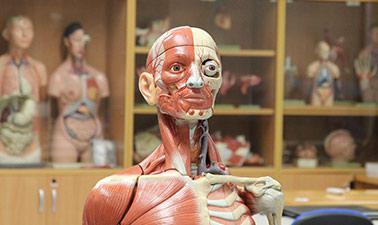
The first MOOC to teach Human Anatomy from multiple healthcare professional perspectives through a case-based study of stroke. How is the human body structured? How are the different body systems interconnected with each other? If you are interested but layman to Human Anatomy, if you find the Human Anatomy textbooks are too difficult to read, or if you want to freshen up quickly your anatomy knowledge, this is the course for you.

Self Paced
Self-Paced
EMT Foundations (Coursera) Coursera
University of Colorado System

EMT Foundations (Coursera)

In this course, you will get a thorough introduction to the emergency medical services system, and learn the foundation components to how it works as a whole. You will also learn the nuts and bolts of becoming a healthcare provider, and gain some basic knowledge about the human body.

Jun 22nd 2026
5-12 Weeks
Using Design to Generate Innovative Business Solutions (Coursera) Coursera
Parsons School of Design, The New School

Using Design to Generate Innovative Business Solutions (Coursera)

This rigorous online course shows you how to use design to generate innovative business solutions. It starts by focusing on alternative design methodologies, including the non-negotiable essentials: design thinking methodology and jobs to be done. It then delves into strategies for choosing the right business model. This includes exploring value-creating and sustainable business models. After covering these foundational concepts, the course examines design tools that can be used to develop the business model in market by creating shared value and tips to manage the conversion funnel. The course concludes by looking at digital dynamics and providing insider tips to promote success.

Jun 22nd 2026
4 Weeks
Human-Centered Design for Work at a Distance: Toolbox Essentials (edX) EdX
The University of British Columbia,UBCx

Human-Centered Design for Work at a Distance: Toolbox Essentials (edX)

Learn and apply human-centered design tools to transform your work with others at a distance. In this course, you will gain a foundational understanding of human-centered design tools, and apply lessons learned to improve your work with others at a distance. Learn how HCD principles can be applied to multiple aspects of working at a distance, and can be used to help decipher complex organizational challenges.

Self Paced
Self-Paced
Human-Computer Interaction III: Ethics, Needfinding & Prototyping (edX) EdX
Georgia Institute of Technology,GTx

Human-Computer Interaction III: Ethics, Needfinding & Prototyping (edX)

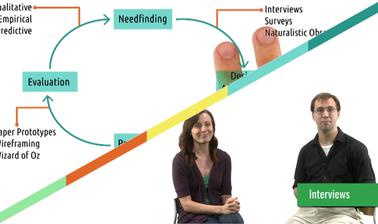
Build on your knowledge of HCI’s core principles by learning to design interfaces in the real world. Begin with the ethics of human subjects research, then learn critical methods for requirements gathering and brainstorming design alternatives. In this course, you’ll begin by learning the design life cycle. This is the process by which we investigate user needs, brainstorm potential designs, create prototypes, and evaluate those prototypes. This life cycle provides the structure for the third and fourth courses in this professional certificate.

Self Paced
Self-Paced
Design for Recycling of Electronics in a Circular Economy (edX) EdX
Delft University of Technology,DelftX

Design for Recycling of Electronics in a Circular Economy (edX)

Discover the latest developments in Design for Recycling (DfR) of electrical and electronic equipment (EEE) and the application of recycled plastics into new products. Electronic products bring countless benefits to society, but their production and waste treatment also lead to numerous negative environmental and economic impacts. Since E-waste is the world’s fastest growing waste stream, governments are setting ambitious targets to help this industry transition towards a circular economy.

Nov 10th 2021
4 Weeks
Groundscape Architecture Lab. Carpark Futures (edX) EdX
École Polytechnique Fédérale de Lausanne,EPFLx

Groundscape Architecture Lab. Carpark Futures (edX)

Developing architectural and design knowledge for the urban underground. ‘Groundscape’ is a new word coined by architect Dominique Perrault to integrate underground spaces into architecture knowledge. The general focus of this course is to provide students with underground design strategies that respond to contemporary urban challenges. Indeed, The underground of cities has become one of the most innovative and radical terrains of experimentation for future urban development by providing much needed spaces capable of optimizing existing city centers, by making them more resilient, responsible, durable and beautiful.

Self Paced
Self-Paced
Human Factors in AI (Coursera) Coursera
Duke University

Human Factors in AI (Coursera)

This third and final course of the AI Product Management Specialization by Duke University's Pratt School of Engineering focuses on the critical human factors in developing AI-based products. The course begins with an introduction to human-centered design and the unique elements of user experience design for AI products.

Jun 22nd 2026
4 Weeks