EdX

Anatomy: Cardiovascular, Urinary, and Respiratory Systems (edX)

Anatomy: Cardiovascular, Urinary, and Respiratory Systems (edX)

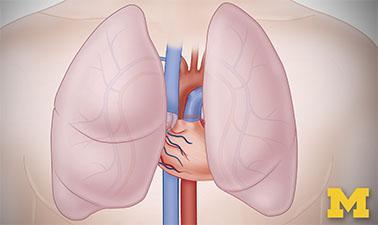
Learn the multifaceted structures and functions of the cardiovascular, urinary, and respiratory systems. This course is a primer for the cardiovascular, respiratory, and urinary systems in which students learn the pertinent details of the structures and functions through a combination of lectures, videos, labeling activities and quizzes.

Class Deals by MOOC List - Click here and see EdX's Active Discounts, Deals, and Promo Codes.

In this anatomy course, part of the Anatomy XSeries, you will explore the interactive relationships of the cardiovascular, respiratory and urinary systems, and the roles they play in your body.

What you'll learn

  • Learn the basic structure and function of the cardiovascular system
  • Learn the basic structure and function of the respiratory system
  • Learn the basic structure and function of the urinary system

Syllabus

CVS I: Blood & Lymphatics
Intro to the cardiovascular system
Blood as a solution
Formed elements
Erythrocyte structure, development, function, and pathologies
Leukocyte types, functions, development, and pathologies
Thrombocyte function
Lymphatic system and circulation
Lymphocytes, cellular immunity, and humoral immunity
Distribution of lymph nodes and routes

CVS II: Heart & Vasculature
Heart layers
External and internal heart failures
Heart cycles and function
Blood flow and structures
Vasculature
Aorta and vena cava branches
Vascular pathologies

Urinary System
Relationship of urinary system and CVS
Urinary anatomy
Kidney structure
Renal vasculature
Ureters
Bladder and urethra

Respiratory System
Intro to the respiratory system
Relationship of respiratory system and CVS
Nose and nasal cavity
Pharynx
Larynx
Bronchial tree and alveoli
Gross features of lungs
Muscle and neural control of respiration
Go to Class
MOOC List is learner-supported. When you buy through links on our site, we may earn an affiliate commission.

Related Courses

AP® Biology - Part 2: Genetics (edX) EdX
Rice University,RiceX

AP® Biology - Part 2: Genetics (edX)

The second course in a comprehensive series designed to prepare you for the AP Biology exam, focusing on genetics and DNA. Preparing for the AP Biology exam requires a deep understanding of many different topics in biology as well as an understanding of the format of the AP exam and the types of questions it asks. This course is Part 2 of the AP Biology series designed to prepare you for the AP Biology exam.

No sessions available
5-12 Weeks
Super-Earths And Life (edX) EdX
HarvardX,Harvard University

Super-Earths And Life (edX)

Learn about the Earth, life, and how we can search for life elsewhere in the universe. Are we alone in this universe? What new information and observations on exoplanets have we discovered? In the past decade, astronomers have made incredible advances in the discovery of planets outside our solar system. Thirty years ago, we knew only of the planets in our own solar system. Now we know of thousands circling nearby stars.

Self Paced
Self-Paced
Molecular Biology - Part 1: DNA Replication and Repair (edX) EdX
MIT,MITx

Molecular Biology - Part 1: DNA Replication and Repair (edX)

An in-depth adventure through DNA replication and repair to strengthen your scientific thinking and experimental design skills. You’re acquainted with your DNA, but did you know that your cells synthesize enough DNA during your lifetime to stretch a lightyear in length? How does the cellular machinery accomplish such a feat without making more mistakes than you can survive?

Apr 16th 2024
5-12 Weeks
Quantitative Biology Workshop (edX) EdX
MIT,MITx

Quantitative Biology Workshop (edX)

A workshop-style introduction to tools used in biological research. Discover how to analyze data using computational methods. Do you have an interest in biology and quantitative tools? Do you know computational methods but do not realize how they apply to biological problems? Do you know biology but do not understand how scientists really analyze complicated data? 7.QBWx: Quantitative Biology Workshop is designed to give learners exposure to the application of quantitative tools to analyze biological data at an introductory level.

Self Paced
Self-Paced
Cell Biology: Transport (edX) EdX
MIT,MITx

Cell Biology: Transport (edX)

How do we know what we know about cells? Enhance your scientific thinking and data analysis skills with this in-depth adventure through cell biology. This is the first cell biology course in a four-part series. How do we know what we know about cells at a molecular level and how can we use that knowledge to design experiments to test hypotheses in cell biology?

Feb 8th 2022
5-12 Weeks
Fundamentals of Neuroscience, Part 2: Neurons and Networks (edX) EdX
HarvardX,Harvard University

Fundamentals of Neuroscience, Part 2: Neurons and Networks (edX)

Discover what makes your brain tick in this second part of a four-part introductory series in Neuroscience. Neurons in isolation are fascinating and complicated, but the real magic of neuroscience happens in the interaction between neurons. In this course, we examine how neurons pass signals to one another and how complex dynamics can result from just a few neurons arranged in relatively simple circuits.

Self Paced
Self-Paced
The Chemistry of Life (edX) EdX
Kyoto University,KyotoUx

The Chemistry of Life (edX)

Learn how to generate ideas at the interface between chemistry and biology. Chemistry and biology are traditionally taught as separate subjects at the high school level, where students memorize fundamental scientific principles that are universally accepted. However, at the university level and in industry, we learn that science is not as simple as we once thought. We are constantly confronted by questions about the unknown and required to use creative, integrated approaches to solve these problems.

Self Paced
Self-Paced
Essential Human Biology: Cells and Tissues (edX) EdX
University of Adelaide,AdelaideX

Essential Human Biology: Cells and Tissues (edX)

An introduction to the human body's most fundamental building blocks and their behaviours in health and disease. Are you preparing for a health-related career, or planning to study in the health sciences? Perhaps you're just keen to learn more about the wonders of the human body? Our bodies are amazing but complex biological machines. This course will provide you with an outstanding foundation of knowledge in human anatomy and physiology.

Self Paced
Self-Paced
Algorithms and Data Structures Capstone (edX) EdX
University of California, San Diego,UC San DiegoX

Algorithms and Data Structures Capstone (edX)

Synthesize your knowledge of algorithms and biology to build your own software for solving a biological challenge. Building a fully-fledged algorithm to assemble genomes from DNA fragments on a real dataset is an enormous challenge with major demand in the multi-billion dollar biotech industry. In this capstone project, we will take the training wheels off and let you design your own optimized software program for genome sequencing.

Self Paced
Self-Paced
Your Body Inside and Out: Using Exercise Physiology to Slow Aging (edX) EdX
Stanford University,StanfordOnline

Your Body Inside and Out: Using Exercise Physiology to Slow Aging (edX)

This online class will present the latest scientific information on the interaction between aging and physical activity. In an approachable style, you will learn how your physiology changes with age and how different types of movement can impact that trajectory of aging. Physical activity is a powerful medicine and you will learn how to harness its benefits to improve your health and wellness throughout the lifespan. Whether you are new to exercise or a life-long athlete, this class will open your eyes to the amazing systems within your body and help you strategize on activities that fit your goals for a healthy life.

Self Paced
5-12 Weeks
Exploring Psychology's Core Concepts | 走进心理学 (edX) EdX
Tsinghua University,TsinghuaX

Exploring Psychology's Core Concepts | 走进心理学 (edX)

How do you interpretThe Da Vinci Code? Isa sleepwalker aware of themselves? Is language before the mind or the contrary? This course will answer these questions and more with psychology theories. How to decipher the Da Vinci Code? Does a person know that he is sleepwalking? Which came first, language or thought? This course will use the latest and coolest psychological theories to answer these questions.

Self Paced
Self-Paced