Sex from Molecules to Elephants (Coursera)

Sex from Molecules to Elephants (Coursera)

Sexual reproduction can be defined as the sort of reproduction by which each organism arises from the fusion of two cells. This generally implies, with some exceptions, that each organism has two parents. This description might sound trivial it is however not at all. Before the appearance of sex, organisms reproduced solely by division. One cell divided into two cells, no partners, no fusion, just simple cell division.

Class Deals by MOOC List - Click here and see Coursera's Active Discounts, Deals, and Promo Codes.

This simple cell division is still here. In fact, the trillions of cells that make up your body are all the descendants of a single cell that underwent several dozens of cell divisions. Surprisingly, most multicellular, as well as, many unicellular organisms reproduce by sex. We might take it thus for granted but this course will show you that it is a rather peculiar and enigmatic process.
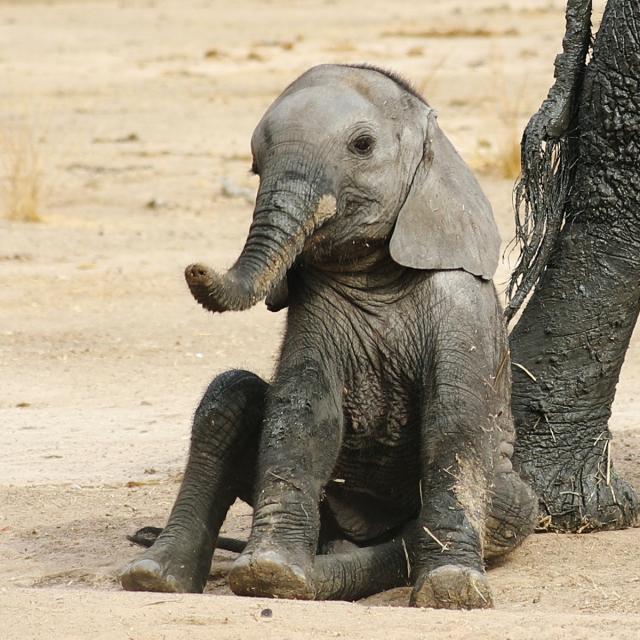
This course will provide you with the necessary tools to understand how sex works and to marvel at its mysteries. We will start by meeting the actors of this greatest drama in their native habitats, from ancient bacteria that live in thermal geysers in Yellowstone national park to the great mammals that roam the African savanna. We will also briefly discuss the history of life on earth and its contemporary state.
The second unit defines the rules of the game explaining the mechanisms of heredity and evolution.
The third unit focuses on meiosis, the fundamental and conserved molecular event that forms the basis of sex. And that might have led to the appearance of sex in the first place. We will also explain the fertility cycle and male and female germ cell development. The fourth unit describes the striking variability of sex determination throughout the animal kingdom. We will discuss the requirement for two genders and their considerable cost. Finally, we will dive in the gulf of Aqaba to meet organisms that are both male and female either at the same, or at different times.
Sex requires cooperation between two individuals – a male and a female – that are in a basic conflict of interest. Furthermore, males and females compete among themselves. This complex network of cooperation and conflict forms the fascinating plot we will tell in the fifth unit that will discuss the patterns of reproduction and social behavior of different animals – corals, insects, spiders, fish, birds, and mammals. We will be intrigued to discover that the same basic conflict is resolved by a huge range of approaches, from altruistic behavior all the way to open warfare and infanticide.
The sixth unit takes us to fertilization and beyond. Starting at an IVF clinic we follow embryonic development throughout the animal kingdom from insects to tadpoles and humans.
The seventh unit is dedicated to flowering plants that made our world colorful, sweet-smelling and tasty and that produce almost all animal food.

What You Will Learn

  • An introduction to biology from cells to higher multicellular organisms, past, present and future.
  • The principles of heredity and evolution.
  • The significance of meiosis and how germ cells are generated.
  • Sex determination and why there are (usually) two sexes and how this affects the natural history of living organisms.

Syllabus

WEEK 1
Introduction to the Course

WEEK 2
Chapter 1 - Biodiversity
In this module we will meet the players of the grand play of sexual reproduction.

WEEK 3
Chapter 2 - Evolution and Genetics
In this module we will learn about the rules of the game - how living organisms evolve and transfer their genetic information to their offsprings.

WEEK 4
Chapter 3 - Meiosis and Gametes
In this module we will learn about germ cells and how they are produced.

WEEK 5
Chapter 4 - Females, Males, Etc.
In this module we will learn about females and males and the differences between them.

WEEK 6
Chapter 5 - Sociality
In this module we will learn about the different social structures of animals and how they affect and are affected by sexual reproduction.

WEEK 7
Chapter 6 - Embryonic Development
In this module we will learn how the fertilized egg evolves into a multicellular organism.

WEEK 8
Chapter 7 - Flowers
In this module we will learn about sexual reproduction of plants.
Go to Class
MOOC List is learner-supported. When you buy through links on our site, we may earn an affiliate commission.

Related Courses

Agroforestry III: Principles of Plant and Soil Management (Coursera) Coursera
University of Florida

Agroforestry III: Principles of Plant and Soil Management (Coursera)

Agroforestry III: Principles of Plant and Soil Management is a detailed review of fundamental principles and best practices for successful agroforestry projects through understanding plant and soil interactions. This interdisciplinary module, presented by leading experts in the field, is the third in the five-module course covering the various aspects of agroforestry including the global distribution of the practices, their underlying principles, and major scientific advances during the past nearly five decades.

Jun 22nd 2026
3 Weeks
Nanotechnology and Nanosensors, Part 2 (Coursera) Coursera
Technion - Israel Institute of Technology

Nanotechnology and Nanosensors, Part 2 (Coursera)

Learn about novel sensing tools that make use of nanotechnology to screen, detect and monitor various events in personal or professional life. Together, we will lay the groundwork for infinite innovative applications, starting from diagnosis and treatments of diseases, continuing with quality control of goods and environmental aspects, and ending with monitoring security issues.

Jun 15th 2026
5-12 Weeks
Beyond the Sustainable Development Goals (SDGs): Addressing Sustainability and Development (Coursera) Coursera
University of Michigan

Beyond the Sustainable Development Goals (SDGs): Addressing Sustainability and Development (Coursera)

We’re excited you’re here! This course, “Beyond the Sustainable Development Goals (SDGs): Addressing Sustainability and Development,” is the first course in the upcoming Sustainability and Development MasterTrack Certificate program (Fall 2020), but you can also take this course as a stand-alone learning opportunity.

Jun 24th 2026
5-12 Weeks
Contemporary Biology (Coursera) Coursera
University of North Texas

Contemporary Biology (Coursera)

This course is an introduction to biology as it applies to our everyday life. Learners will explore the interplay between science and self through a personalized case study of themselves and their environment. By the end of the course, learners will be able to recognize the interactions among natural phenomena and the implications of the scientific principles behind the physical world and their experiences living in it.

Jun 22nd 2026
4 Weeks
Emergence of Life (Coursera) Coursera
University of Illinois at Urbana-Champaign

Emergence of Life (Coursera)

How did life emerge on Earth? How have life and Earth co-evolved through geological time? Is life elsewhere in the universe? Take a look through the 4-billion-year history of life on Earth through the lens of the modern Tree of Life. This course will evaluate the entire history of life on Earth within the context of our cutting-edge understanding of the Tree of Life. This includes the pioneering work of Professor Carl Woese on the University of Illinois Urbana-Champaign campus which revolutionized our understanding with a new "Tree of Life."

Jun 15th 2026
5-12 Weeks
Epidemics - the Dynamics of Infectious Diseases (Coursera) Coursera
Pennsylvania State University

Epidemics - the Dynamics of Infectious Diseases (Coursera)

Not so long ago, it was almost guaranteed that you would die of an infectious disease. In fact, had you been born just 150 years ago, your chances of dying of an infectious disease before you've reached the tender age of 5 would have been extremely high. Since then, science has come a long way in understanding infectious diseases - what they are, how they spread, and how they can be prevented. But diseases like HIV/AIDS, Malaria, Tuberculosis, or the flu are still major killers worldwide, and novel emerging diseases are a constant threat to public health. In addition, the bugs are evolving. Antibiotics, our most potent weapon against bacterial infections, are losing their power because the bacteria are becoming resistant. In this course, we'll explore the major themes of infectious diseases dynamics.

Jun 22nd 2026
5-12 Weeks
Introduction to Biology: Evolution (Coursera) Coursera
Rice University

Introduction to Biology: Evolution (Coursera)

Evolution is one of the most interesting fields within biology, and one that’s central to a complete understanding of modern biology. We begin by tracing how Charles Darwin developed a theory of evolution by natural selection and the many ways that biologists have advanced the science of evolution since his lifetime. We then go on to learn about the many applications of evolutionary biology to our everyday lives.

Jun 22nd 2026
4 Weeks
Engineering Genetic Circuits: Design (Coursera) Coursera
University of Colorado Boulder

Engineering Genetic Circuits: Design (Coursera)

This course gives an introduction to the biology and biochemistry necessary to understand genetic circuits. It starts by providing an engineering viewpoint on genetic circuit design and a review of cells and their structure. The second module introduces genetic parts and the importance of standards followed by a discussion of genetic devices used within circuit design. The last two modules cover experimental techniques and construction methods and principles applied during the design process.  

Jun 22nd 2026
5-12 Weeks
The Science of the Solar System (Coursera) Coursera
Caltech

The Science of the Solar System (Coursera)

Learn about the science behind the current exploration of the solar system in this free class. Use principles from physics, chemistry, biology, and geology to understand the latest from Mars, comprehend the outer solar system, ponder planets outside our solar system, and search for habitability in our neighborhood and beyond. This course is generally taught at an advanced level assuming a prior knowledge of undergraduate math and physics, but the majority of the concepts and lectures can be understood without these prerequisites.

Jun 22nd 2026
5-12 Weeks
Environmental Science (Coursera) Coursera
Dartmouth College

Environmental Science (Coursera)

The Introduction to Environmental Science course explores the field of environmental science and encourages participants to understand how environmental scientists think. It addresses some important questions such as: 1. What is the difference between environmental science and environmental studies? 2. How do both differ from environmentalism? 3. Why is energy so important in environmental science? 4. What do you mean by biodiversity?

Jun 22nd 2026
4 Weeks
Journey Conversations: Weaving Knowledge and Action (Coursera) Coursera
Yale University

Journey Conversations: Weaving Knowledge and Action (Coursera)

Journey of the Universe weaves together the discoveries of the evolutionary sciences together with humanities such as history, philosophy, art, and religion. This course draws on the Journey of the Universe Conversations, a series of 20 interviews with scientists and environmentalists. The first 10 interviews are with scientists and historians who deepen our understanding of the evolutionary process of universe, Earth, and humans.

Jun 22nd 2026
5-12 Weeks