Become ResponSEAble! (EMMA)

Offered by ResponSEAble,
Become ResponSEAble! (EMMA)

What are the issues affecting our oceans? How can we change behavior? What is ocean literacy, and what could be its role in promoting this change? Enrolling in the RESPONSEABLE MOOC you will be able to explore answers to these and other questions, guided by a multidisciplinary team which includes marine biologists, ecologists, economists, social scientists, communication experts and ocean literacy experts.

Protecting our oceans: moving from knowledge to behavioral change

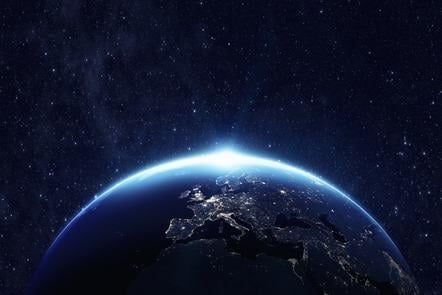
World oceans cover more than 72% of the planet surface. But as citizens, local authorities, economic sectors and civil society, what do we know about the oceans, the state of their ecosystems or the services they deliver to society? Do we (individually and collectively) know enough for us to act responsibly, so the pressures on marine ecosystems are reduced and opportunities offered by the oceans duly seized?

Evidence suggests that knowledge is not sufficient to promote widespread behavioural change. A first barrier might reside in the fact that this knowledge, although available, is currently scattered and not sufficiently structured and organized. As a second challenge, it might be difficult for the public and other economic actors to understand a complex system such as the ocean. Thirdly, knowledge might not be effectively conveyed to citizens and to the specific actors involved in the ocean-human interactions. And this is where ocean literacy comes into place.
This MOOC explores effective ways to move from knowledge to behavioral change through ocean literacy. In particular, during the course we will look for answers to the following questions:
What do we know about the human-ocean relationships?
Which opportunities for changing behavior of sea-connected socio-economic actors?
How do (ocean) knowledge systems function?
How can we establish conditions that enable individuals or organised groups to develop their knowledge and potential, so they can take their role and responsibility in society?
The course is offered by ResponSEAble, a research project supported by the Horizon 2020 Programme of the European Commission. The project involves 24 leading institutions from all over Europe, including marine biologists, ecologists, economists, social scientists, communication experts and ocean literacy experts. The MOOC will be taught by some ResponSEAble scientists and experts, as well as by some external European experts which participated to project activities.


Go to Class
MOOC List is learner-supported. When you buy through links on our site, we may earn an affiliate commission.

Related Courses

Tackling Environmental Challenges for a Sustainable Future (FutureLearn) FutureLearn
University of York

Tackling Environmental Challenges for a Sustainable Future (FutureLearn)

Discover how environmental research can inform how we respond to and solve the major global environmental issues of today. Explore sustainable solutions to environmental issues like changing glaciers. Our energy use is unsustainable, we’re producing waste plastic that’s endangering oceans, and large parts of the natural world are disappearing. We know our planet is facing huge environmental challenges, but what are we doing to solve them?

Self Paced
4 Weeks
Municipal Solid Waste Management in Developing Countries (Coursera) Coursera
École Polytechnique Fédérale de Lausanne

Municipal Solid Waste Management in Developing Countries (Coursera)

Have you come across large piles of garbage in neighborhoods and streets, or smelly waste disposal sites polluting the environment of low and middle income countries? Are you also convinced that improvements are necessary and do you want to know what kind of sustainable solutions are appropriate to better manage waste and enhance recycling and recovery? If yes, this course is for you!

Aug 10th 2026
5-12 Weeks
MOOC #OWU: Open Wine University (Université de la Vigne et du Vin pour Tous) (EMMA) EMMA
Université de Bourgogne

MOOC #OWU: Open Wine University (Université de la Vigne et du Vin pour Tous) (EMMA)

Le MOOC #OWU créé par les enseignants-chercheurs de l’université de Bourgogne (membres de l’Institut Universitaire de la Vigne et du Vin) propose une plongée dans l’univers de la vigne et du vin. De la viticulture à la dégustation en passant par les terroirs, vous apprendrez toutes les étapes de fabrication de différents vins français, jusqu’aux étapes essentielles de la dégustation du vin. Pourquoi un vin est-il blanc, rouge, mousseux ou rosé ? Comment entraîner vos sens à la dégustation des arômes du vin ? Au-delà des techniques viticoles, ce MOOC vous transmettra aussi des connaissances quant à l’Histoire des cépages et des terroirs vitivinicoles de l’environnement socio-culturel de la vigne et du vin.

Self Paced
Self-Paced
Marine Litter MOOC (OU) Other Providers
Open Universiteit

Marine Litter MOOC (OU)

Marine litter is a global problem that affects our oceans. It is an environmental, human health and socio-economic problem that is symptomatic of a throw-away society. With worldwide growth in the amount of solid litter disposed of and slow rates of degradation, the amount of litter present in the marine environment is increasing exponentially. This MOOC is part of the Clean Seas Campaign and contributes to the mission of the Global Partnership on Marine Litter (GPML), which seeks to protect the global marine environment, human well-being and animal welfare by addressing the challenges of marine litter. The MOOC is available in 10 different languages.

No sessions available
2 Weeks
One Planet, One Ocean (edX) EdX
SDGAcademyX,SDG Academy

One Planet, One Ocean (edX)

A holistic view of how the ocean functions, how human interactions with the ocean can be understood, and what solutions are available to support both sustainable use and stewardship of our blue planet. Is the ocean the real final frontier? Humans have a greater understanding of the surface of the moon than they do of the depths of these waters.

Self Paced
Self-Paced
Causes of Climate Change (FutureLearn) FutureLearn
University of Bergen

Causes of Climate Change (FutureLearn)

Learn the physical processes behind climate variation around the world to better understand the causes of climate change. Uncover the past, present, and future of the causes of climate change. This free online course provides the basis for understanding the underlying physical processes governing climate variations in the past, present and future.

Self Paced
3 Weeks
Alterações Climáticas: Ligando Ciência e a Experiência da vida (EMMA) EMMA
Universidade Aberta

Alterações Climáticas: Ligando Ciência e a Experiência da vida (EMMA)

O objetivo geral do curso Alterações Climáticas: o contexto das experiências de vida é introduzir o conceito de alterações climáticas no contexto do desenvolvimento sustentável, relacionando-o com as experiências vivenciadas por cada um de como, por exemplo, adaptar e mitigar os seu efeitos, relacionados com cheias, falta de água, subida no nível do mar, erosão costeira, e outros.

Self-Paced
Self-Paced
Marine Biology (saylor.org) Saylor Academy
Saylor.org

Marine Biology (saylor.org)

Marine Biology is the study of ocean life. As you might expect, life in salt water is vastly different from life in a terrestrial or freshwater environment due to factors like salinity, water circulation, and atmospheric pressure. How, for example, can organisms living in salt water avoid dehydration? How do organisms living in the depths of the ocean handle the immense pressure? How do the environmental factors in marine communities affect biodiversity? How do some animals manage to alternate between the demands of terrestrial life and the demands of marine life? In this course, you will learn the answers to these questions and more. This course will touch on a number of different subfields of biological study (including biochemistry, physiology, zoology, botany, and ecology) within the context of the ocean environment.

Legacy Course
Self-Paced
Sustainable Food Production Through Livestock Health Management (Coursera) Coursera
University of Illinois at Urbana-Champaign

Sustainable Food Production Through Livestock Health Management (Coursera)

Learn about the impact of infectious disease on sustainable animal-based food production by understanding the science of growth, immunity, and infection and by learning the problem-solving skills needed to advance animal health and food production through optimal management practices. In this course we will explore the effect of infectious disease on sustainable animal-based food production. The content and learning outcomes of this new course will be designed to be relevant across different food production sectors (i.e., beef, dairy, poultry, and pigs).

Aug 10th 2026
5-12 Weeks
Ecosystems of California (Coursera) Coursera
University of California, Santa Cruz

Ecosystems of California (Coursera)

This course surveys the diversity, structure and functioning of California’s ecosystems through time and the ways they have influenced and responded to human activities and stewardship. Topics include ecosystem drivers such as climate, soils, and land use history; human and ecological prehistory of the state; comparative marine, freshwater, and terrestrial ecosystem dynamics; and managed ecosystems such as range, fisheries and agriculture in California.

Aug 10th 2026
5-12 Weeks