An introduction to dynamical modeling techniques used in contemporary Systems Biology research. We take a case-based approach to teach contemporary mathematical modeling techniques. The course is appropriate for advanced undergraduates and beginning graduate students. Lectures provide biological background and describe the development of both classical mathematical models and more recent representations of biological processes. The course will be useful for students who plan to use experimental techniques as their approach in the laboratory and employ computational modeling as a tool to draw deeper understanding of experiments.
Class Deals by MOOC List - Click here and see Coursera's Active Discounts, Deals, and Promo Codes.
The course should also be valuable as an introductory overview for students planning to conduct original research in modeling biological systems.
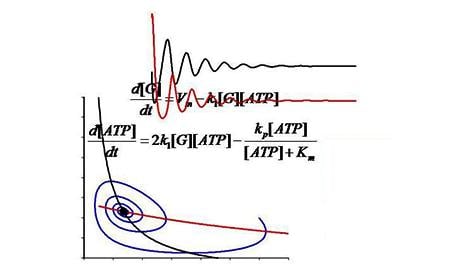
This course focuses on dynamical modeling techniques used in Systems Biology research. These techniques are based on biological mechanisms, and simulations with these models generate predictions that can subsequently be tested experimentally. These testable predictions frequently provide novel insight into biological processes. The approaches taught here can be grouped into the following categories: 1) ordinary differential equation-based models, 2) partial differential equation-based models, and 3) stochastic models.
Course 4 of 6 in the Systems Biology and Biotechnology Specialization.
Syllabus
WEEK 1: Introduction | Computing with MATLAB
WEEK 2: Introduction to Dynamical Systems
WEEK 3: Bistability in Biochemical Signaling Models
WEEK 4: Computational Modeling of the Cell Cycle
WEEK 5: Modeling Electrical Signaling
WEEK 6: Modeling with Partial Differential Equations
WEEK 7: Stochastic Modeling