Marine Litter MOOC (OU)

Offered by Open Universiteit,
Marine Litter MOOC (OU)

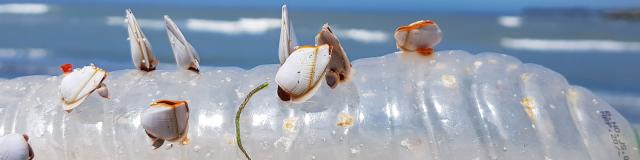
Marine litter is a global problem that affects our oceans. It is an environmental, human health and socio-economic problem that is symptomatic of a throw-away society. With worldwide growth in the amount of solid litter disposed of and slow rates of degradation, the amount of litter present in the marine environment is increasing exponentially. This MOOC is part of the Clean Seas Campaign and contributes to the mission of the Global Partnership on Marine Litter (GPML), which seeks to protect the global marine environment, human well-being and animal welfare by addressing the challenges of marine litter. The MOOC is available in 10 different languages.

Since it began, more than 22 thousand people have signed onto the course to learn more about marine litter and microplastics prevention. The MOOC seeks to inspire people of all ages to take action and leadership, and to provide examples and case studies that will inspire evidence-based, targeted actions and increase awareness of and stimulate creative solutions to this pressing global issue. Moreover, this course will benefit policymakers, practitioners, and managers who wish to connect with other professionals in order to enhance their knowledge of marine litter issues. The study material consists of a series of lectures, case studies and videos.
The MOOC is a free course that will start on October 26, 2020. Registration is open and available in the following languages: the Expert Track is offered in English, Spanish and Russian; the Leadership Track is available in Chinese, Arabic, French, Portuguese, Indonesian, Vietnamese and Thai. After completing one or both tracks you will receive a certificate of participation and free access to all course materials on the 24-hour online Trifork platform.
The Open Universiteit and UN Environment Program have created this MOOC in order to address public interest in capacity building and actionable learning on marine litter, as well as to create opportunities for a wider audience. Over the next five years, we want to bring many more people around the world together, to try and find solutions to this complex challenge, regardless of their academic and professional background or location.

Go to Class
MOOC List is learner-supported. When you buy through links on our site, we may earn an affiliate commission.

Related Courses

Population, Food, and Soil (Coursera) Coursera
Dartmouth College

Population, Food, and Soil (Coursera)

This course explores the population-environment relationship. In this course, you will learn about the human population and the ways in which changes in the population affect the environment. Agriculture, soils, and the environmental implications of eating meat, vegetables, local, organic, sustainable, industrial, and other types of food are discussed too.

Jun 29th 2026
4 Weeks
Climate change and migration: predictions, politics and policy (Climate Outreach) Other Providers
The Climate and Migration Coalition

Climate change and migration: predictions, politics and policy (Climate Outreach)

How will climate change reshape migration? And what are governments planning to do about it? This online course examines these questions in depth. Over the space of 10 months, this course examines the major issues around climate-linked migration and displacement. Climate change is set to play a key role in patterns of human settlement and migration in the future. Altered patterns of drought, storms and sea level rise are already creating new patterns of migration.

Self Paced
Self-Paced
The Influence of Social Context on Health (Coursera) Coursera
University of Michigan

The Influence of Social Context on Health (Coursera)

Why are some groups healthier than others, and how do these differences emerge and persist over the life course? How do social policies (e.g., housing, transportation, employment) relate to health and health inequalities? Why are there health disparities even in countries that have free universal health care? This course will address conceptual models for understanding health disparities in the US and internationally, how population science identifies the main sources of these disparities, and how public health can inform policy efforts to address these disparities.

Jun 22nd 2026
4 Weeks
Understanding Dementia (University of Tasmania) Other Providers
University of Tasmania

Understanding Dementia (University of Tasmania)

The Understanding Dementia MOOC was developed by the Wicking Dementia Research and Education Centre based in the College of Health and Medicine at the University of Tasmania. This world-leading online course is free, easily accessible and available to everyone with an interest in dementia. This course is free and runs twice a year in February and July.

Feb 7th 2023
5-12 Weeks
Planet Earth: Understanding and Protecting our Environment (FutureLearn) FutureLearn
University of Leeds

Planet Earth: Understanding and Protecting our Environment (FutureLearn)

Learn about the physical geography of Earth and discover how to use this knowledge to protect our natural environment. Discover the Earth’s natural systems and how human activity affects them. On this two-week course from the University of Leeds, you will discover the processes of the hydrosphere, the geosphere, and the biosphere and explore the impact of human activity and climate change on our planet.

Jun 29th 2026
2 Weeks
Advanced Neurobiology I (Coursera) Coursera
Peking University

Advanced Neurobiology I (Coursera)

Hello everyone! Welcome to advanced neurobiology! Neuroscience is a wonderful branch of science on how our brain perceives the external world, how our brain thinks, how our brain responds to the outside of the world, and how during disease or aging the neuronal connections deteriorate. We’re trying to understand the molecular, cellular nature and the circuitry arrangement of how nervous system works.

Jun 29th 2026
5-12 Weeks
Modelo de Ecossistema com Insight Maker (Coursera) Coursera
Coursera Project Network

Modelo de Ecossistema com Insight Maker (Coursera)

Neste curso baseado em projeto de 1 hora de duração, você criará um modelo que simula a dinâmica de três populações de espécies diferentes em um ambiente: formigas, tamanduás-bandeira e lobos-guará. Durante a criação de tal modelo você será apresentado ao Insight Maker, um ambiente de simulação online gratuito que permite diferentes tipos de modelagem como modelagem de sistemas dinâmicos e baseada em agente.

Jun 29th 2026
Self-Paced
Structuring Values in Modern China (Coursera) Coursera
The Chinese University of Hong Kong

Structuring Values in Modern China (Coursera)

This sequence of four courses will propose a multi-disciplinary approach to the study of Chinese cultural history conceived of as a succession of modes of rationality (philosophical, bureaucratic, and economic). The focus will be on the moments of paradigm shift from one mode of rationality to another. For each of these moments, cultural facts and artifacts—thought, literature, ritual—will be examined in relationship to changing social, political, and economic systems.

Jun 22nd 2026
5-12 Weeks
Philosophy, Science and Religion: Philosophy and Religion (Coursera) Coursera
University of Edinburgh

Philosophy, Science and Religion: Philosophy and Religion (Coursera)

Philosophy, Science and Religion mark three of the most fundamental modes of thinking about the world and our place in it. Are these modes incompatible? Put another way: is the intellectually responsible thing to do to ‘pick sides’ and identify with one of these approaches at the exclusion of others? Or, are they complementary or mutually supportive? As is typical of questions of such magnitude, the devil is in the details. For example, it is important to work out what is really distinctive about each of these ways of inquiring about the world. In order to gain some clarity here, we’ll be investigating what some of the current leading thinkers in philosophy, science and religion are actually doing.

Jun 22nd 2026
5-12 Weeks
Global Warming I: The Science and Modeling of Climate Change (Coursera) Coursera
University of Chicago

Global Warming I: The Science and Modeling of Climate Change (Coursera)

This class describes the science of global warming and the forecast for humans’ impact on Earth’s climate. Intended for an audience without much scientific background but a healthy sense of curiosity, the class brings together insights and perspectives from physics, chemistry, biology, earth and atmospheric sciences, and even some economics—all based on a foundation of simple mathematics (algebra).

Jun 29th 2026
5-12 Weeks
Bioinformatics: Introduction and Methods 生物信息学: 导论与方法 (Coursera) Coursera
Peking University

Bioinformatics: Introduction and Methods 生物信息学: 导论与方法 (Coursera)

A big welcome to “Bioinformatics: Introduction and Methods” from Peking University! In this MOOC you will become familiar with the concepts and computational methods in the exciting interdisciplinary field of bioinformatics and their applications in biology, the knowledge and skills in bioinformatics you acquired will help you in your future study and research.

Jun 22nd 2026
13-24 Weeks
Experiments and Variations in Bipedalism (Coursera) Coursera
Dartmouth College

Experiments and Variations in Bipedalism (Coursera)

This course will help you learn how fossils give us an insight into how the early members of our lineage walked bipedally. The four million years old bone of Australopithecus anamensis is the oldest undisputed evidence for bipedalism in our lineage. Similarly, Lucy’s, who was Australopithecus afarensis, fossil also helped scientists discover a lot about how bipedalism evolved over time.

Jun 29th 2026
4 Weeks