Greening the Economy: Lessons from Scandinavia (Coursera)

Offered by Lund University,
Greening the Economy: Lessons from Scandinavia (Coursera)

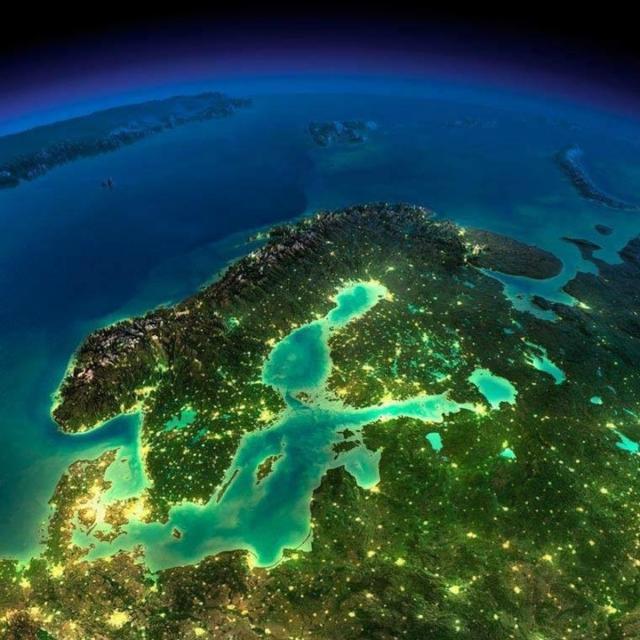
How can we live a good life on one planet with over seven billion people? This course will explore greening the economy on four levels – individual, business, city, and nation. We will look at the relationships between these levels and give many practical examples of the complexities and solutions across the levels. Scandinavia, a pioneering place advancing sustainability and combating climate change, is a unique starting point for learning about greening the economy. We will learn from many initiatives attempted in Scandinavia since the 1970s, which are all potentially helpful and useful for other countries and contexts.

Class Deals by MOOC List - Click here and see Coursera's Active Discounts, Deals, and Promo Codes.

The International Institute for Industrial Environmental Economics (IIIEE) at Lund University is an international centre of excellence on strategies for sustainable solutions. The IIIEE is ideally suited to understand and explain the interdisciplinary issues in green economies utilising the diverse disciplinary backgrounds of its international staff. The IIIEE has been researching and teaching on sustainability and greener economies since the 1990s and it has extensive international networks connecting with a variety of organizations.

Syllabus

WEEK 1
Introduction: what is a green economy and why is it important?
We start the course by looking at the key issues that a green economy seeks to address and the underlying concepts and definitions of a greener economy. In this module, we will describe problems arising from the interaction of the economy and the environment; we will state some of the aims of greening the economy and look into the multitude of definitions; we will use tools to measure and assess a green economy; and we will discuss concepts and indicators related to the green economy.

WEEK 2
Individual choices
Here in Module 2 we look at the individual level and how individual choices can help or hinder progress towards a green economy. This module offers an increased understanding of patterns and levels of consumption; we will look at the drivers and theories of consumer behaviour and the limitations of working with consumer choice in isolation (e.g. rebound effect); and develop an understanding of how to measure the impact of consumption (e.g. carbon footprint).

WEEK 3
Business strategies
In the third module, we look at the business level, focusing on how companies and organisations choose strategies that can help transitions to a green economy. In this module, the aim is to understand the changes relevant to the business level for a greener economy. You will be presented to some solutions and concepts that companies use to deal with complex problems encountered in their sustainability work. We will discuss the challenges facing companies that want to take a lead in the transition to a greener economy, and reflect on strategies for green business in different contexts.

WEEK 4
Sustainable cities
In Module 4, we look at how planning and designing cities can help achieve a green economy and underpin sustainable development. The aim this week is to understand the role of cities for experimentation, planning, collaboration and providing visions for a greener economy. We will use tools to measure and critically assess green economy indicators at the city level and discuss whether city level policies and actions in Scandinavia can work around the world.

WEEK 5
National policies
Finally, in the fifth module, we look at how national governments can establish policies to promote green economy across the different levels (individual, business, city, national) discussed in this course. In this module, we discuss how national level policies affect cities, business, and individuals, as well as the challenges for national level policies to influence other levels, including the international sphere. Finally, we will discuss whether national policies from Scandinavia can work in other contexts.
Go to Class
MOOC List is learner-supported. When you buy through links on our site, we may earn an affiliate commission.

Related Courses

The ABC of sustainability (Coursera) Coursera
Campus BBVA

The ABC of sustainability (Coursera)

The sustainability agenda is currently key to companies, governments and citizens. It’s vital for people to have first-hand knowledge of the basic concepts in order to understand all issues related to sustainability as a vector of systemic change in the economy, society, companies and our lives. The course is an introduction to sustainability, regarded as a cross-cutting discipline in our society (in the public and private international spheres) that’s based on the most updated public information on economic, social and environmental issues.

Aug 17th 2026
4 Weeks
Arctic Economy (Coursera) Coursera
University of Alberta,UiT The Arctic University of Norway

Arctic Economy (Coursera)

Arctic communities have diverse histories and roles in local, regional and global economies. However, the scope and scale of globalization has increased so quickly that vulnerable Arctic communities are facing new kinds of challenges to their survival. In this 3-week MOOC, a unique collaboration between the University of Alberta and UiT The Arctic University of Norway, you will investigate the challenges faced by Indigenous, North American, Russian and Nordic Arctic communities in a modern world. So join us as we venture above the 60th parallel North, and explore how these fascinating communities adjust to change while maintaining their ways of life, socio-economic histories, and cultural traditions.

Aug 17th 2026
4 Weeks
Sustainable high-end tourism (Coursera) Coursera
Universitat Autònoma de Barcelona

Sustainable high-end tourism (Coursera)

Welcome to the sustainable high-end tourism course. Why should you take this course? High-end tourism is a sector and industry that has grown in the last 50 years in an exponential way across the globe. The recent developments in our world -with globalization and sustainability- need to be addressed in this high-end industry. In this course we will have a look at what makes that high-end tourism, what is essential in high-end luxury tourism, and what is not.

Aug 17th 2026
5-12 Weeks
Drones for Environmental Science (Coursera) Coursera
Duke University

Drones for Environmental Science (Coursera)

Duke Environment+ will be hosting a virtual informational session on Drones for Environmental Science on July 25 at 7 p.m. ET. For more details and to register for the Zoom webinar, see the related FAQ at the bottom of this page. How can drones be used for good in environmental science? What types of data can scientists collect, and how should they go about collecting it using drones? Why should someone integrate drones into their existing career or pursue this field?

Aug 17th 2026
4 Weeks
Ecosystem Services: a Method for Sustainable Development (Coursera) Coursera
University of Geneva

Ecosystem Services: a Method for Sustainable Development (Coursera)

Ecosystem services are a way of thinking about – and evaluating – the goods and services provided by nature that contribute to the well-being of humans. This MOOC will cover scientific (technical), economic, and socio-political dimensions of the concept through a mix of theory, case-studies, interviews with specialists and a serious-game.

Aug 10th 2026
5-12 Weeks
Electric Vehicle Operation and Diagnosis (Coursera) Coursera
Starweaver

Electric Vehicle Operation and Diagnosis (Coursera)

"Electric Vehicle Operation and Diagnosis" is a course tailored to meet the increasing demand for professionals skilled in troubleshooting electric vehicles (EVs). Participants will gain a solid understanding of EV fundamentals, system operations, and diagnostic techniques. The course emphasizes environmental benefits and sustainable practices in transportation.

Aug 17th 2026
4 Weeks
Biosphere 2 Science for the Future of Our Planet (Coursera) Coursera
University of Arizona

Biosphere 2 Science for the Future of Our Planet (Coursera)

Are you ready to take an incredible journey around Planet Earth and beyond? In this course, you will delve into a world of innovative science and learn from a team of Biosphere 2 and University of Arizona researchers. From plants and soils, to oceans and rainforests, the Moon, Mars, and more, this course is an exciting opportunity for anyone interested in science and Earth stewardship.

Aug 17th 2026
5-12 Weeks
Climate Solutions (Coursera) Coursera
University of Edinburgh

Climate Solutions (Coursera)

This short course has been designed by award-winning climate change experts and passionate educators to give you an insight into the greatest challenge of our era. Through completing the course, you'll gain a deeper understanding of core climate concepts such as mitigation, adaptation, climate justice, carbon footprinting, net zero and solutions frameworks.

Aug 17th 2026
5-12 Weeks
Sustainable Fashion (Coursera) Coursera
Copenhagen Business School

Sustainable Fashion (Coursera)

Sometimes when we say we work with sustainable fashion people look at us like... "Mmmm, is it really possible for something like fashion to be sustainable?" And let's face it, people are right being suspicious. If anything the fashion industry has become increasingly unsustainable over the last decades, using more and more natural resources and creating more and more waste.

Aug 17th 2026
5-12 Weeks
Introduction to Faecal Sludge Management (Coursera) Coursera
École Polytechnique Fédérale de Lausanne

Introduction to Faecal Sludge Management (Coursera)

Do you want learn how to apply concepts of sustainable faecal sludge management (FSM) on a city-wide scale? This course starts with an overview of what faecal sludge is and an introduces you to the engineering fundamentals and required information for the design and selection of technologies. Sanitation solutions are prone to failure if an integrated planning approach that includes stakeholder involvement and the development of appropriate institutional, management and financial arrangements is not implemented.

Aug 10th 2026
5-12 Weeks
Algae Biotechnology (Coursera) Coursera
University of California, San Diego

Algae Biotechnology (Coursera)

For decades, researchers have been studying microalgae to understand their biological functions and how we can use technology to harness algae’s power to create a wide range of commercial products. In this course, we will cover how synthetic biology, genetic engineering, and metabolic engineering is used in algae biotechnology, and also examine the current state of algae biotechnology research and tools. We’ll also explore some of the common bio-products we can make from algae, and take a look at some real-world algae companies that are using algae biotechnology to create products consumers can buy today.

Aug 17th 2026
5-12 Weeks
Sustainable Vikings: Sustainability & Corporate Social Responsibility in Scandinavia (Coursera) Coursera
Copenhagen Business School

Sustainable Vikings: Sustainability & Corporate Social Responsibility in Scandinavia (Coursera)

This course gives you immediate access to the world leading sustainability and corporate social responsibility (CSR) practices. Scandinavian firms dominate the major sustainability and CSR performance indicators including the Dow Jones Sustainability Index (DJSI). In this course we explore the concepts of sustainability and CSR and focus attention on how Scandinavian firms, like Novo Nordisk, have achieved superior sustainability and CSR performances.

Aug 17th 2026
5-12 Weeks