Beneath the Blue: The Importance of Marine Sediments (FutureLearn)

Beneath the Blue: The Importance of Marine Sediments (FutureLearn)

Understand the importance of our planet's seafloor and get an introduction to the exciting field of ocean science. Discover fascinating seafloor habitats and learn how humans affect them. Exactly what lies beneath our oceans? Why is the sea floor, and its marine sediments, so important? And how are humans affecting them? On this course you’ll answer these questions and more.

Class Deals by MOOC List - Click here and see FutureLearn's Active Discounts, Deals, and Promo Codes.

You will consider the importance of the seafloor and learn about its part in global ecological, chemical and physical processes. You will learn about the vital role that the seafloor plays in providing ecosystem services to society, the current rate at which humans are exploiting seafloor habitats and the need to conserve these systems.

What topics will you cover?

  • The composition and global distribution of marine sediments.
  • Biodiversity; how it is measured and how it has changed though geological time.
  • Scientific illustration and taxonomy (the classification of living organisms)
  • Defining and classifying functional groups.
  • How humans benefit from, and impact on, marine benthic ecosystem processes.

What will you achieve?
By the end of the course, you'll be able to...

  • Explain what biodiversity is and how it evolved over geological time
  • Discuss why biodiversity is important and how marine communities deliver important services that benefit humans.
  • Explore the diversity of marine sediments and how communities of organisms inhabit them.
  • Identify marine organisms using a taxonomic key
  • Discuss the challenges of measuring and quantifying biodiversity in marine environments
  • Demonstrate an understanding of functional groups
Go to Class
MOOC List is learner-supported. When you buy through links on our site, we may earn an affiliate commission.

Related Courses

Artificial Intelligence (AI) for Earth Monitoring (FutureLearn) FutureLearn
EUMETSAT,Copernicus Atmosphere Monitoring Service - CAMS,European Centre for Medium-Range Weather Forecasts - ECMWF,Mercator Ocean International - MOi,European Environment Agency - EEA

Artificial Intelligence (AI) for Earth Monitoring (FutureLearn)

Explore how artificial intelligence (AI) and machine learning (ML) technologies are helping to advance Earth monitoring. Learn to use AI and ML to improve the use of big data in Earth Monitoring. This is a fast-changing and critical time for Earth Observation (EO), especially for those involved in its use for climate and meteorology.

Oct 18th 2021
5-12 Weeks
Introduction to Biology: Ecology (Coursera) Coursera
Rice University

Introduction to Biology: Ecology (Coursera)

Ecology is all about connections. In this course, we’ll see how interdependent every living thing is and how people are impacting the natural world. Like all sciences, ecology isn’t just a list of known facts– it’s also a process. I love telling stories, and I’ve included many stories about how we’ve come to know what we know about ecology through observations and experiments.

Jun 8th 2026
4 Weeks
Environmental Humanities: Remaking Nature (FutureLearn) FutureLearn
UNSW Sydney - University of New South Wales

Environmental Humanities: Remaking Nature (FutureLearn)

Learn how the new Environmental Humanities field is shaping how we understand environmental issues, with this free online course. In Environmental Humanities: Remaking Nature, you’ll get a broad overview of an emerging area of interdisciplinary research that reframes contemporary environmental challenges using approaches from philosophy, literature, language, history, anthropology, cultural studies and the arts.

No sessions available
5-12 Weeks
Strong sustainability and Europe (FUN) FUN
Université Clermont Auvergne

Strong sustainability and Europe (FUN)

Sustainable development, popularized by the Brundtland Report, was defined at the end of the 1980s in three spheres (economic, environmental and social). It is this representation that continues today to be disseminated to the public and to large companies. The objective of this MOOC is to question the major challenges of development for Europe in a perspective of strong sustainability (energy, climate, biodiversity, food, mobility, agriculture, natural resources, education...) and to propose alternatives.

Sep 12th 2022
5-12 Weeks
Urban Ecology Design (edX) EdX
Delft University of Technology,DelftX

Urban Ecology Design (edX)

Learn how to contribute to a more biodiverse, nature-inclusive and sustainable built environment by using nature-based solutions in your designs and policies. As our urban habitats become increasingly complex, the need to address the challenges of accommodating a growing human population becomes ever more pressing. These challenges, intricately intertwined with the built environment and its wider surroundings, encompass the perils of heat stress, loss of biodiversity, land degradation, flood risks, and the urgent need to adapt to a changing climate.

May 1st 2024
5-12 Weeks
Comprendre l'écologie, pour une économie innovante (Coursera) Coursera
ESCP Europe

Comprendre l'écologie, pour une économie innovante (Coursera)

Conçu conjointement par le think-tank Ecolo-Ethik et ESCP Europe, ce MOOC se propose de vous aider à dépasser les idées reçues sur l’écologie, dans le souci d’une démarche ouverte et multiple. A ce titre, de grands experts reconnus interviendront pour illustrer, approfondir et enrichir les différentes thématiques.

Jun 8th 2026
5-12 Weeks
AI and Climate Change (Coursera) Coursera
DeepLearning.AI

AI and Climate Change (Coursera)

In Course 2: AI and Climate Change, you will begin by learning the basics of anthropogenic climate change — why it is happening, its projected impacts, and how it is already driving extreme weather around the globe. You will then learn how machine learning techniques can lessen climate change’s impacts and help communities prepare for those that do occur.

Jun 15th 2026
4 Weeks
Aeroecology: Exploring Biodiversity with Radar (Coursera) Coursera
University of Leeds

Aeroecology: Exploring Biodiversity with Radar (Coursera)

Learn how aeroecology, a discipline that studies airborne life forms, has been revolutionised with the use of radar with this unique course. This course is designed to help scientists, researchers as well as ecology enthusiasts to develop skills in using radar to explore biodiversity. You will explore the origins and evolution of radar from a military technology to a powerful tool with multiple scientific applications, including aeroecology. You will then be introduced to studying global biodiversity trends and learn how to evaluate traditional methods and emerging technologies used by scientists to monitor the natural world.

Jun 15th 2026
2 Weeks
Biosphere 2 Science for the Future of Our Planet (Coursera) Coursera
University of Arizona

Biosphere 2 Science for the Future of Our Planet (Coursera)

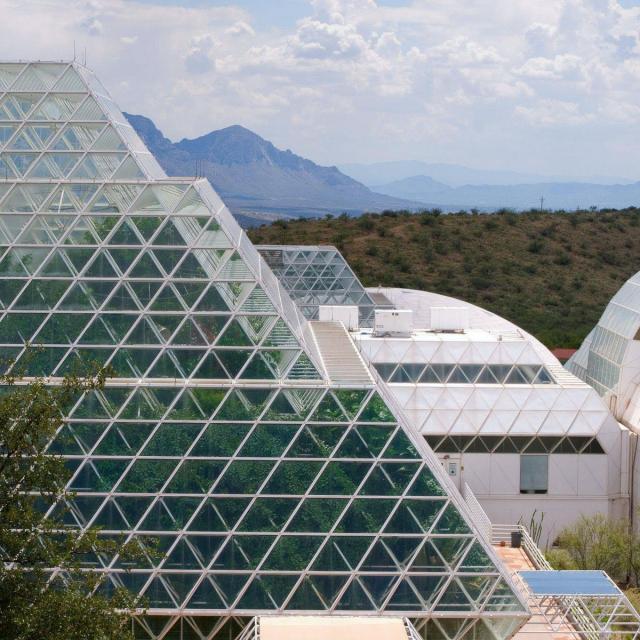
Are you ready to take an incredible journey around Planet Earth and beyond? In this course, you will delve into a world of innovative science and learn from a team of Biosphere 2 and University of Arizona researchers. From plants and soils, to oceans and rainforests, the Moon, Mars, and more, this course is an exciting opportunity for anyone interested in science and Earth stewardship.

May 25th 2026
5-12 Weeks