Climate Change Mitigation in Developing Countries (Coursera)

Climate Change Mitigation in Developing Countries (Coursera)

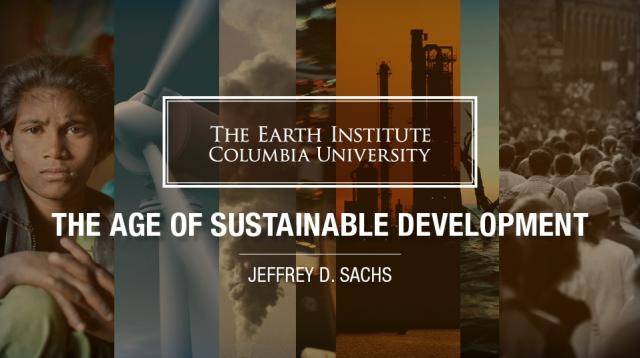
This course challenges you to consider how one might lift societies out of poverty while also mitigating greenhouse gas emissions. We explore the inherent complexity of developing country governments wanting to grow their economies in a climate friendly way. You will be introduced to an approach with which to address this challenge. The approach consists of a facilitated process whereby academic researchers and high-level influential actors within society co-produce knowledge. You will track this process in four Latin American countries - Brazil, Chile, Colombia, Peru, and South Africa. You will hear from various professionals about their contexts and the different challenges and opportunities the process includes.

Class Deals by MOOC List - Click here and see Coursera's Active Discounts, Deals, and Promo Codes.

This course will cover topics such as facilitation process techniques, energy modeling, scenario building, innovation and policy making. You will have the opportunity to respond to these topics with ideas and reflection from your own context. Whether you are a climate change practitioner, work in development or are simply curious about how climate mitigation is understood, this course will give you insights into the complexity of how countries from the South pursue development goals while addressing climate mitigation. The course is free to enroll and take. You will be offered the option of purchasing a certificate of completion, which you become eligible for if you successfully complete the course requirements. This can be an excellent way of staying motivated! Financial Aid is also available.

Syllabus

WEEK 1
Complexity of climate change mitigation
Climate change and development both involve many complex problems. Each are 'wicked' problems, meaning they defy easy solutions. Tackling both development and climate change together is a 'super-wicked' problem. But we must start by taking a first step to responding to this 'super-wicked' problem. To do this we’ll share our experiments drawing particularly on the MAPS community, which includes Brazil, Chile, Colombia, Peru and South Africa.

WEEK 2
Mandating and co-production of knowledge
Our approach to mitigation and development is essentially a process that spurs change within a system. The premise is that change happens through co-production of knowledge, which in turn encourages action by actors in a system. We ask the questions: what is the best way to start such an intervention? What could the intervention look like? What are the options for the process design? This week we review the role a Scenario Building Team has to play in supporting knowledge generation.

WEEK 3
Mitigation action research and modelling
Knowledge generated through research can effect change. We describe the models and tools that are available to support the generation of this knowledge. Apart from knowledge related to greenhouse gas mitigation and the costs thereof, we are interested in the positive and negative developmental impacts of moving to a low carbon economy. Emissions and costs are relatively easy to quantify but developmental impacts are less easily quantified. This week, we explore how this challenge can be addressed.

WEEK 4
Minding the mitigation gap
What happens when your best efforts are not good enough? We will look at the ‘gaps’ between where we would like to be and where we are.The direction emission trends are headed is a function of everything put into the model (such as population, growth and GDP, and technology). Yet what is required by science is driven by considerations such as how we need to reduce emissions to keep temperature rises below two degrees. This week, in exploring some of the potential reasons for this gap we consider technical reasons and other pushbacks, like vested-interests, political or inherent human behaviour.

WEEK 5
Responding to mitigation challenges
There are limitations within our existing toolsets and ways of thinking how we might address the mitigation gap. We need to look more closely at the interface of economic and development pathways and to question the way in which climate change mitigation professionals are approaching this huge and complex climate and development problem. Responses to these challenges include linking of economic and mitigation model to better understand the interconnectedness of mitigation policies and economic development, and involves out-of-the-box thinking when imagining climate and development solutions of the future. This week we hope to inspire innovations and responses to challenges in the climate mitigation and development community.

WEEK 6
Bridges to domestic and international policy
This is the final module and it tells the story of how we have moved to the end of the scenario building process, and what the impacts of this approach are. This week we speak of two bridges: the bridge between knowledge and domestic policy, and domestic policy and international contributions.
Go to Class
MOOC List is learner-supported. When you buy through links on our site, we may earn an affiliate commission.

Related Courses

On Strategy : What Managers Can Learn from Philosophy - PART 1 (Coursera) Coursera
CentraleSupélec

On Strategy : What Managers Can Learn from Philosophy - PART 1 (Coursera)

In the expression “creative thinking”, the keyword is not creativity; the keyword is thinking. With the help of great philosophers, you will rediscover the art of thinking. To help leaders to be rigorous even without figures, great philosophers have lots of ideas. Managers are invited to rediscover the art of thinking. They should understand the role of mental models, realize the importance of cognitive bias, agree on clear definitions and efficient criteria etc. Creativity demands the ability to unshackle ourselves from conventional ways of thinking, to "think outside the box".

Jun 29th 2026
5-12 Weeks
Strategy Formulation (Coursera) Coursera
Copenhagen Business School

Strategy Formulation (Coursera)

The purpose of this course is to present, analyze and discuss the different facets of business strategy formulation. Emphasizing that strategy can be seen as a unified theme that provides coherence and direction to the actions and decisions of a firm, we will cover a variety of business strategy topics concerned with firm positioning in the context of different markets, industries and locations.

Jun 29th 2026
5-12 Weeks
First Steps in Making the Business Case for Sustainability (Coursera) Coursera
University of Colorado System

First Steps in Making the Business Case for Sustainability (Coursera)

The Business School at the University of Colorado Denver wants to help you become a change agent for sustainable business. We hope that with the skills and concepts you gain from this specialization that you will help your business reduce its social and environmental impact. Being a change agent is hard. It takes courage and passion and knowledge. To implement change also requires being able to make the case for that change in terms that people in your company or organization respond to and understand.

Jun 29th 2026
5-12 Weeks
Sustentabilidad y Economías Sociales (Coursera) Coursera
Universidad de Chile

Sustentabilidad y Economías Sociales (Coursera)

En los últimos años el fenómeno del Emprendimiento con Sentido, la Innovación Social y la relevancia de la Sustentabilidad dan cuenta de la imperiosa necesidad de modernizar los esquemas de gestión de empresas y adaptarlos a una realidad cambiante, modificando paradigmas hacia las nuevas economías enfocadas en un desarrollo sustentable.

Jun 29th 2026
5-12 Weeks
Patent Law (Coursera) Coursera
University of Pennsylvania

Patent Law (Coursera)

In our modern technologically-based economy, the creation and enforcement of patent rights can make or break a business. With record numbers of patents being issued every year, the stakes for inventors (and, indeed, their lawyers) continue to rise, even as the patent law and its administration faces growing criticism. This course begins with an examination of the fundamental justifications for and creation of U.S. patent rights as well as the relationship between patent law and other “intellectual property” concepts.

Jun 29th 2026
4 Weeks
Securing Investment Returns in the Long Run (Coursera) Coursera
University of Geneva

Securing Investment Returns in the Long Run (Coursera)

In this course, you will learn about the famous dichotomy between active and passive investing, how to appropriately measure and analyze investment performance and what the future trends in the investment management industry are. You will first learn about absolute and relative performance, risk-adjusted returns and how to decompose investment performance. The focus will then shift to the two main categories of investment vehicles, active and passive funds, and what they entail in terms of expected performance.

Jun 29th 2026
4 Weeks
Global Postharvest Loss Prevention: Fundamentals, Technologies, and Actors (Coursera) Coursera
University of Illinois at Urbana-Champaign

Global Postharvest Loss Prevention: Fundamentals, Technologies, and Actors (Coursera)

This course provides an overview of the issue of postharvest loss of grains by exploring essential physical, technical, and social dimensions of postharvest supply chains and loss prevention methods globally. Each year, estimates suggest that 1/3 of all food produced is lost or wasted, making postharvest loss a critical global food security and sustainability issue of today. Key knowledge areas are presented including: an overview of postharvest loss; supply chain activities such as harvesting, drying, and storage; economics and markets; an introduction to the network of actors working in this field.

Jun 29th 2026
4 Weeks
Supply Chain Management: A Learning Perspective (Coursera) Coursera
Korea Advanced Institute of Science and Technology - KAIST

Supply Chain Management: A Learning Perspective (Coursera)

As a human being, we all consume products and/or services all the time. This morning you got up and ate your breakfast, e.g., eggs, milk, bread, fresh fruits, and the like. After the breakfast, you drove your car to work or school. At your office, you used your computer, perhaps equipped with 27” LCD monitor. During your break, you drank a cup of coffee and played with your iPhone. So on and so forth. You probably take it for granted that you can enjoy all of these products. But if you take a closer look at how each of these products can be made and eventually delivered to you, you will realize that each one of these is no short of miracle.

Jun 29th 2026
5-12 Weeks
Global Arctic (Coursera) Coursera
École Polytechnique Fédérale de Lausanne

Global Arctic (Coursera)

The GlobalArctic MOOC introduces you the dynamics between global changes and changes in the Arctic. This course aims to highlight the effects of climate change in the Polar region. In turn, it will underline the impacts of a warmer Arctic on the planet Earth. For human civilization, the Arctic stands both as a laboratory and a warning for human kind.

Jul 3rd 2026
4 Weeks
Innovation Through Design: Think, Make, Break, Repeat (Coursera) Coursera
The University of Sydney

Innovation Through Design: Think, Make, Break, Repeat (Coursera)

The evolution of design has seen it become a discipline no longer limited to the concerns of a singular, specific domain and develop to become a pathway for solving complex, nonlinear problems. Design is becoming a capability-enhancing skill, equipping people with the ability to deal with uncertainty, complexity and failure. In this course, we demonstrate how you can use design as a way of thinking to provide strategic and innovative advantage within your profession.

Jun 29th 2026
5-12 Weeks
Leading Innovation in Arts and Culture (Coursera) Coursera
Vanderbilt University,National Arts Strategies - NAS

Leading Innovation in Arts and Culture (Coursera)

Developed by David Owens at Vanderbilt University and customized for the cultural sector with National Arts Strategies, this course will help arts and culture leaders create an environment where new ideas are constantly created, shared, evaluated and the best ones are successfully put to work. One of the toughest challenges for any leader is getting traction for new ideas. Winning support can be a struggle. As a result, powerful new ideas often get stuck. This is especially true in the cultural sector. People involved in arts and culture often have little time and even less money for experimentation and risks. This course will help those in the performing arts, museums, zoos, libraries and other cultural organizations build environments where new management and program ideas flourish.

Jun 29th 2026
5-12 Weeks
Electric Industry Operations and Markets (Coursera) Coursera
Duke University

Electric Industry Operations and Markets (Coursera)

This is a two week course. In the first week you will learn about the core activities that the Industry executes to bring electricity to customers. We will review what electricity is, how it is generated, how it is transmitted, how it comes into buildings, and how consumption of electricity instantly feeds back on the transmission and generation of electricity.

Jun 29th 2026
2 Weeks