Setting Expectations & Assessing Performance Issues (Coursera)

Setting Expectations & Assessing Performance Issues (Coursera)

If you don’t know where you are going, any road will take you there. One of the most important roles of a manager is to ensure everyone knows the destination. The most effective managers set expectations and assess their employees’ performance against those expectations, and take a coaching approach to helping them get to the destination. That’s exactly what you’ll learn to do in this course! You will explore how to collaboratively develop expectations with those you lead. When you encounter expectations that are not being met, you’ll learn how to use "Coaching Algebra" to determine the underlying issues that are impeding performance, and how to respond as a manger-coach.

Class Deals by MOOC List - Click here and see Coursera's Active Discounts, Deals, and Promo Codes.

Mangers need to be able to diagnose why a performance gap exists. In this course, you will learn a method for discerning the root cause of poor performance, and how to respond as a manger-coach to different types of performance issues to help your staff improve and excel.
Course 2 of 4 in the Coaching Skills for Managers Specialization.

Syllabus

WEEK 1
Course Overview & Designing Performance Expectations
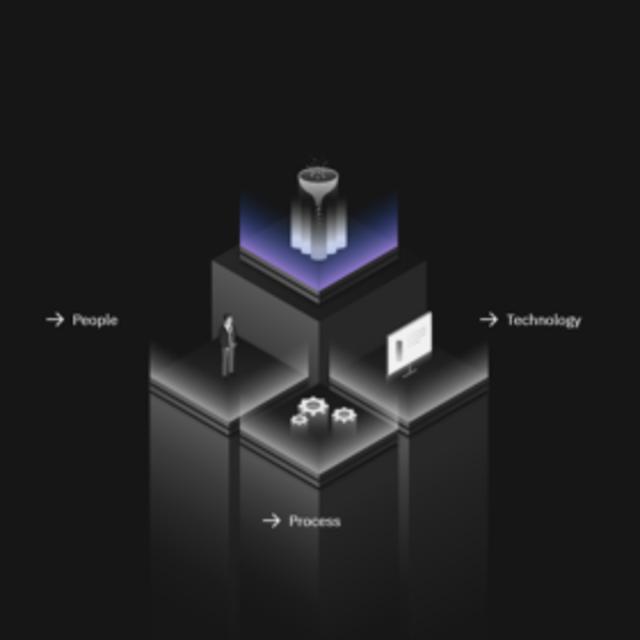
This module provides an overview of the entire course and then moves into talking about performance expectations. We'll discuss the three primary constructs of performance: process, people, and practice, learn what elements make effective mission and vision statements, and begin talking about creating effective performance expectations for your team members. You will also learn how to define clear expectations for team members and compare expectations and standards.

WEEK 2
Key Performance Indicators and Accountability
We now have a fundamental understanding of drivers and expectations for organizations, teams, and individuals. It's now time to turn to the subject of accountability. We'll begin by discussing key performance indicators or KPIs, how to align KPIs with individual goals and commitments, and end by defining what is meant by accountability along with some strategies to employ when having accountability conversations with employees.

WEEK 3
Diagnosing and Addressing Performance Gaps
In this module you will learn how to detect and resolve performance gaps for members of your teams. You'll learn about a process called "Coaching Algebra," and explore some effective strategies for coaching both skill set and mindset performance gaps.

WEEK 4
Specialization Milestone 1: Define Your Coaching Philosophy
In the final module of this course, you are going to complete your first specialization milestone by defining your own coaching philosophy. This will allow you to reflect on everything you've learned in these first 2 courses and determine, for yourself, your approach to coaching your employees.


Go to Class
MOOC List is learner-supported. When you buy through links on our site, we may earn an affiliate commission.

Related Courses

Science of Training Young Athletes Part 2 (Coursera) Coursera
University of Florida

Science of Training Young Athletes Part 2 (Coursera)

In this course you will learn how to design the type of training that takes advantage of the plastic nature of the athlete’s body so you mold the right phenotype for a sport. We explore ways the muscular system can be designed to generate higher force and power and the type of training needed to mold the athlete's physical capacity so it meets the energy and biochemical demands of the sport.

Aug 10th 2026
5-12 Weeks
Designing and Implementing Your Coaching Strategy (Coursera) Coursera
University of California, Davis

Designing and Implementing Your Coaching Strategy (Coursera)

In order to be an effective manager in increasingly fast-paced and complex organizational environments, coaching skills to develop and get the best work out of employees has become essential. Throughout the Coaching Skills for Managers specialization, we’ve discussed many topics for improving coaching conversations with our employees. It is now time to put all of that theory and discussion into practice as you solidify your coaching philosophy, develop your coaching practice and agendas, and demonstrate mastery at handling everyday coaching conversations!

Aug 24th 2026
3 Weeks
Søren Kierkegaard - Subjectivity, Irony and the Crisis of Modernity (Coursera) Coursera
University of Copenhagen

Søren Kierkegaard - Subjectivity, Irony and the Crisis of Modernity (Coursera)

In this course created by former associate professor at the Søren Kierkegaard Research Centre, Jon Stewart, we will explore how Kierkegaard deals with the problems associated with relativism, the lack of meaning and the undermining of religious faith that are typical of modern life. His penetrating analyses are still highly relevant today and have been seen as insightful for the leading figures of Existentialism, Post-Structuralism and Post-Modernism.

Aug 17th 2026
5-12 Weeks
Philosophy, Science and Religion: Science and Philosophy (Coursera) Coursera
University of Edinburgh

Philosophy, Science and Religion: Science and Philosophy (Coursera)

Philosophy, Science and Religion mark three of the most fundamental modes of thinking about the world and our place in it. Are these modes incompatible? Put another way: is the intellectually responsible thing to do to ‘pick sides’ and identify with one of these approaches at the exclusion of others? Or, are they complementary or mutually supportive? As is typical of questions of such magnitude, the devil is in the details. For example, it is important to work out what is really distinctive about each of these ways of inquiring about the world. In order to gain some clarity here, we’ll be investigating what some of the current leading thinkers in philosophy, science and religion are actually doing.

Aug 3rd 2026
5-12 Weeks
Science & Religion 101 (Coursera) Coursera
University of Alberta

Science & Religion 101 (Coursera)

This course examines the nature of both science and religion and attempts to explore the possible relationships between them. The primary purpose is to dispel the popular myth that science and religion are entrenched in a never-ending conflict. As a result, this course argues that if the limits of both science and religion are respected, then their relationship can be complementary.

Aug 3rd 2026
5-12 Weeks
The Factors that Influence the Effectiveness of Boards and the Governance Process (Coursera) Coursera
University at Buffalo,The State University of New York

The Factors that Influence the Effectiveness of Boards and the Governance Process (Coursera)

The third course in this Specialization introduces you to the factors that influence how effective boards of directors will be in carrying out their roles and responsibilities and hence the impact they have in shaping the success of the organization they govern. While this course has been developed with North American culture in mind, we do appreciate that, in other parts of the world, the nature of the factors that influence the effectiveness of nonprofit boards of directors may vary. Nevertheless,it is our hope that much of the course content will still be of value to those in other parts of the world.

Aug 17th 2026
5-12 Weeks
Richard Schechner's Introduction to Performance Studies (Coursera) Coursera
New York University

Richard Schechner's Introduction to Performance Studies (Coursera)

Performance Studies: An Introduction explores the wide world of performance--from theatre, dance, and music to ritual, play, political campaigns, social media, and the performances of everyday life. Performance studies also ranges across cultures--Asia, Africa, the Caribbean, Europe, the Americas. And it spans historical periods from the art of the paleolithic caves to YouTube and the avantgarde. This course is devised by Richard Schechner, one of the pioneers of performance studies, in dialogue with more than a dozen expert scholars and artists.

Aug 3rd 2026
13-24 Weeks
Relativism (Coursera) Coursera
University of California, Irvine

Relativism (Coursera)

Relativism is an ancient philosophical doctrine which has recurred time and again in the history of philosophy. It has also transcended the boundaries of that discipline, for it has shaped much of the methodology in anthropology and sociology, as well as in critical theory and literary studies. While often advocated for its supposed tolerance of differences, relativism has profound consequences for how we think of reality, for the possibility of knowledge, both in the factual and in the moral domain, and may engender the practice of double standard.

Aug 17th 2026
4 Weeks
Managing Talent (Coursera) Coursera
University of Michigan

Managing Talent (Coursera)

In this course, you will learn best practices for selecting, recruiting, and onboarding talent. You will also learn about the key approaches to measuring performance and evaluating your employees. In addition, you will learn how to develop and coach your talent so that they can realize their full potential at work. Altogether, you will gain a thorough understanding of the complete cycle of managing talent and creating a robust talent pipeline for your team and organization.

Aug 3rd 2026
4 Weeks
Musicianship: Tensions, Harmonic Function, and Modal Interchange (Coursera) Coursera
Berklee College of Music

Musicianship: Tensions, Harmonic Function, and Modal Interchange (Coursera)

After a tremendous response from learners on Coursera, Berklee Online has created a Developing Your Musicianship specialization, and this course is the third course in the series. If you have a general understanding of music theory or if you have completed Developing Your Musicianship I and II, this course will continue to help you understand musical concepts, enabling you to create and perform contemporary music. Taught by Berklee College of Music professor George W. Russell, Jr., the course includes four lessons that delve into an intermediate level of harmony and ear training.

Aug 3rd 2026
4 Weeks
The Modern and the Postmodern (Part 2) (Coursera) Coursera
Wesleyan University

The Modern and the Postmodern (Part 2) (Coursera)

This course examines how the idea of "the modern" develops at the end of the 18th century in European philosophy and literature, and how being modern (or progressive, or hip) became one of the crucial criteria for understanding and evaluating cultural change. Are we still in modernity, or have we moved beyond the modern to the postmodern?

Aug 10th 2026
5-12 Weeks