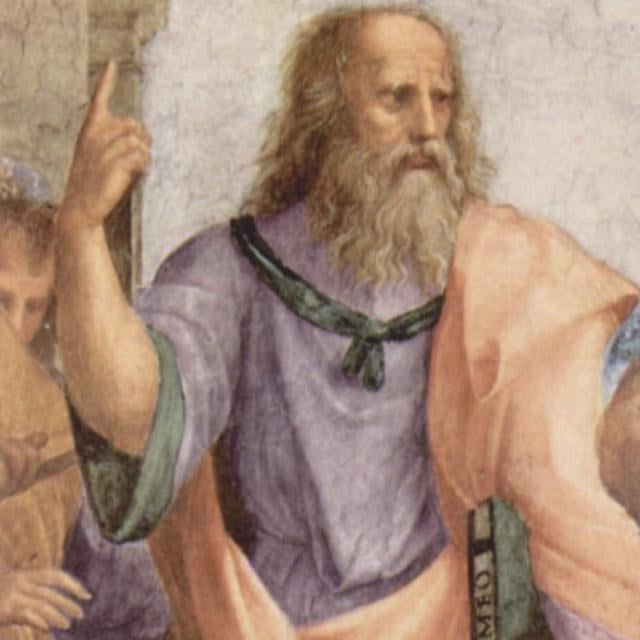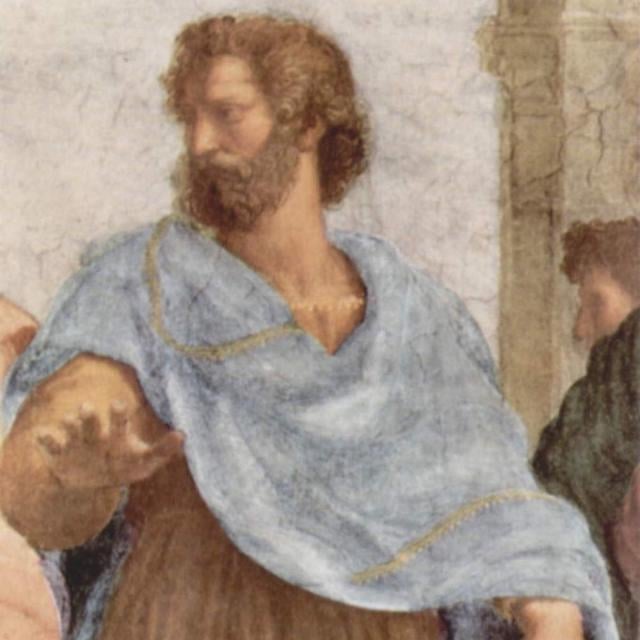
Ancient Philosophy: Aristotle and His Successors (Coursera)

Ancient Philosophy: Aristotle and His Successors (Coursera)

What is philosophy? How does it differ from science, religion, and other modes of human discourse? This course traces the origins of philosophy in the Western tradition in the thinkers of Ancient Greece. We begin with the Presocratic natural philosophers who were active in Ionia in the 6th century BCE and are also credited with being the first scientists. Thales, Anaximander, and Anaximines made bold proposals about the ultimate constituents of reality, while Heraclitus insisted that there is an underlying order to the changing world.

Class Deals by MOOC List - Click here and see Coursera's Active Discounts, Deals, and Promo Codes.

Parmenides of Elea formulated a powerful objection to all these proposals, while later Greek theorists (such as Anaxagoras and the atomist Democritus) attempted to answer that objection. In fifth-century Athens, Socrates insisted on the importance of the fundamental ethical question—“How shall I live?”—and his pupil, Plato, and Plato’s pupil, Aristotle, developed elaborate philosophical systems to explain the nature of reality, knowledge, and human happiness. After the death of Aristotle, in the Hellenistic period, Epicureans and Stoics developed and transformed that earlier tradition. We will study the major doctrines of all these thinkers. Part I will cover Plato and his predecessors. Part II will cover Aristotle and his successors.

Syllabus

WEEK 1
Aristotle’s Categories
Aristotle’s anti-Platonic metaphysics: the ultimate realities are ordinary objects of our experience, like people and animals. Each of these is a substances, the most fundamental type of being.

WEEK 2
Aristotle's Natural Philosophy
Natural substances have matter and form, and natural processes are goal-directed. Every living thing, plants and animals included, has a soul that moves it.

WEEK 3
Aristotle's Ethics
The motion of the universe is eternal and its cause is an eternal unmoved mover, Aristotle’s god. Our goal in life is to achieve happiness, which comes in two varieties: the human happiness we achieve by exercising the virtues of character, and the godlike happiness we achieve when we grasp eternal truths.

WEEK 4
Epicureanism
Epicureans return to the atomism of Democritus, and find no purpose in nature. Philosophy is a therapeutic practice that removes fear and anxiety and provides us with the tranquility (ataraxia) of the gods.

WEEK 5
Stoicism
A providential god is at work in every detail of the cosmos, where everything happens by fate. Our goal in life is to accommodate ourselves to this divine nature by giving up our concern for (but not our pursuit of) worldly objectives.

Go to Class
MOOC List is learner-supported. When you buy through links on our site, we may earn an affiliate commission.

Related Courses

Designing and Implementing Your Coaching Strategy (Coursera) Coursera
University of California, Davis

Designing and Implementing Your Coaching Strategy (Coursera)

In order to be an effective manager in increasingly fast-paced and complex organizational environments, coaching skills to develop and get the best work out of employees has become essential. Throughout the Coaching Skills for Managers specialization, we’ve discussed many topics for improving coaching conversations with our employees. It is now time to put all of that theory and discussion into practice as you solidify your coaching philosophy, develop your coaching practice and agendas, and demonstrate mastery at handling everyday coaching conversations!

Aug 24th 2026
3 Weeks
Intellectual Humility: Practice (Coursera) Coursera
University of Edinburgh

Intellectual Humility: Practice (Coursera)

We live in a polarised world where all too often people talk past each other. But do you know when to believe what others say? For example, how quick should we be to accept something that someone else tells us is true, and what should we be looking out for when assessing a person's trustworthiness? Meanwhile, what should we do when we encounter disagreements with people who seem to be our equals? How and when should we adjust our beliefs, and how does the appropriate response vary depending on the evidence? These challenges may be especially important in the arena of religious disagreements. How should we weigh the evidence for and against various theistic and atheistic stances?

Aug 24th 2026
4 Weeks
A Life of Happiness and Fulfillment (Coursera) Coursera
Indian School of Business - ISB

A Life of Happiness and Fulfillment (Coursera)

What are the determinants of a happy and fulfilling life? This is surely one of life’s biggest questions, and a question that has interested many of our ancestors. Buddha famously gave up his kingdom in search of happiness. Several Greek philosophers (from Aristotle to Epicurus and Plato to Socrates) had their own views on what it takes to be happy. And of course, we all have our own theories about happiness too.

Sep 14th 2026
5-12 Weeks
Serious Gaming (Coursera) Coursera
Erasmus University Rotterdam

Serious Gaming (Coursera)

Have you ever wondered how playing games can help us to train people, deal with societal challenges or raise awareness of contemporary social issues? In this MOOC you will learn the ins and outs of games that are designed with exactly those purposes in mind: serious games. We will define serious games and discuss the different types that have been developed. We will explain why people like to play them and what impact they may have.

Aug 31st 2026
5-12 Weeks
Humanidades digitales (Coursera) Coursera
Universitat Autònoma de Barcelona

Humanidades digitales (Coursera)

¿Te has planteado para qué sirven las humanidades en el siglo XXI? ¿Cómo el advenimiento de lo Digital ha cambiado nuestra forma de acercarnos a las Humanidades? ¿Y al revés? ¿De qué forma las Humanidades influencian sobre los diferentes aspectos de la Tecnología? Te ofrecemos el primer curso online que da respuesta a estas preguntas. Una visión de las Humanidades Digitales desde la filosofía, la historia, la arqueología, el arte,… y desde las ciencias computacionales y la visión por ordenador.

Aug 31st 2026
4 Weeks
Philosophy and the Sciences: Introduction to the Philosophy of Physical Sciences (Coursera) Coursera
University of Edinburgh

Philosophy and the Sciences: Introduction to the Philosophy of Physical Sciences (Coursera)

What is the origin of our universe? What are dark matter and dark energy? This is the first part of the course 'Philosophy and the Sciences', dedicated to Philosophy of the Physical Sciences. Scientific research across the physical sciences has raised pressing questions for philosophers. The goal of this course is to introduce you to some of the main areas and topics at the key juncture between philosophy and the physical sciences.

Aug 24th 2026
4 Weeks
Know Thyself - The Value and Limits of Self-Knowledge: The Examined Life (Coursera) Coursera
University of Edinburgh

Know Thyself - The Value and Limits of Self-Knowledge: The Examined Life (Coursera)

According to legend, inscribed on walls of the temple on the sacred site of Delphi in Ancient Greece were two premier injunctions: NOTHING IN EXCESS, and KNOW THYSELF. This course will be an examination of the latter injunction in an effort to discover what self-knowledge is, why it might be valuable, and what, if any, limitations it might face.

Aug 24th 2026
4 Weeks
Re-imaging God in Korean Context (Coursera) Coursera
Yonsei University

Re-imaging God in Korean Context (Coursera)

This course will be an overview of a development of the theological methods in relation to Korea’s cultural context. Completing the course, the learners can understand cultural influences on the dynamic development of Korean churches and indigenous theology; they can also gain an insight into their own image of God and theological imagination in their own cultural context.

Sep 14th 2026
5-12 Weeks
Foundations of Teaching for Learning: Being a Professional (Coursera) Coursera
Commonwealth Education Trust

Foundations of Teaching for Learning: Being a Professional (Coursera)

The Foundations of Teaching for Learning programme is for anyone who is teaching, or who would like to teach, in any subject and any context - be it at school, at home or in the workplace. With dynamic lessons taught by established and respected professionals from across the Commonwealth, this eight course programme will see you develop and strengthen your skills in teaching, professionalism, assessment, and more. As you carry on through the programme, you will find yourself strengthening not only your skills, but your connection with colleagues across the globe. A professional development opportunity not to be missed.

Aug 24th 2026
5-12 Weeks
活用希臘哲學 (Understanding the Greek Philosophy) (Coursera) Coursera
National Taiwan University

活用希臘哲學 (Understanding the Greek Philosophy) (Coursera)

本課程之教學內容以希臘哲學之發展為主,並輔以哲學對人生意義之說明。希臘哲學是西洋哲學的骨幹,呈現西方人思維的核心理念,不但足以解釋今日之西方世界,甚至可以說明全世界的發展趨勢。本課程以希臘哲學為教學之主幹,分為先蘇哲學、詭辯學派、蘇格拉底、柏拉圖、亞理斯多德五個階段。教學的方式以強調他們之間的不同與相同的部分。課程將以演講的方式進行,揉合日常經驗作說明,並不時地會以整體的角度回頭看希臘哲學在今日哲學與社會所扮演的角色。

Aug 24th 2026
5-12 Weeks
Setting Expectations & Assessing Performance Issues (Coursera) Coursera
University of California, Davis

Setting Expectations & Assessing Performance Issues (Coursera)

If you don’t know where you are going, any road will take you there. One of the most important roles of a manager is to ensure everyone knows the destination. The most effective managers set expectations and assess their employees’ performance against those expectations, and take a coaching approach to helping them get to the destination. That’s exactly what you’ll learn to do in this course! You will explore how to collaboratively develop expectations with those you lead. When you encounter expectations that are not being met, you’ll learn how to use "Coaching Algebra" to determine the underlying issues that are impeding performance, and how to respond as a manger-coach.

Aug 24th 2026
4 Weeks