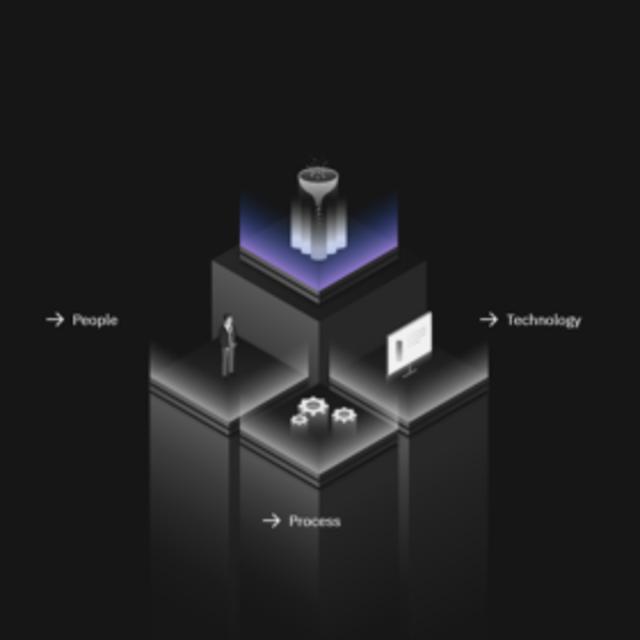
DataOps Methodology (Coursera)

Offered by IBM,
DataOps Methodology (Coursera)

DataOps is defined by Gartner as "a collaborative data management practice focused on improving the communication, integration and automation of data flows between data managers and consumers across an organization. Much like DevOps, DataOps is not a rigid dogma, but a principles-based practice influencing how data can be provided and updated to meet the need of the organization’s data consumers.”

Class Deals by MOOC List - Click here and see Coursera's Active Discounts, Deals, and Promo Codes.

The DataOps Methodology is designed to enable an organization to utilize a repeatable process to build and deploy analytics and data pipelines. By following data governance and model management practices they can deliver high-quality enterprise data to enable AI. Successful implementation of this methodology allows an organization to know, trust and use data to drive value.
In the DataOps Methodology course you will learn about best practices for defining a repeatable and business-oriented framework to provide delivery of trusted data. This course is part of the Data Engineering Specialization which provides learners with the foundational skills required to be a Data Engineer.

What You Will Learn

  • Understand the process to establish a repeatable process that delivers rigor and repeatability
  • Articulate the business value of any data sprint by capturing the KPI's the sprint will deliver
  • Understand how to enable the organization's business, development and operations to continuously design, deliver and validate new data demands

Syllabus

WEEK 1
Establish DataOps - Prepare for operation
In this module you will learn the fundamentals of a DataOps approach. You will learn about the people who are involved in defining data, curating it for use by a wide variety of data consumers, and how they can work together to deliver data for a specific purpose:

WEEK 2
Establish DataOps – Optimize for operation
In this lesson you will learn the fundamentals of a DataOps approach. You will learn about how the DataOps team works together in defining the business value of the work they undertake to be able to clearly articulate the value they bring to the wider organization:

WEEK 3
Iterate DataOps - Know your data
In this lesson you will learn about the capabilities that you will need to use to understand the data in repositories across an organization. Data discovery is most appropriately employed when the scale of available data is too vast to devise a manual approach or where there has been institutional loss of data cataloging. It utilizes various techniques to programmatically recognize semantics and patterns in data. It is a key aspect of identifying and locating sensitive or regulated data to adequately protect it, although in general, knowing what stored data means unlocks its potential for use in analytics. Data Classification provides a higher level of semantic enrichment, enabling the organization to raise data understanding from technical metadata to a business understanding, further helping to discover the overlap between multiple sources of data according to the information that they contain:

WEEK 4
Iterate DataOps – Trust your data
In this lesson you will learn that understanding data semantics helps data consumers to know what is available for consumption, but it does not provide any guidance on how good that data is. This module is all about trust, how reliable a data source can be in providing high fidelity data that can be used to drive key strategic decisions, and whether that data should be accessible to those who want to use it; whether the data consumer is permitted to see and use it. This module will address the common dimensions of data quality, how to both detect and remediate poor data quality. And it will look at enforcing the many policies that are needed around data quality, not least the need to respect an individual’s wishes and rights around how their data is used:

WEEK 5
Iterate DataOps – Use your data
In this lesson you will learn that providing useful data in a catalog can often necessitate some transformation of that data. Modifying original data can optimize data ingestion in various use-cases, such as combining multiple data sets, consolidating multiple transaction summaries, or manipulating non-standard data to conform to international standards. This module will examine the choices for data preparation, how visualization can be used to facilitate the human understanding of the data and what needs to be changed, and the various options for single use, optimization of data workflows and ensuring the regular production of transformations for operational use. Furthermore, this module will show you how to plan and implement the data movement and integration tasks that are required to support a business use case. The module is based on a real-world data movement and integration project required to support implementation of an AI-based SaaS analytical system for supply chain management running in the Google cloud. The module will cover the major topics that need to be addressed to complete a data movement and integration project successfully:

WEEK 6
Improve DataOps
In this lesson you will learn about evaluating the last data sprint, observe what worked and what did not, and make recommendations on how the next iteration could be improved.

WEEK 7
Summary & Final Exam

Go to Class
MOOC List is learner-supported. When you buy through links on our site, we may earn an affiliate commission.

Related Courses

Salesforce Capstone: Organization Integration (Coursera) Coursera
University of California, Irvine

Salesforce Capstone: Organization Integration (Coursera)

In Salesforce Capstone: Organization Integration, the final course of the Salesforce Fundamentals Specialization, learners will complete the Business Administration Specialist Superbadge as their main project. This project asks learners to combine all the skills and knowledge areas that they have collected from the previous three courses. Skill areas to be demonstrated include cleaning and importing account data, adding users and managing access, building email templates for new marketing needs, configuring UI tools for a new product type, generating reports and dashboards, managing and applying Chatter tools, and participating in the deployment of Salesforce within an organization.

Aug 31st 2026
1 Week
Datos no tradicionales en repositorios NoSQL (Coursera) Coursera
Universidad de los Andes

Datos no tradicionales en repositorios NoSQL (Coursera)

El curso Datos no tradicionales en repositorios NoSQL busca que identifiques consideraciones fundamentales para la implementación de una solución basada en información usando tecnologías NoSQL, los criterios para la selección y configuración de las herramientas, teniendo presente las necesidades de la aplicación y la diversidad de aproximaciones al modelaje de información semiestructurada y no estructurada. El curso está dirigido a personas con conocimientos básicos en manejo de herramientas computacionales y programación en al menos uno de estos lenguajes (Python, Java).

Aug 31st 2026
4 Weeks
Evaluation of Digital Health Interventions (Coursera) Coursera
Imperial College London

Evaluation of Digital Health Interventions (Coursera)

This course focuses on data, evaluation methods and the economic evaluation of digital health interventions. This module focuses on key data considerations for digital health including data management, data visualisation and methods for evaluating digital health interventions. The key focus is on experimental and quasi-experimental design approaches that can be applied to evaluating digital health interventions and key considerations for the economic evaluation of digital health interventions.

Aug 31st 2026
4 Weeks
Big Data Modeling and Management Systems (Coursera) Coursera
University of California, San Diego

Big Data Modeling and Management Systems (Coursera)

Once you’ve identified a big data issue to analyze, how do you collect, store and organize your data using Big Data solutions? In this course, you will experience various data genres and management tools appropriate for each. You will be able to describe the reasons behind the evolving plethora of new big data platforms from the perspective of big data management systems and analytical tools.

Aug 31st 2026
5-12 Weeks
Integración y preparación de datos (Coursera) Coursera
Universidad de los Andes

Integración y preparación de datos (Coursera)

El manejo de datos que permita generar conocimiento útil para una organización es cada vez más importante en los trabajos de alta demanda al día de hoy. Es así como este curso presenta al estudiante una metodología para el desarrollo de proyectos basados en datos, en especial de ciencia de datos. Hace énfasis en los procesos de exploración, transformación, integración de fuentes de datos estructuradas y no estructuradas con el fin de mejorar la eficiencia y calidad en los resultados de análisis posteriores como los basados en modelos analíticos.

Aug 31st 2026
4 Weeks
The ABC's of GDPR: Protecting Privacy in an Online World (Coursera) Coursera
Knowledge Accelerators

The ABC's of GDPR: Protecting Privacy in an Online World (Coursera)

This course is aimed at business professionals, web designers, and other interested professionals who collect, process, use, or otherwise encounter personal data subject to the European Union's General Data Protection Regulation. By the end of this course, learners will be familiar with roles involved in assuring compliance with GDPR standards, the rights of GDPR data subjects, responsibilities of organizations regarding GDPR and the consequences for failure to comply.

Sep 7th 2026
1 Week
Developing a Google SRE Culture (Coursera) Coursera
Google Cloud

Developing a Google SRE Culture (Coursera)

In many IT organizations, incentives are not aligned between developers, who strive for agility, and operators, who focus on stability. Site reliability engineering, or SRE, is how Google aligns incentives between development and operations and does mission-critical production support. Adoption of SRE cultural and technical practices can help improve collaboration between the business and IT. This course introduces key practices of Google SRE and the important role IT and business leaders play in the success of SRE organizational adoption.

Sep 14th 2026
3 Weeks
Managing Big Data in Clusters and Cloud Storage (Coursera) Coursera
Cloudera

Managing Big Data in Clusters and Cloud Storage (Coursera)

In this course, you'll learn how to manage big datasets, how to load them into clusters and cloud storage, and how to apply structure to the data so that you can run queries on it using distributed SQL engines like Apache Hive and Apache Impala. You’ll learn how to choose the right data types, storage systems, and file formats based on which tools you’ll use and what performance you need.

Aug 31st 2026
5-12 Weeks
Introduction to Data Engineering (Coursera) Coursera
IBM

Introduction to Data Engineering (Coursera)

This course introduces you to the core concepts, processes, and tools you need to know in order to get a foundational knowledge of data engineering. You will gain an understanding of the modern data ecosystem and the role Data Engineers, Data Scientists, and Data Analysts play in this ecosystem. The Data Engineering Ecosystem includes several different components. It includes disparate data types, formats, and sources of data.

Aug 31st 2026
4 Weeks