EdX

Preparing for the AP* Physics C: Electricity and Magnetism Exam (edX)

Preparing for the AP* Physics C: Electricity and Magnetism Exam (edX)

Course addresses introductory electricity and magnetism topics including: Electrostatics, Conductors capacitors and dielectrics, Electric circuits, Magnetic fields, and Electromagnetism using calculus.

Class Deals by MOOC List - Click here and see EdX's Active Discounts, Deals, and Promo Codes.

This course will address introductory electricity and magnetism topics (using calculus) from a standpoint of continually asking ‘how do we know’, addressing this using experimental evidence, conceptual logic, derivation, and application of equations. Students will be exposed to how these topics relate to research at Georgetown University. Teachers taking this course will be exposed to the pedagogical choices made and resources for use in their own classrooms.

  • Advanced Placement and AP are registered trademarks of the College Board, which was not involved in the production of, and does not endorse, these offerings.

What you'll learn:

  • Key concepts of introductory electricity and magnetism in preparation for completion of the AP Physics C Electricity and Magnetism exam
  • Building content understanding from an experimental evidence perspective, a conceptual logic perspective, and a derivation and equation-based perspective
  • Applying the content to video-based labs and research conducted by faculty at Georgetown University
Go to Class
MOOC List is learner-supported. When you buy through links on our site, we may earn an affiliate commission.

Related Courses

Quantum Mechanics for Scientists and Engineers 1 (edX) EdX
StanfordOnline

Quantum Mechanics for Scientists and Engineers 1 (edX)

This 9 week course aims to teach quantum mechanics to anyone with a reasonable college-level understanding of physical science or engineering. Quantum mechanics was once mostly of interest to physicists, chemists and other basic scientists. Now the concepts and techniques of quantum mechanics are essential in many areas of engineering and science such as materials science, nanotechnology, electronic devices, and photonics.

Self Paced
Self-Paced
Quantum Detectors (edX) EdX
Purdue University,PurdueX

Quantum Detectors (edX)

Learn about quantum sensors and devices that extract maximal information from the world around us. Classical detectors and sensors are ubiquitous around us from heat sensors in cars to light detectors in a camera cell phone. Leveraging advances in the theory of noise and measurement, an important paradigm of quantum metrology has emerged. Here, ultra-precision measurement devices collect maximal information from the world around us at the quantum limit.

Feb 12th 2024
5-12 Weeks
Science & Cooking: From Haute Cuisine to Soft Matter Science (chemistry) (edX) EdX
HarvardX,Harvard University

Science & Cooking: From Haute Cuisine to Soft Matter Science (chemistry) (edX)

Top chefs and Harvard researchers explore how everyday cooking and haute cuisine can illuminate basic principles in chemistry, physics, and engineering. Learn about food molecules and how chemical reactions can affect food texture and flavor. During each module of this course, chefs reveal the secrets behind some of their most famous culinary creations — often right in their own restaurants. Inspired by such cooking mastery, the Harvard team will then explain the science behind the recipe.

Self Paced
Self-Paced
Incorporating Renewable Energy in Electricity Grids (edX) EdX
Imperial College London,ImperialX

Incorporating Renewable Energy in Electricity Grids (edX)

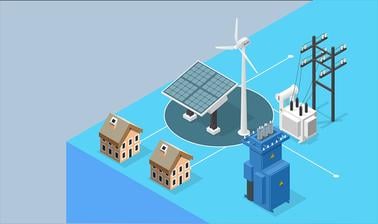
Learn how to manage high shares of variable renewable electricity sources to achieve cost-effective and reliable electricity supplies. This introductory course, delivered by Ieading academics from Imperial College London, with technical input and contributions from the National Energy Renewable Lab (Golden, Colorado), will discuss what challenges variable output renewables pose to the achievability of a reliable, stable electricity system, how these challenges can be addressed and at what costs.

Self Paced
Self-Paced
Advanced Transport Phenomena (edX) EdX
Delft University of Technology,DelftX

Advanced Transport Phenomena (edX)

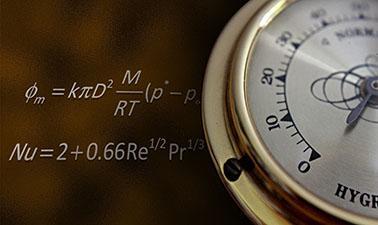
Learn how to tackle complex mass and heat transfer problems and apply the results in your own environment. How can you reduce the energy loss of your home? What is the underlying science of energy loss in pipes? Which heat and mass transfer problems do we have to tackle to make consumer products? In this engineering course, you will learn about the engineering principles that play an important role in all of these and more phenomena. You will learn about microbalances, radiation, convection, diffusion and more and their applications in everyday life.

Self Paced
Self-Paced
The Radio Sky I: Science and Observations (edX) EdX
École Polytechnique Fédérale de Lausanne,EPFLx

The Radio Sky I: Science and Observations (edX)

Be captivated by the exotic objects that populate the Radio Sky and gain a solid understanding of their physics and the fundamental techniques we use to observe them. The serendipitous and unexpected discovery of radio emission from celestial objects opened up the possibility of studying a new and exciting view of the universe beyond the visible spectrum. Astronomers have been studying the cosmos in visible light since ancient Greece, but it is only in comparatively modern times that the universe beyond the visible spectrum has become accessible to us. In this course you will learn about the most important objects that emit in the radio regime, both within and beyond our own galaxy.

Self Paced
Self-Paced
Cement Chemistry and Sustainable Cementitious Materials (edX) EdX
École Polytechnique Fédérale de Lausanne,EPFLx

Cement Chemistry and Sustainable Cementitious Materials (edX)

Learn the basics of cement chemistry and laboratory best practices for assessment of its key properties. Every day, we see concrete used all around us – to build our houses, offices, schools, bridges, and infrastructure. But few people actually understand what gives concrete its strength, resistance, and utility. The aim of this course is to offer basic cement chemistry to practitioners, as well as new students in the fields of chemistry and engineering.

Self Paced
Self-Paced
Cellular Polymers: Structure, Properties, Processing, Applications (edX) EdX
University of Bayreuth,BayreuthX

Cellular Polymers: Structure, Properties, Processing, Applications (edX)

Take our MOOC and dive deep into Cellular Polymers. Understand what makes them superior to other materials, how they are processed and why they are used in countless applications in our everyday life. This MOOC is your first step in the pioneering field of Cellular Polymers that connects chemistry, physics, materials science, engineering, and technology. Get yourself ready and enroll now.

Self Paced
Self-Paced
Understanding Nuclear Energy (edX) EdX
Delft University of Technology,DelftX

Understanding Nuclear Energy (edX)

Learn the science and technology behind nuclear energy and the special features of this energy source. In this nuclear energy course, we will tackle provocative questions such as: Is nuclear energy a good substitute for fossil fuels to reduce our CO2 emission or not?; Can nuclear reactors operate safely without any harm to the public and environment?; How much nuclear waste is produced and how long does it need to be stored safely?; How can we make nuclear energy clean and more sustainable?; How much are nuclear energy costs?

Self Paced
Self-Paced
Energía eléctrica: conceptos y principios básicos (edX) EdX
Tecnológico de Monterrey,TecdeMonterreyX

Energía eléctrica: conceptos y principios básicos (edX)

Aprende los conceptos básicos de la electricidad, para comprenderla, saber medirla y utilizarla de manera eficiente. Actualmente el uso de la electricidad es algo cotidiano, sin embargo, muy pocas personas conocen los conceptos y principios básicos que permiten comprender como funciona, cuáles son sus parámetros básicos, cómo se miden o cómo hacer un mejor uso de la energía. Este curso de electricidad presenta conceptos básicos como voltaje, corriente y resistencia que te permitirán comprender cómo se mide la potencia y el consumo de energía.En este curso entenderás que es la energía eléctrica y su importancia.

Self Paced
Self-Paced