EdX

Quantum Mechanics for Scientists and Engineers 1 (edX)

Offered by StanfordOnline,
Quantum Mechanics for Scientists and Engineers 1 (edX)

This 9 week course aims to teach quantum mechanics to anyone with a reasonable college-level understanding of physical science or engineering. Quantum mechanics was once mostly of interest to physicists, chemists and other basic scientists. Now the concepts and techniques of quantum mechanics are essential in many areas of engineering and science such as materials science, nanotechnology, electronic devices, and photonics.

Class Deals by MOOC List - Click here and see EdX's Active Discounts, Deals, and Promo Codes.

This course is a substantial introduction to quantum mechanics and how to use it. It is specifically designed to be accessible not only to physicists but also to students and technical professionals over a wide range of science and engineering backgrounds.

What you'll learn

  • A conceptual understanding of quantum mechanics
  • Key physics concepts
  • Key ideas in using quantum mechanical waves
  • Mathematics of quantum mechanical waves
  • Quantum mechanics of systems that change in time
  • Measurements in quantum mechanics
  • The uncertainty principle
  • The hydrogen atom
  • How to solve real problems

Syllabus

Introduction to quantum mechanics
How quantum mechanics is important in the everyday world, the bizarre aspects and continuing evolution of quantum mechanics, and how we need it for engineering much of modern technology.

Schroedinger’s wave equation
Getting to Schroedinger’s wave equation. Key ideas in using quantum mechanical waves — probability densities, linearity. The "two slit" experiment and its paradoxes.

Getting "quantum" behavior
The "particle in a box", eigenvalues and eigenfunctions. Mathematics of quantum mechanical waves.

Quantum mechanics of systems that change in time
Time variation by superposition of wave functions. The harmonic oscillator. Movement in quantum mechanics — wave packets, group velocity and particle current.

Measurement in quantum mechanics
Operators in quantum mechanics — the quantum-mechanical Hamiltonian. Measurement and its paradoxes — the Stern-Gerlach experiment.

Writing down quantum mechanics simply
A simple general way of looking at the mathematics of quantum mechanics — functions, operators, matrices and Dirac notation. Operators and measurable quantities. The uncertainty principle.

The hydrogen atom
Angular momentum in quantum mechanics — atomic orbitals. Quantum mechanics with more than one particle. Solving for the the hydrogen atom. Nature of the states of atoms.

How to solve real problems
Approximation methods in quantum mechanics.

Prerequisites:
The course is approximately at the level of a first quantum mechanics class in physics at a third-year college level or above, but it is specifically designed to be suitable and useful also for those from other science and engineering disciplines.
The course emphasizes conceptual understanding rather than a heavily mathematical approach, but some amount of mathematics is essential for understanding and using quantum mechanics. The course presumes a mathematics background that includes basic algebra and trigonometry, functions, vectors, matrices, complex numbers, ordinary differential and integral calculus, and ordinary and partial differential equations.
In physics, students should understand elementary classical mechanics (Newton’s Laws) and basic ideas in electricity and magnetism at a level typical of first-year college physics. (The course explicitly does not require knowledge of more advanced concepts in classical mechanics, such as Hamiltonian or Lagrangian approaches, or in electromagnetism, such as Maxwell’s equations.) Some introductory exposure to modern physics, such as the ideas of electrons, photons, and atoms, is helpful but not required.
The course includes an optional and ungraded “refresher” background mathematics section that reviews and gives participants a chance to practice all the necessary math background background. Introductory background material on key physics concepts is also presented at the beginning of the course.


Go to Class
MOOC List is learner-supported. When you buy through links on our site, we may earn an affiliate commission.

Related Courses

Cosmic Rays, Dark Matter, and the Mysteries of the Universe (edX) EdX
Waseda University,WasedaX

Cosmic Rays, Dark Matter, and the Mysteries of the Universe (edX)

Join us on a unique exploration of one of the universe’s deepest mysteries: cosmic rays. In the Universe, high-energy cosmic rays are violently propagating in space. While we know these cosmic rays come from outside of the solar system, exactly how and where they originate is a mystery. Professor Shoji Torii from Waseda University and many researchers from around the world, believe that understanding about their origin will help resolve the mysteries of the Universe, such as, supernova remnants, dark matter, and even the Universe’s evolution.

Self Paced
Self-Paced
Understanding Nuclear Energy (edX) EdX
Delft University of Technology,DelftX

Understanding Nuclear Energy (edX)

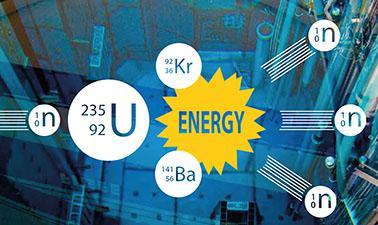
Learn the science and technology behind nuclear energy and the special features of this energy source. In this nuclear energy course, we will tackle provocative questions such as: Is nuclear energy a good substitute for fossil fuels to reduce our CO2 emission or not?; Can nuclear reactors operate safely without any harm to the public and environment?; How much nuclear waste is produced and how long does it need to be stored safely?; How can we make nuclear energy clean and more sustainable?; How much are nuclear energy costs?

Self Paced
Self-Paced
Pre-University Physics (edX) EdX
Delft University of Technology,DelftX

Pre-University Physics (edX)

Prepare for your technical studies by reviewing the fundamentals of physics. Become familiar with the way physics and physics-related topics are taught at university level. Physics is the foundation of many important science and engineering disciplines. Understanding its basics is fundamental for advanced studies. In this course, you will have the chance to review the fundamentals either for your own interest, or to ensure you have a smooth start in the first year of your Bachelor’s degree.

Self Paced
Self-Paced
The Radio Sky I: Science and Observations (edX) EdX
École Polytechnique Fédérale de Lausanne,EPFLx

The Radio Sky I: Science and Observations (edX)

Be captivated by the exotic objects that populate the Radio Sky and gain a solid understanding of their physics and the fundamental techniques we use to observe them. The serendipitous and unexpected discovery of radio emission from celestial objects opened up the possibility of studying a new and exciting view of the universe beyond the visible spectrum. Astronomers have been studying the cosmos in visible light since ancient Greece, but it is only in comparatively modern times that the universe beyond the visible spectrum has become accessible to us. In this course you will learn about the most important objects that emit in the radio regime, both within and beyond our own galaxy.

Self Paced
Self-Paced
Advanced Transport Phenomena (edX) EdX
Delft University of Technology,DelftX

Advanced Transport Phenomena (edX)

Learn how to tackle complex mass and heat transfer problems and apply the results in your own environment. How can you reduce the energy loss of your home? What is the underlying science of energy loss in pipes? Which heat and mass transfer problems do we have to tackle to make consumer products? In this engineering course, you will learn about the engineering principles that play an important role in all of these and more phenomena. You will learn about microbalances, radiation, convection, diffusion and more and their applications in everyday life.

Self Paced
Self-Paced
Cement Chemistry and Sustainable Cementitious Materials (edX) EdX
École Polytechnique Fédérale de Lausanne,EPFLx

Cement Chemistry and Sustainable Cementitious Materials (edX)

Learn the basics of cement chemistry and laboratory best practices for assessment of its key properties. Every day, we see concrete used all around us – to build our houses, offices, schools, bridges, and infrastructure. But few people actually understand what gives concrete its strength, resistance, and utility. The aim of this course is to offer basic cement chemistry to practitioners, as well as new students in the fields of chemistry and engineering.

Self Paced
Self-Paced
Introduction to Quantum Science & Technology (edX) EdX
Purdue University,PurdueX

Introduction to Quantum Science & Technology (edX)

Learn about fundamental concepts and engineering challenges of quantum technologies. Emerging quantum systems are disruptive technologies redefining computing and communication. Teaching quantum physics to engineers and educating scientists on engineering solutions are critical to address fundamental and engineering challenges of the quantum technologies.

Aug 21st 2023
13-24 Weeks
Semiconductor Fundamentals (edX) EdX
Purdue University,PurdueX

Semiconductor Fundamentals (edX)

From smartphones to satellites, semiconductors are everywhere. Tying together physics, chemistry, and electrical engineering, this easy-to-follow introduction provides the background needed to understand devices such as transistors and solar cells. This course provides the essential foundations required to understand the operation of semiconductor devices such as transistors, diodes, solar cells, light-emitting devices, and more.

Jan 9th 2023
5-12 Weeks
Advanced statistical physics (edX) EdX
École Polytechnique Fédérale de Lausanne,EPFLx

Advanced statistical physics (edX)

We explore statistical physics in both classical and open quantum systems. Additionally, we will cover probabilistic data analysis that is extremely useful in many applications. This course covers non-equilibrium statistical processes and the treatment of fluctuation dissipation relations by Einstein, Boltzmann and Kubo. Moreover, the fundamentals of Markov processes, stochastic differential and Fokker Planck equations, mesoscopic master equation, etc will be treated in detail. Prior knowledge of statistical physics is highly recommended but not required.

Self Paced
Self-Paced