EdX

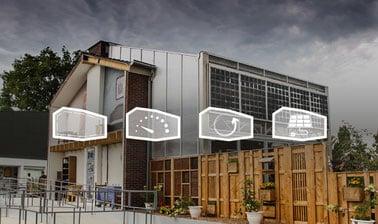
Understanding Nuclear Energy (edX)

Understanding Nuclear Energy (edX)

Learn the science and technology behind nuclear energy and the special features of this energy source. In this nuclear energy course, we will tackle provocative questions such as: Is nuclear energy a good substitute for fossil fuels to reduce our CO2 emission or not?; Can nuclear reactors operate safely without any harm to the public and environment?; How much nuclear waste is produced and how long does it need to be stored safely?; How can we make nuclear energy clean and more sustainable?; How much are nuclear energy costs?

Class Deals by MOOC List - Click here and see EdX's Active Discounts, Deals, and Promo Codes.

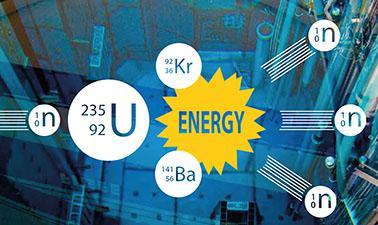
You will learn the physics behind nuclear science, how to gain energy from nuclear fission, how nuclear reactors operate safely, and the life cycle of nuclear fuel: from mining to disposal. In the last part of the course, we will focus on what matters most in the public debate: the economic and social impact of nuclear energy but also the future of energy systems.
Practically, we will:

  • Teach you about nuclear science and technology (radiation and radioactivity, nuclear reactions, nuclear reactors and fuel cycle, economics of nuclear energy, and the sociality aspects)
  • Show you short videos about the theory and practical implementation of nuclear energy
  • Stimulate discussion and debate about nuclear energy
  • Ask you to formulate your own opinion about nuclear energy and its role in society

The GENTLE consortium has sponsored and prepared this course. GENTLE is focused on maintaining the current high level of nuclear safety, and developing a highly skilled and well informed nuclear workforce, following the conclusion of the Council of the EU that it “it is essential to maintain in the European Union a high level of training in the nuclear field“ to deal with reactor fleet safely, decommission obsolete plants, be involved in new builds where policy dictates, and deal with the legacy and future radioactive wastes.

What you'll learn:

  • The basics of nuclear science and nuclear energy
  • The operating principles of nuclear reactors
  • The various steps in the nuclear fuel cycle
  • The differences between current and future reactors
  • The pros and cons of nuclear energy

Go to Class
MOOC List is learner-supported. When you buy through links on our site, we may earn an affiliate commission.

Related Courses

Greatest Unsolved Mysteries of the Universe (edX) EdX
Australian National University - ANU,ANUx

Greatest Unsolved Mysteries of the Universe (edX)

Exploring the biggest mysteries of modern astrophysics. Despite spectacular recent progress, there is still a lot we don't know about our universe. We don't know why the Big Bang happened. We don't know what most of the universe is made of. We don't know whether there is life in space. We don't know how planets form, how black holes get so big, or where the first stars have gone. This course will take you through nine of the greatest unsolved problems of modern astrophysics.

Self Paced
Self-Paced
Energy-The Technology You Must Know in the 21st Century | 能源─21世紀你必須了解的科技! (edX) EdX
OECx

Energy-The Technology You Must Know in the 21st Century | 能源─21世紀你必須了解的科技! (edX)

A comprehensive introduction to existing and emerging energy technologies and their applications. (Taught in Mandarin). Energy technology is a highly multidisciplinary subject, which extends from engineering (e.g. mechanical, chemical, civil, environmental and electrical) to economy and ecology.

No sessions available
4 Weeks
Semiconductor Fundamentals (edX) EdX
Purdue University,PurdueX

Semiconductor Fundamentals (edX)

From smartphones to satellites, semiconductors are everywhere. Tying together physics, chemistry, and electrical engineering, this easy-to-follow introduction provides the background needed to understand devices such as transistors and solar cells. This course provides the essential foundations required to understand the operation of semiconductor devices such as transistors, diodes, solar cells, light-emitting devices, and more.

Jan 9th 2023
5-12 Weeks
Energy Markets of Today (edX) EdX
Delft University of Technology,DelftX

Energy Markets of Today (edX)

Understand the European energy market and the economic principles behind it. This course will help you understand the functioning of energy markets as the necessary first step to promotion of the energy transition. By using the European electricity market as an example, you will obtain a deeper understanding of its principles and effectiveness.

Mar 12th 2024
5-12 Weeks
Quantum Networking (edX) EdX
Purdue University,PurdueX

Quantum Networking (edX)

Learn about the science and engineering of future quantum networks whose security is guaranteed by laws of quantum physics. Applying exotic quantum properties such as entanglement to every-day applications such as communication and computation reveals new dimensions of such applications. Quantum encoding and entanglement distribution provide means to establish fundamentally secure communication links for transfer of classical and quantum data.

Mar 27th 2023
5-12 Weeks
Astrophysics: Exploring Exoplanets (edX) EdX
Australian National University - ANU,ANUx

Astrophysics: Exploring Exoplanets (edX)

Explore the mysteries of exoplanets - planets around other stars – in this introductory astrophysics course. The discovery of exoplanets is one of the greatest revolutions in modern astrophysics. Twenty years ago, we had no idea whether any of the countless stars out there beyond our solar system had planets or not.

Self Paced
Self-Paced
Energy Subsidy Reform (edX) EdX
International Monetary Fund - IMF,IMFx

Energy Subsidy Reform (edX)

A course on energy subsidies, their costs, and the design of a successful reform based on country case studies. In the first part of the course, economists from the IMF will introduce the definition and measurement of subsidies, and then describe the economic, social, and environmental implications of subsidies.

Self Paced
Self-Paced
Astrophysics: The Violent Universe (edX) EdX
Australian National University - ANU,ANUx

Astrophysics: The Violent Universe (edX)

Explore the deadliest places in the universe, from black holes to supernovae. Interested in exploring the deadliest and most mysterious parts of our universe? Or, investigating black holes, which warp the very fabric of space-time around them? We will look at what we know about these objects, and also at the many unsolved mysteries that surround them. We will also study white-dwarf stars and neutron stars, where the mind-bending laws of quantum mechanics collide with relativity. And, examine dwarf novae, classical novae, supernovae and even hypernovae: the most violent explosions in the cosmos.

Self Paced
Self-Paced