EdX

Principles of Electric Circuits | 电路原理 (edX)

Principles of Electric Circuits | 电路原理 (edX)

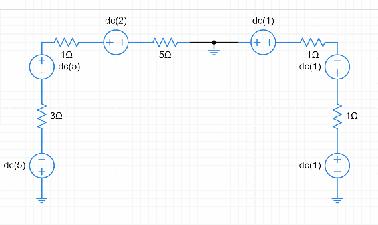
Electricity is almost everywhere. Our civilization involves constant utilization of electricity, and electric circuits are important tools for this. In Principles of Electric Circuits , you will learn sufficient techniques for analyzing and designing circuits.

Class Deals by MOOC List - Click here and see EdX's Active Discounts, Deals, and Promo Codes.

Principles of Electric Circuits (20220214x) is one of the kernel courses in the broad EECS subjects. Almost all the required courses in EECS are based on the concepts learned in this course, so it’s the gateway to a qualified EECS engineer.

The main content of this course contains linear and nonlinear resistive circuits, time domain analysis of the dynamic circuits, and the steady state analysis of the dynamic circuits with sinusoidal excitations. Important concepts, e.g. filters, resonance, quiescent point, etc., cutting-edge elements, e.g. MOSFETs and Op Amps, etc., systematic analyzing tools, e.g. node method and phasor method, etc., and real-world engineering applications, e.g. square wave generator and pulse power supply for railgun, etc., will be discussed in depth.
In order to facilitate the learning for students with middle school level, we prepare the necessary knowledge for calculus and linear algebra in week 0. With your effort, we can show you the fantastic view of electricity.

What you'll learn:

  • Math basics for studying circuits
  • Techniques for analyzing circuits with any scale and containing any element
  • Real world applications of circuits
  • Concepts related to EECS courses, e.g. signals and systems, electronics, etc.
  • Perspectives needed for qualified engineers, e.g. engineering, equivalence, and abstraction
Go to Class
MOOC List is learner-supported. When you buy through links on our site, we may earn an affiliate commission.

Related Courses

Wave-Based NDT Methods (edX) EdX
Purdue University,PurdueX

Wave-Based NDT Methods (edX)

Learn how to use wave-based NDT techniques, ultrasonic testing, acoustic emission, etc, to inspect the structural integrity of civil engineering structures, including highways, bridges, dams, and buildings. Wave-based NDT methods allow for reliable and rapid evaluation of civil engineering infrastructure. These methods are particularly useful in long-range inspection; for example, in pipelines, where the wave-based NDT can provide data on hundreds of meters of piping in a matter of seconds.

Feb 14th 2022
5-12 Weeks
Fundamentals of Non-Destructive Testing (edX) EdX
Purdue University,PurdueX

Fundamentals of Non-Destructive Testing (edX)

Learn the fundamentals of non-destructive testing (NDT), a technique used to evaluate material and structure properties and defects without causing damage. Non-destructive testing (NDT) is used across industries to ensure product integrity and reliability; it is used in the aerospace, defense, oil and gas, and automotive sectors. In civil engineering, NDT is commonly used to detect flaws and defects in concrete elements and structures.

Jan 10th 2022
5-12 Weeks
Introducción a la Ingeniería del Helicóptero (edX) EdX
OECx,Open Education Consortium - OEC

Introducción a la Ingeniería del Helicóptero (edX)

El curso proporciona una introducción del conocimiento aplicado de la aerodinámica, aeromecánica, mecánica del vuelo, estructura e ingeniería de los sistemas del helicóptero, que permita identificar y resolver problemas aplicando, con creatividad, los conocimientos adquiridos para finalizar con la aplicación de los conocimientos al análisis de un diseño preliminar de un helicóptero. The course provides an overview of applied knowledge of aerodynamics, aeromechanics, flight mechanics, structures and engineering of helicopter systems. The objective of this brief description is to acquire the skills and capabilities to identify and solve elementary problems of preliminary design of a helicopter.

No sessions available
4 Weeks
Electricity and Magnetism: Maxwell’s Equations (edX) EdX
MIT,MITx

Electricity and Magnetism: Maxwell’s Equations (edX)

In this final part of 8.02, we will cover Faraday’s Law, Circuits with Inductors, Maxwell’s equations, and electromagnetic radiation. This introductory Electromagnetism physics course will require the use of calculus. Electricity and Magnetism dominate much of the world around us – from the most fundamental processes in nature to cutting edge electronic devices.

Self Paced
Self-Paced
Dynamics and Control (edX) EdX
Universitat Politècnica de València,UPValenciaX

Dynamics and Control (edX)

This is an interactive course about the basic concepts of Systems, Control and their impact in all the human activities. First, the basic concepts of systems, dynamics, structure and control are introduced. Then, looking at many examples in Nature and human made devices, we will realize that the dynamic behavior of most systems can be modified by adding a control system. Later we will see how knowing how to evaluate the dynamic behavior of a system and measure its performance will provide the tools to design new controlled systems fulfilling some requirements.

Self Paced
Self-Paced
Railway Engineering: An Integral Approach (edX) EdX
Delft University of Technology,DelftX

Railway Engineering: An Integral Approach (edX)

Discover the science and complexity behind the exciting world of metro, tram and railway systems. Have you ever wondered what it takes to get your train on the right platform at the scheduled time every day? Understanding the complexity behind today’s sophisticated railway systems will give you a better insight into how this safe and reliable transportation system works. We will show you the many factors which are involved and how multiple people, behind the scenes, have a daily task that enables you to get from home to work. Journey with us into the world of rail - a complex system that connects people, cities and countries.

Apr 10th 2024
5-12 Weeks
Introduction to Quantum Transport (edX) EdX
Purdue University,PurdueX

Introduction to Quantum Transport (edX)

This course introduces the non-equilibrium Green’s function (NEGF) method widely used to describe quantum effects in nanoscale devices, along with its applications to spintronic devices. This course introduces the Schrödinger equation, using the tight-binding method to discuss the concept of bandstructure and E(k) relations, followed by an introduction to the NEGF method with simple illustrative examples. Concept of spinors is introduced along with the application of the NEGF method to spintronic devices.

Feb 12th 2024
5-12 Weeks
Caer o No caer. El secreto de las estructuras (edX) EdX
Universidad Carlos III de Madrid - UC3M,UC3Mx

Caer o No caer. El secreto de las estructuras (edX)

Las estructuras están presentes en todos los sistemas que nos rodean. Descubrirlas y comprender cómo funcionan es sencillo y fascinante. Las estructuras están implicadas en nuestras vidas: las plantas, los animales, casi todo lo que fabrica el ser humano, incluso nuestro propio cuerpo, deben soportar una serie de fuerzas sin romperse, y por lo tanto prácticamente cualquier elemento de nuestro entorno es una estructura de una clase u otra.

Self Paced
Self-Paced