Preclinical Safety (Coursera)

Offered by Novartis,
Preclinical Safety (Coursera)

Patient safety is of paramount importance for any drug discovery program.  This course looks at some of the lessons learned which have influenced how promising molecules are currently evaluated for safety risks.  In vitro and in vivo toxicology and safety studies are discussed, why they are performed, and how the data they provide guide a safety risk assessment, including determining a therapeutic index or safety window for a drug. 

Class Deals by MOOC List - Click here and see Coursera's Active Discounts, Deals, and Promo Codes.

Finally, the course will look at how safety data guide human dose selection, and some of the studies performed during clinical development.
Target audience: This course is suitable for life scientists, clinicians, and individuals from fields that support drug discovery (e.g., patents, finance, licensing, etc.) interested in learning more about the pharmaceutical/biotechnology sector. Advanced undergraduate coursework or practical familiarity/working knowledge in biological sciences and organic chemistry is recommended.
This course is part of the Drug Hunting: The Science of Making New Medicines Specialization.

Syllabus

Preclinical Safety, part 1
Welcome, by the end of the course students will be able to: Recognize the role of toxicology in drug development and its differentiation from pharmacology. List and describe representative preclinical toxicology studies conducted to identify and quantify risks a small molecule may pose to a patient. Explain how preclinical safety assessments contribute to early human dose selection.

Preclinical Safety, part 2

Preclinical Safety, part 3

Go to Class
MOOC List is learner-supported. When you buy through links on our site, we may earn an affiliate commission.

Related Courses

Introduction to Drug Hunting (Coursera) Coursera
Novartis

Introduction to Drug Hunting (Coursera)

This course introduces and summarizes the different steps of preclinical drug discovery, wrapping up with a brief description of the subsequent clinical trials and the importance of competitive intelligence in project strategy.  It provides a high-level overview for those interested in a more general understanding of the topic and forms the foundation for a more in-depth exploration of topics covered in other courses in this series.

Jun 1st 2026
3 Weeks
Drug Discovery in Prevention and Treatment of COVID-19 (edX) EdX
Tsinghua University,TsinghuaX

Drug Discovery in Prevention and Treatment of COVID-19 (edX)

This curriculum includes research into fundamental knowledge of clinical diagnosis, prevention and treatment of COVID-19. The beginning of 2020 have witnessed the emergence of COVID-19 escalating to a world pandemic. This virus have claimed more than 100,000 death reported by WHO, 10 times more than the seasonal flu does. Since the severity of the virus is becoming crystal clear, it is essential to grasp related knowledge to prepare us for self-protection and future drug development.

Self Paced
Self-Paced
Toxicology 21: Scientific Applications (Coursera) Coursera
Johns Hopkins University

Toxicology 21: Scientific Applications (Coursera)

This course familiarizes students with the novel concepts being used to revamp regulatory toxicology in response to a breakthrough National Research Council Report “Toxicity Testing in the 21st Century: A Vision and a Strategy.” We present the latest developments in the field of toxicology—the shift from animal testing toward human relevant, high content, high-throughput integrative testing strategies. Active programs from EPA, NIH, and the global scientific community illustrate the dynamics of safety sciences.

Jun 8th 2026
5-12 Weeks
Prescription Drug Regulation, Cost, and Access: Current Controversies in Context (edX) EdX
HarvardX,Harvard University

Prescription Drug Regulation, Cost, and Access: Current Controversies in Context (edX)

Understand how the FDA regulates pharmaceuticals and explore debates on prescription drug costs, marketing, and testing. Prescription drugs are among the most common health care interventions and have turnedsome once-fatal diseases into manageable conditions — but they have also been a growing source of controversy.

Self Paced
Self-Paced
Environnement et santé : un homme sain dans un environnement sain (FUN) FUN
Université Paris Descartes

Environnement et santé : un homme sain dans un environnement sain (FUN)

Ce MOOC en toxicologie, environnement et santé aborde les principaux mécanismes d'exposition aux polluants environnementaux ainsi que les enjeux de la réglementation actuelle. La question des effets des environnements sur la santé est une préoccupation majeure. Les crises sanitaires récurrentes mettent en évidence les relations étroites entre l’homme et son environnement et les conséquences parfois dramatiques d’une mauvaise évaluation du risque sanitaire.

No sessions available
5-12 Weeks
Introduction to Translational Research: Connecting Scientists and Medical Doctors (FutureLearn) FutureLearn
Taipei Medical University

Introduction to Translational Research: Connecting Scientists and Medical Doctors (FutureLearn)

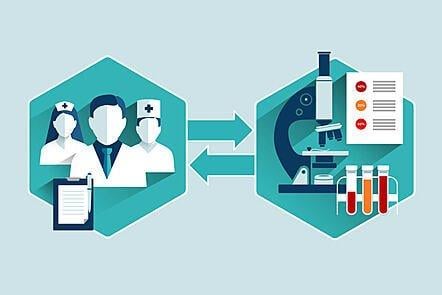
Understand the emerging discipline of translational medicine and the process of taking research from ‘benchside’ to ‘bedside'. Translational medicine, also known as translational science or translational research, is a new, growing discipline in medicine that aims to ensure research flows from ‘benchside’ to ‘bedside’.

Available now
5-12 Weeks
Air Pollution – a Global Threat to our Health (Coursera) Coursera
University of Copenhagen

Air Pollution – a Global Threat to our Health (Coursera)

We all have to breathe to live. But the air we breathe is polluted both outdoors and indoors. Each year, this pollution costs 7 million lives across the globe – and a lot of suffering. 1 in 8 deaths is due to air pollution. This course will provide you with an introduction to the most recent research in the field of health effects of air pollution as well as a broader understanding of sources and spread of air pollution and what we should do about it.

May 18th 2026
3 Weeks
Evidence-based Toxicology (Coursera) Coursera
Johns Hopkins University

Evidence-based Toxicology (Coursera)

Welcome to the Evidence-based Toxicology (EBT) course. In medicine and healthcare, evidence-based medicine has revolutionized the way that information is evaluated transparently and objectively. Over the past ten years, a movement in North America and Europe has attempted to translate this revolution to the field of toxicology.

May 25th 2026
5-12 Weeks
Chemicals and Health (Coursera) Coursera
Johns Hopkins University

Chemicals and Health (Coursera)

This course covers chemicals in our environment and in our bodies and how they impact our health. It addresses policies and practices related to chemicals, particularly related to how they get into our bodies (exposures), what they do when they get there (toxicology), how we measure them (biomonitoring) and their impact on our health. Most examples are drawn from the US.

May 25th 2026
5-12 Weeks
Literature Case Studies in Drug Discovery (edX) EdX
Davidson College,DavidsonX

Literature Case Studies in Drug Discovery (edX)

Once a person understands the ideas of drug efficacy, potency, pharmacokinetics, and safety, original research articles can be readily understood. The Journal of Medicinal Chemistry of the American Chemical Society regularly publishes a series of articles called Drug Annotations. These articles summaries a drug discovery program from a pharmaceutical company. The article covers everything from the indication of the drug, key pathways and promising drug targets within the pathways, library screening, lead selection, lead optimization, and both preclinical safety and PK/ADME studies. The articles are excellent articles for students who are testing their knowledge of drug discovery.

Self Paced
Self-Paced
Overcoming Dyslexia (Coursera) Coursera
Yale University

Overcoming Dyslexia (Coursera)

Dyslexia is everywhere, touching so many children and adults, and while science has made extraordinary progress in understanding and clarifying the condition, this incredible powerful knowledge rarely reaches those who most need to know and would greatly benefit from it. Our goal is to change all this with the Coursera you are about to view, produced by Dr. Sally Shaywitz, the Audrey G. Ratner Professor in Learning Development, both the leading scientist studying dyslexia and the most devoted advocate for helping those who are dyslexic.

Jun 13th 2026
5-12 Weeks