Targets, Assays & Screening (Coursera)

Offered by Novartis,
Targets, Assays & Screening (Coursera)

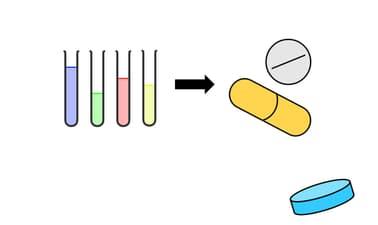
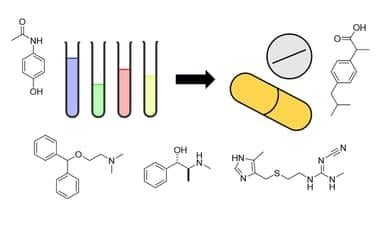
This course focuses on the early stages of drug discovery and the identification of promising compounds with which to begin the hunt for a novel drug.  Different types of assays and methods are reviewed that are used to screen libraries of molecules in the preliminary search for compounds with activity.  Methods are discussed for validating that active molecules are indeed engaging a target associated with a predicted therapeutic benefit.

Class Deals by MOOC List - Click here and see Coursera's Active Discounts, Deals, and Promo Codes.

Target audience: This course is suitable for life scientists, clinicians, and individuals from fields that support drug discovery (e.g., patents, finance, licensing, etc.) interested in learning more about the pharmaceutical/biotechnology sector. Advanced undergraduate coursework or practical familiarity/working knowledge in biological sciences and organic chemistry is recommended.
This course is part of the Drug Hunting: The Science of Making New Medicines Specialization.

Syllabus

Targets, Assays & Screening, part 1
Welcome, by the end of the course students will be able to: Recognize the differences between target-based and phenotypic drug discovery. Differentiate between common library types and screening approaches for identifying small molecule hits. Describe some of the assay types used in early screening and factors to consider in their design.

Targets, Assays & Screening, part 2

Targets, Assays & Screening, part 3
Go to Class
MOOC List is learner-supported. When you buy through links on our site, we may earn an affiliate commission.

Related Courses

The New Nordic Diet - from Gastronomy to Health (Coursera) Coursera
University of Copenhagen

The New Nordic Diet - from Gastronomy to Health (Coursera)

The New Nordic Diet is a new food culture developed in 2009-13 with key emphasis on gastronomy, health, and environment. Major research in its effect on acceptability, behaviour and learning skills, and disease prevention have been conducted by the OPUS centre at the University of Copenhagen and the people behind the award-winning restaurant Noma in Copenhagen. This course will give the participants the opportunity to experience a healthy and palatable new food and eating concept diet “The New Nordic Diet” and an understanding of how food and diets can affect mental and physical health and ensure the foundation for a healthier life style for future generations with a regional based diet and food culture.

Jun 8th 2026
5-12 Weeks
Introduction to the Biology of Cancer (Coursera) Coursera
Johns Hopkins University

Introduction to the Biology of Cancer (Coursera)

Over 500,000 people in the United States and over 8 million people worldwide are dying every year from cancer. As people live longer, the incidence of cancer is rising worldwide and the disease is expected to strike over 20 million people annually by 2030. This open course is designed for people who would like to develop an understanding of cancer and how it is prevented, diagnosed, and treated.

Jun 8th 2026
5-12 Weeks
Drug Discovery in Prevention and Treatment of COVID-19 (edX) EdX
Tsinghua University,TsinghuaX

Drug Discovery in Prevention and Treatment of COVID-19 (edX)

This curriculum includes research into fundamental knowledge of clinical diagnosis, prevention and treatment of COVID-19. The beginning of 2020 have witnessed the emergence of COVID-19 escalating to a world pandemic. This virus have claimed more than 100,000 death reported by WHO, 10 times more than the seasonal flu does. Since the severity of the virus is becoming crystal clear, it is essential to grasp related knowledge to prepare us for self-protection and future drug development.

Self Paced
Self-Paced
Measuring Pharmacodynamics: From Ligand Binding to Clinical Outcomes (edX) EdX
Davidson College,DavidsonX

Measuring Pharmacodynamics: From Ligand Binding to Clinical Outcomes (edX)

Drugs are biologically active compounds. Drug discovery and drug development rely on methods for measuring biological activity. The term “activity” is quite general. In practice, a substance’s biological activity can refer to how a substance affects a biological pathway, cell-level responses, safety risks, how long a substance resides within in a system, as well as a substance’s effects in an organism (called pharmacodynamics). The design of methods for measuring activity is a critical aspect of drug discovery. The design of robust and informative methods can accelerate the drug discovery and development process.

Self Paced
Self-Paced
Leading Healthcare Quality and Safety (Coursera) Coursera
George Washington University

Leading Healthcare Quality and Safety (Coursera)

Ensuring patient safety and healthcare quality is critical and should be a key focus of everyone in healthcare practice. This course provides healthcare practitioners and others with an introduction to the knowledge and skills needed to lead patient safety and quality improvement initiatives at the micro and macro levels. Participants will explore the foundations of health care quality and the science underlying patient safety and quality improvement, design and select effective health care measures, analyze patient safety problems and processes using tools such as human factors analysis, apply systematic approaches including the Plan-Do-Study-Act (PDSA) model to address quality improvement challenges, and learn strategies to lead a culture of change

Jun 8th 2026
5-12 Weeks
Clinical Terminology for International and U.S. Students (Coursera) Coursera
University of Pittsburgh

Clinical Terminology for International and U.S. Students (Coursera)

Understanding the clinical terms and abbreviations commonly used in U.S. hospitals is challenging. Adaptation to clinical language can be difficult for U.S. students entering the clinical area and even more so for international students whose primary language is not English. This course is designed to help both groups of students understand the terms and abbreviations commonly encountered during the first three months of clinical work on a U.S. hospital unit.

Jun 8th 2026
5-12 Weeks
Pre-formulation (Coursera) Coursera
Novartis

Pre-formulation (Coursera)

In this course we will focus on how active compounds are developed into a formulation suitable for dosing in animal studies and early human clinical trials.  Factors such as the route of administration, enhancing the solubility of the drug substance, the crystalline form of the drug substance, drug substance vs. drug product, storage requirements, and how special requirements of the patient population play a role in the design of an ideal formulation will be covered. 

Jun 1st 2026
3 Weeks
Understanding Cancer Metastasis (Coursera) Coursera
Johns Hopkins University

Understanding Cancer Metastasis (Coursera)

Over 500,000 people in the United States and over 8 million people worldwide are dying from cancer every year. As people live longer, the incidence of cancer is rising worldwide, and the disease is expected to strike over 20 million people annually by 2030. Everyone has been, or will be touched by cancer in some way during their lifetime. Thanks to years of dedication and commitment to research we’ve made enormous advances in the prevention and treatment of cancer, But there is still a lot of work to be done. In this course, physicians and scientists at the Johns Hopkins School of Medicine explain how cancer spreads or metastasizes.

Jun 8th 2026
3 Weeks
Service Transformed: Lessons in U.S. Veteran Centered Care (Coursera) Coursera
University of Michigan

Service Transformed: Lessons in U.S. Veteran Centered Care (Coursera)

Improving health care for veterans has become a matter of national attention and has gained increasing attention from the medical community. With the current surge of veterans reintegrating into civilian society it is critical to improve the training of the next cadre of providers who will provide care for our veterans. It is widely known that veterans receive care in all aspects of the health system, thus providers in veteran focused care facilities, military health serves and civilian locals must be aware of the unique needs of veterans. It is perhaps even more important to educate civilian providers who may be unfamiliar with the unique physical, mental and emotional needs related to military service.

Jun 8th 2026
5-12 Weeks
Major Depression in the Population: A Public Health Approach (Coursera) Coursera
Johns Hopkins University

Major Depression in the Population: A Public Health Approach (Coursera)

Public Mental Health is the application of the principles of medicine and social science to prevent the occurrence of mental and behavioral disorders and to promote mental health of the population. This course illustrates the principles of public health applied to depressive disorder, including principles of epidemiology, transcultural psychiatry, health services research, and prevention. It is predicted that by 2020 depressive disorder will be the most important cause of disease burden in the entire world! Every human being suffers from feeling depressed at some point or other, but only about one fifth of the population will experience an episode of depressive disorder over the course of their lives.

Jun 8th 2026
5-12 Weeks
Thoracic Oncology (Coursera) Coursera
University of Michigan

Thoracic Oncology (Coursera)

Thoracic malignancies are major, global health problems. Lung cancer is the most common cancer and cause of cancer death in the world, with more than 1.5 million deaths per year. More Americans will die from lung cancer each year (approximately 159,480) than from colon, breast, pancreatic, and prostate cancer combined (approximately 158,630), the next most common causes of cancer death. Esophageal cancer is the 6th most common cause of cancer deaths worldwide, and the 4th most common cause in developing nations.

Nov 13th 2023
5-12 Weeks
Living with Dementia: Impact on Individuals, Caregivers, Communities and Societies (Coursera) Coursera
Johns Hopkins University

Living with Dementia: Impact on Individuals, Caregivers, Communities and Societies (Coursera)

Health professionals and students, family caregivers, friends of and affected individuals, and others interested in learning about dementia and quality care will benefit from completing the course. Led by Drs. Nancy Hodgson and Laura Gitlin, participants will acquire foundational knowledge in the care of persons with Alzheimer’s Disease and other neurocognitive disorders.

Jun 8th 2026
5-12 Weeks