Introduction to Translational Research: Connecting Scientists and Medical Doctors (FutureLearn)

Introduction to Translational Research: Connecting Scientists and Medical Doctors (FutureLearn)

Understand the emerging discipline of translational medicine and the process of taking research from ‘benchside’ to ‘bedside'. Translational medicine, also known as translational science or translational research, is a new, growing discipline in medicine that aims to ensure research flows from ‘benchside’ to ‘bedside’.

Class Deals by MOOC List - Click here and see FutureLearn's Active Discounts, Deals, and Promo Codes.

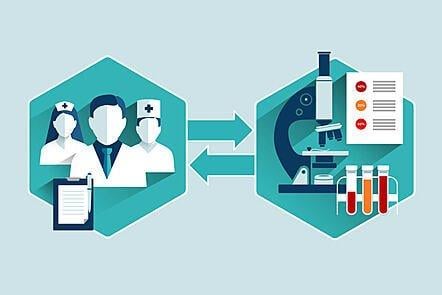
This means translating medical research findings into clinical treatment options, drug development and diagnostic tools, as well as bringing clinical difficulties back to the research bench for further development.
You will examine the steps from benchside (research) to bedside (clinical) - starting with identifying a disease and following on through drug development and preclinical trials.

What topics will you cover?

  • The basic principles of translational medicine
  • How translational medicine has a lot of potential
  • Basic knowledge of medical-related research, from drug-development, animal research, to clinical trial
  • How academic scientific research and clinical scientific research can collaborate together

What will you achieve?
By the end of the course, you'll be able to...

  • Describe the basic principle of translational medicine
  • Explore more topics related to translational medicine, including drug development, animal research, and clinical trials
  • Demonstrate how academic scientific research and clinical scientific research can collaborate together
  • Develop learning interests in the field of translational medicine
Go to Class
MOOC List is learner-supported. When you buy through links on our site, we may earn an affiliate commission.

Related Courses

Introduction to Systematic Review and Meta-Analysis (Coursera) Coursera
Johns Hopkins University

Introduction to Systematic Review and Meta-Analysis (Coursera)

We will introduce methods to perform systematic reviews and meta-analysis of clinical trials. We will cover how to formulate an answerable research question, define inclusion and exclusion criteria, search for the evidence, extract data, assess the risk of bias in clinical trials, and perform a meta-analysis.

Jul 27th 2026
5-12 Weeks
Measuring Pharmacodynamics: From Ligand Binding to Clinical Outcomes (edX) EdX
Davidson College,DavidsonX

Measuring Pharmacodynamics: From Ligand Binding to Clinical Outcomes (edX)

Drugs are biologically active compounds. Drug discovery and drug development rely on methods for measuring biological activity. The term “activity” is quite general. In practice, a substance’s biological activity can refer to how a substance affects a biological pathway, cell-level responses, safety risks, how long a substance resides within in a system, as well as a substance’s effects in an organism (called pharmacodynamics). The design of methods for measuring activity is a critical aspect of drug discovery. The design of robust and informative methods can accelerate the drug discovery and development process.

Self Paced
Self-Paced
Clinical Trials Management and Advanced Operations (Coursera) Coursera
Johns Hopkins University

Clinical Trials Management and Advanced Operations (Coursera)

In this course, you’ll learn about the more advanced elements of managing clinical trials. From anticipating and planning for protocol events to conducting systematic reviews to synthesize evidence, you and your study team need the skills to implement best practices throughout the trial process.

Jul 27th 2026
5-12 Weeks
Digital Tools for Efficient Clinical Trials (FutureLearn) FutureLearn
University of Southampton,National Institute for Health Research - NIHR

Digital Tools for Efficient Clinical Trials (FutureLearn)

Discover how digital tools can be used for the recruitment and retention of participants within clinical trials. Learn how digital tools can be used throughout clinical trials. This four-week clinical trials course is designed to create awareness about the availability and use of digital tools for the recruitment and retention of participants within clinical trials.

Self Paced
4 Weeks
Improving Healthcare Through Clinical Research (FutureLearn) FutureLearn
University of Leeds

Improving Healthcare Through Clinical Research (FutureLearn)

On this free online course, find out how medical treatments are discovered, tested and evaluated to improve healthcare for all. Everything we do in healthcare has to be discovered and thoroughly tested before it can be put into practice. In this course you will explore clinical research – its challenges and its huge benefits to modern healthcare.

Self Paced
4 Weeks
Behavioral Neuroscience: Foundations of Compulsive Behaviors (edX) EdX
University of Alaska Fairbanks,AlaskaX

Behavioral Neuroscience: Foundations of Compulsive Behaviors (edX)

The first MOOC to teach behavioral neuroscience research using laboratory mice. Learn responsible conduct of research and how to collect scientific data using two different tests that measure compulsions, and interpret and discuss the results in the context of obsessive-compulsive disorder in humans.

Self Paced
Self-Paced
Making Data Science Work for Clinical Reporting (Coursera) Coursera
Genentech

Making Data Science Work for Clinical Reporting (Coursera)

This course is aimed to demonstrate how principles and methods from data science can be applied in clinical reporting. By the end of the course, learners will understand what requirements there are in reporting clinical trials, and how they impact on how data science is used. The learner will see how they can work efficiently and effectively while still ensuring that they meet the needed standards.

Aug 10th 2026
4 Weeks
Precision Medicine (Coursera) Coursera
University of Geneva

Precision Medicine (Coursera)

This course will provide you with the key knowledge and tools to understand the fundamentals and practical implications of precision medicine, its opportunities and challenges. It will address precision-medicine era diagnostics, treatment selection, genetic counseling, public health interventions, and biomedical research. It will also deal with data science and ethical issues. From genomic analysis and genetic counseling to cancer biomarkers, from risk assessment of chronic diseases to the understanding of gene-environment interactions, from pharmacogenomics to multi-omics data integration, experts will walk you through the many aspects of precision medicine, from the bench to the bedside and to population health.

Jul 27th 2026
5-12 Weeks
Drug Discovery (Coursera) Coursera
University of California, San Diego

Drug Discovery (Coursera)

The University of California San Diego, Skaggs School of Pharmacy and Pharmaceutical Sciences Drug Discovery course brings you lectures from both faculty and industry experts. With this course, recorded on campus at UCSD, we seek to share our access to top people in the field who bring an unprecedented range of expertise on drug discovery. In this course you will learn the drug discovery process up to the filing of an Initial New Drug Application or IND. Each week you will learn the steps that a pharmaceutical or biotech company goes through to discover a new therapeutic drug.

Aug 10th 2026
3 Weeks
Genomic Medicine and Research: A Community Approach (FutureLearn) FutureLearn
University of Exeter

Genomic Medicine and Research: A Community Approach (FutureLearn)

Learn how translational research in genomics can deliver health, social, and scientific benefits to communities. Explore the benefits of a community approach to genomic medicine and research. On this course, you will explore the skills needed for translational research work and understand the meaning of community genetics. You will also learn the value of whole genome sequencing in the community context and the importance of community-specific medical research to patients.

Available now
3 Weeks
Design and Interpretation of Clinical Trials (Coursera) Coursera
Johns Hopkins University

Design and Interpretation of Clinical Trials (Coursera)

Clinical trials are experiments designed to evaluate new interventions to prevent or treat disease in humans. The interventions evaluated can be drugs, devices (e.g., hearing aid), surgeries, behavioral interventions (e.g., smoking cessation program), community health programs (e.g. cancer screening programs) or health delivery systems (e.g., special care units for hospital admissions). We consider clinical trials experiments because the investigators rather the patients or their doctors select the treatment the patients receive.

Aug 3rd 2026
5-12 Weeks
Medical Technology and Evaluation (Coursera) Coursera
University of Minnesota

Medical Technology and Evaluation (Coursera)

Innovations in medical technologies are one of the leading areas of economic growth in the world. Whether new technologies take the form of pharmaceutical, medical device, biotechnology, information technology of some combination of these innovations, the opportunities for both private enterprise and social welfare are substantial. However, these innovations are not without cost, and require reimbursement from either a privately or publicly financed health care delivery system to enter the marketplace.

Jul 27th 2026
4 Weeks