Drug Discovery (Coursera)

Drug Discovery (Coursera)

The University of California San Diego, Skaggs School of Pharmacy and Pharmaceutical Sciences Drug Discovery course brings you lectures from both faculty and industry experts. With this course, recorded on campus at UCSD, we seek to share our access to top people in the field who bring an unprecedented range of expertise on drug discovery. In this course you will learn the drug discovery process up to the filing of an Initial New Drug Application or IND. Each week you will learn the steps that a pharmaceutical or biotech company goes through to discover a new therapeutic drug.

Class Deals by MOOC List - Click here and see Coursera's Active Discounts, Deals, and Promo Codes.

In this course you will be able to:

  • Understand the pharmaceutical and biotechnology market a changing landscape
  • Learn the major aspects of the drug discovery process, starting with target selection, to compound screening to designing lead candidates.
  • Recognize current modern drug discovery based on the lock-and-key theory, which attempts to use one single compound to hit one target to combat the related disease.
  • Increase understanding of the various drug discovery tools and methods that are used for finding, identifying and designing a new drug.
  • Define and understand the regulatory responsibilities for drug discovery to file an Investigational New Drug Application (IND).

Course 1 of 3 in the Drug Development Product Management Specialization
This course is intended as part 1 of a series: Drug Discovery, Drug Development and Drug Commercialization . We would highly recommend that you take the courses in order since it will give you a better understanding on how a drug is discovered in the lab before being tested in clinical trials and then launched in the market place.

Syllabus

WEEK 1
Welcome!
Pharmaceutical & Biotechnology Industry Landscape
In this module course lead Dr. Williams Ettouati begins by giving a landscape overview of the Pharma and Biotechnology landscape.

WEEK 2
Drug Discovery: Proteomics, Genomics
This week we will be hearing from Phillip Bourne, PhD. Dr. Bourne was, at the time of this recording, the Associate Vice Chancellor for Innovation and Industrial Alliances in the UCSD Skaggs School of Pharmacy and Pharmaceutical Sciences. Since that time, he has been named the first Associate Director for Data Science at the United States National Institutes of Health.
Compound Selection & Preclinical Studies
This week we will hear from Ronald Christopher, Ph.D. Dr. Ronald Christopher, Vice President of Preclinical Trials at Arena Pharmaceuticals.

WEEK 3
Challenges in Fragment Based Drug Discovery for Protein Kinases
In this module we will hear from Stephen Burley, M.D., Ph.D. At the time of this recording, Director of the Center for Integrative Proteomics at Rutgers University. He is now the Director of the Protein Data Bank and remains an Adjunct Professor at the UCSD Skaggs School of Pharmacy and Pharmaceutical Sciences.
Key Concepts in Drug Delivery
This module we hear from Professor of Clinical Pharmacy and Pediatrics, Brookie Best, Pharm. D., of UCSD's Skaggs School of Pharmacy and Pharmaceutical Sciences.

Go to Class
MOOC List is learner-supported. When you buy through links on our site, we may earn an affiliate commission.

Related Courses

Opioid Epidemic: From Evidence to Impact (Coursera) Coursera
Johns Hopkins University

Opioid Epidemic: From Evidence to Impact (Coursera)

While prescription opioids serve an invaluable role for the treatment of cancer pain and pain at the end of life, their overuse for acute and chronic non-cancer pain as well as the increasing availability of heroin and illicit fentanyl, have contributed to the highest rates of overdose and opioid addiction in U.S. history. Evidence-informed solutions are urgently needed to address these issues and to promote high-quality care for those with pain. This course and the report it is based on are a response to that need. They offer timely information and a path forward for all who are committed to addressing injuries and deaths associated with opioids in the United States.

Jun 1st 2026
4 Weeks
Cannabis, Mental Health, and Brain Disorders (Coursera) Coursera
University of Colorado Boulder

Cannabis, Mental Health, and Brain Disorders (Coursera)

This Cannabis, Mental Health, and Brain Disorders course is designed to have you think critically about the health effects of cannabis (i.e., marijuana) in the context of several mental health and neurocognitive disorders. You'll be able to identify key features of several anxiety disorders (e.g., panic disorder, generalized anxiety disorder, social anxiety disorder, PTSD), major depression, schizophrenia, multiple sclerosis, epilepsy, traumatic brain injury, and Alzheimer's and Parkinson's Disease.

Jun 1st 2026
4 Weeks
Value-Based Care: Population Health (Coursera) Coursera
University of Houston

Value-Based Care: Population Health (Coursera)

This course is designed to introduce you to the concept of population health and related key terms. Refine your understanding of population health and what influences health care costs. Gain an overview of population health management, beginning with a high-level review of four critical areas: addressing behavioral and social determinants of health, the prevalence of chronic disease, attributes of an aging population, and key barriers of access to health care. Use the Population Health Pyramid to organize a care delivery system to meet the needs of population groups—all with an eye towards achieving better outcomes through the fundamental premise of value-based care.

Jun 8th 2026
3 Weeks
Medical Technology and Evaluation (Coursera) Coursera
University of Minnesota

Medical Technology and Evaluation (Coursera)

Innovations in medical technologies are one of the leading areas of economic growth in the world. Whether new technologies take the form of pharmaceutical, medical device, biotechnology, information technology of some combination of these innovations, the opportunities for both private enterprise and social welfare are substantial. However, these innovations are not without cost, and require reimbursement from either a privately or publicly financed health care delivery system to enter the marketplace.

Jun 1st 2026
4 Weeks
Healthcare Marketplace (Coursera) Coursera
University of Minnesota

Healthcare Marketplace (Coursera)

In this course in the Healthcare Marketplace specialization you will identify, define, and describe potential business and public policy solutions to the challenges facing society’s growing demand for health services. Students will master a body of knowledge on the health care sectors major components through reading and reflection.

Jun 1st 2026
5-12 Weeks
Planning a Patient Safety or Quality Improvement Project (Patient Safety III) (Coursera) Coursera
Johns Hopkins University

Planning a Patient Safety or Quality Improvement Project (Patient Safety III) (Coursera)

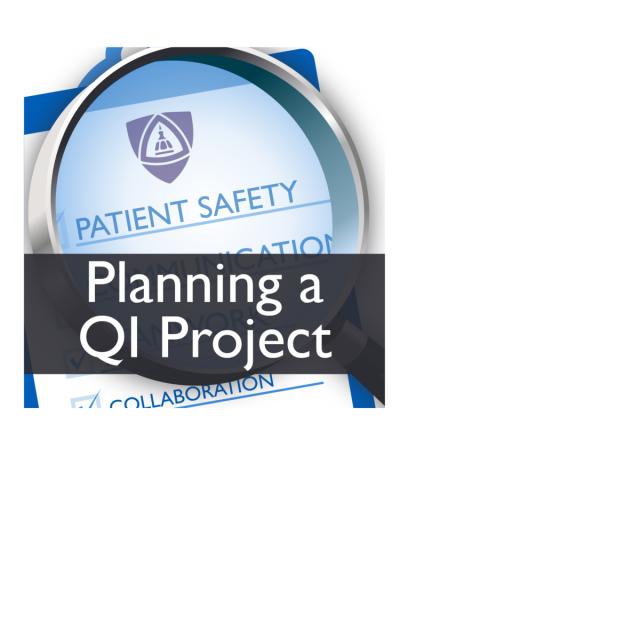
This course provides students with a set of tools and methodologies to plan and initiate a Problem Solving or Quality Improvement project. The first module presents methods for selecting, scoping and structuring a project before it is even initiated. It also introduces the project classifications of implementation and discovery. The second module describes the A3 problem solving methodology and the tool itself. Further in that same module, the student is shown tools to identify problems in flow, defects, and waste and to discover causes, brainstorm, and prioritize interventions. Module 3 shows a methodology within the implementation class. These methods are designed to overcome emotional and organizational barriers to translating evidence-based interventions into practice. The fourth and last module looks at one more way to approach improvement projects in the discovery class. These tools are specifically for new, out-of-the-box design thinking.

Jun 1st 2026
4 Weeks
Pharmacokinetics (Coursera) Coursera
Novartis

Pharmacokinetics (Coursera)

This course begins with a review of routes of administration, ADME (absorption, distribution, metabolism, & excretion), and the use of in vivo drug concentration-time data to determine key pharmacokinetic parameters, like volume of distribution, half-life and clearance.  The course then emphasizes in vitro assays that allow rapid prediction of ADME and PK properties for evaluation of new compounds. 

Jun 1st 2026
3 Weeks
Patient Safety and Quality Improvement: Developing a Systems View (Patient Safety I) (Coursera) Coursera
Johns Hopkins University

Patient Safety and Quality Improvement: Developing a Systems View (Patient Safety I) (Coursera)

In this course, you will be able develop a systems view for patient safety and quality improvement in healthcare. By then end of this course, you will be able to: 1) Describe a minimum of four key events in the history of patient safety and quality improvement, 2) define the key characteristics of high reliability organizations, and 3) explain the benefits of having strategies for both proactive and reactive systems thinking.

Jun 1st 2026
4 Weeks
HI-FIVE: Health Informatics For Innovation, Value & Enrichment (Administrative/IT Perspective) (Coursera) Coursera
Columbia University

HI-FIVE: Health Informatics For Innovation, Value & Enrichment (Administrative/IT Perspective) (Coursera)

HI-FIVE (Health Informatics For Innovation, Value & Enrichment) Training is an approximately 10-hour online course designed by Columbia University in 2016, with sponsorship from the Office of the National Coordinator for Health Information Technology (ONC). The training is role-based and uses case scenarios. No additional hardware or software are required for this course. Our nation’s healthcare system is changing at a rapid pace.

Jun 8th 2026
4 Weeks
Ethical Issues in Computing Applications (Coursera) Coursera
University of Colorado Boulder

Ethical Issues in Computing Applications (Coursera)

Computing systems and technologies fundamentally impact the lives of most people in the world, including how we communicate, get information, socialize, and receive healthcare. This course is the third of a three course sequence that examines ethical issues in the design and implementation of computing systems and technologies, and reflects upon the broad implication of computing on our society. It covers medical applications, uses of robotics, autonomous vehicles, and the future of work.

Jun 1st 2026
5-12 Weeks
Pre-formulation (Coursera) Coursera
Novartis

Pre-formulation (Coursera)

In this course we will focus on how active compounds are developed into a formulation suitable for dosing in animal studies and early human clinical trials.  Factors such as the route of administration, enhancing the solubility of the drug substance, the crystalline form of the drug substance, drug substance vs. drug product, storage requirements, and how special requirements of the patient population play a role in the design of an ideal formulation will be covered. 

Jun 1st 2026
3 Weeks