Translating Basic Research into Research for Humans (Coursera)

Translating Basic Research into Research for Humans (Coursera)

The first phase of translational research — known as “T1” — is the process of moving foundational scientific discoveries into possible approaches for real-world health applications. This course focuses on innovations in basic science discovery, including drug discovery and repurposing and animal studies, that lead to new methods of diagnosis, treatment, and prevention in highly controlled settings.

Class Deals by MOOC List - Click here and see Coursera's Active Discounts, Deals, and Promo Codes.

You’ll also discuss the role of the federal government to support and regulate translational research as it moves from basic science to human interventions.
This is the second course of five in the “Translational Science” series.
Course 2 of 5 in the Translational Science Specialization.

Syllabus

WEEK 1
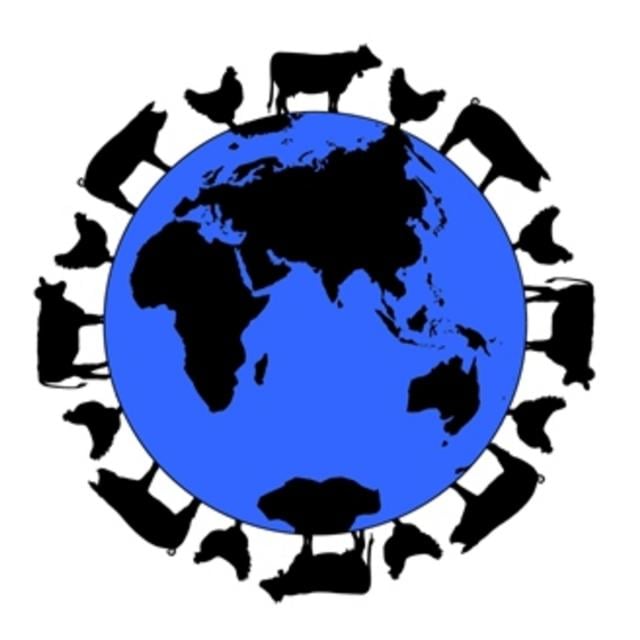
Welcome to Week 1 of Translating Basic Research into Research for Humans. This week you will learn how to 1) identify key differences between basic science research and clinical research, and 2) describe the role of animals in the research process.

WEEK 2
Welcome to Week 2 of Translating Basic Research into Research for Humans. This week you will learn how to 1) describe potential career paths for basic science researchers, 2) identify team roles for research conducted in the T1 stage of translational science, and 3) describe the types of career development awards available for translational research education.

WEEK 3
Welcome to Week 3 of Translating Basic Research into Research for Humans. This week you will learn how to 1) explain the process of translating the outcomes of basic science research into improvements in human health, and 2) explain how T1 research is associated with T2 and T3/T4 research.

Go to Class
MOOC List is learner-supported. When you buy through links on our site, we may earn an affiliate commission.

Related Courses

Classical papers in molecular genetics (Coursera) Coursera
University of Geneva

Classical papers in molecular genetics (Coursera)

You have all heard about the DNA double helix and genes. Many of you know that mutations occur randomly, that the DNA sequence is read by successive groups of three bases (the codons), that many genes encode enzymes, and that gene expression can be regulated. These concepts were proposed on the basis of astute genetic experiments, as well as often on biochemical results. The original articles were these concepts appeared are however not frequently part of the normal curriculum of biologists, biochemists and medical students.

Jun 1st 2026
5-12 Weeks
Dino 101: Dinosaur Paleobiology (Coursera) Coursera
University of Alberta

Dino 101: Dinosaur Paleobiology (Coursera)

Dino 101: Dinosaur Paleobiology is a 12-lesson course teaching a comprehensive overview of non-avian dinosaurs. Topics covered: anatomy, eating, locomotion, growth, environmental and behavioral adaptations, origins and extinction. Lessons are delivered from museums, fossil-preparation labs and dig sites. Estimated workload: 3-5 hrs/week.

May 30th 2026
5-12 Weeks
Evaluation of Digital Health Interventions (Coursera) Coursera
Imperial College London

Evaluation of Digital Health Interventions (Coursera)

This course focuses on data, evaluation methods and the economic evaluation of digital health interventions. This module focuses on key data considerations for digital health including data management, data visualisation and methods for evaluating digital health interventions. The key focus is on experimental and quasi-experimental design approaches that can be applied to evaluating digital health interventions and key considerations for the economic evaluation of digital health interventions.

Jun 8th 2026
4 Weeks
Big Data Science with the BD2K-LINCS Data Coordination and Integration Center (Coursera) Coursera
Icahn School of Medicine at Mount Sinai

Big Data Science with the BD2K-LINCS Data Coordination and Integration Center (Coursera)

In this course we briefly introduce the DCIC and the various Centers that collect data for LINCS. We then cover metadata and how metadata is linked to ontologies. We then present data processing and normalization methods to clean and harmonize LINCS data. This follow discussions about how data is served as RESTful APIs. Most importantly, the course covers computational methods including: data clustering, gene-set enrichment analysis, interactive data visualization, and supervised learning. Finally, we introduce crowdsourcing/citizen-science projects where students can work together in teams to extract expression signatures from public databases and then query such collections of signatures against LINCS data for predicting small molecules as potential therapeutics.

Jun 1st 2026
5-12 Weeks
Targets, Assays & Screening (Coursera) Coursera
Novartis

Targets, Assays & Screening (Coursera)

This course focuses on the early stages of drug discovery and the identification of promising compounds with which to begin the hunt for a novel drug.  Different types of assays and methods are reviewed that are used to screen libraries of molecules in the preliminary search for compounds with activity.  Methods are discussed for validating that active molecules are indeed engaging a target associated with a predicted therapeutic benefit.

Jun 15th 2026
3 Weeks
Chemicals and Health (Coursera) Coursera
Johns Hopkins University

Chemicals and Health (Coursera)

This course covers chemicals in our environment and in our bodies and how they impact our health. It addresses policies and practices related to chemicals, particularly related to how they get into our bodies (exposures), what they do when they get there (toxicology), how we measure them (biomonitoring) and their impact on our health. Most examples are drawn from the US.

May 25th 2026
5-12 Weeks
Biology Everywhere Foundations (Coursera) Coursera
University of Colorado Boulder

Biology Everywhere Foundations (Coursera)

In this course, we will explore the nature of science and biology. We will discuss what the “biology everywhere” philosophy means and the history of the “biology everywhere” project. We will also discuss what science (and biology) are as a discipline of inquiry and how chemistry is foundational to understanding biology.

Jun 15th 2026
4 Weeks
Data Management for Clinical Research (Coursera) Coursera
Vanderbilt University

Data Management for Clinical Research (Coursera)

This course presents critical concepts and practical methods to support planning, collection, storage, and dissemination of data in clinical research. Understanding and implementing solid data management principles is critical for any scientific domain. Regardless of your current (or anticipated) role in the research enterprise, a strong working knowledge and skill set in data management principles and practice will increase your productivity and improve your science. Our goal is to use these modules to help you learn and practice this skill set.

May 25th 2026
5-12 Weeks