Peterloo to the Pankhursts: Radicalism and Reform in the 19th Century (FutureLearn)

Peterloo to the Pankhursts: Radicalism and Reform in the 19th Century (FutureLearn)

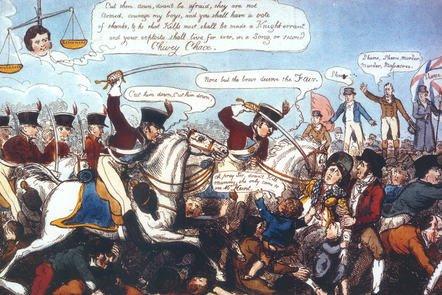
Discover the history of protest, parliament and citizens’ rights. Improve your understanding of important milestones in political history. 16th August 2019 marks the bicentenary of the Peterloo Massacre, a key milestone in the campaign to reform Parliament in the 19th century, and an important part of Britain’s democratic heritage and history. On this course, you will understand this event within a wider context of radicalism and reform over the 19th century.

Class Deals by MOOC List - Click here and see FutureLearn's Active Discounts, Deals, and Promo Codes.

You will first explore the birth of modern democratic ideas and responses to the American and French revolutions in the 18th century. You will end the course by examining the campaign for universal men’s and women’s suffrage in the early years of the 20th century.

What topics will you cover?
Each week will have a thematic focus:

  1. Revolutions. Week one explores how revolutions in political thought; in agriculture and industry; and America and France led to increasing calls for the reform of Parliament, culminating in the Peterloo Massacre of 1819.
  2. Reform. Week two examines key moments, movements and figures associated with reform in the first half of the nineteenth century, including Catholic Emancipation; the Great Reform Act and Chartism; the abolition of slavery; the Poor Law Amendment Act and the Repeal of the Corn Laws.
  3. Workers: Week three charts the emergence of trade unionism, British responses to and variations of socialism and the establishment and early electoral fortunes of the Labour Party.
  4. Voters: The course concludes with an exploration of when, how and why the vote was extended by Reform Acts in the second half of the nineteenth century, examining the role of both popular campaigns and political calculation. This week culminates with the emergence of mass politics and calls for universal male and (limited) women’s suffrage at the turn of the century.

What will you achieve?
By the end of the course, you'll be able to...

  • Improve your understanding of key milestones in the extension of citizens rights and representation in the nineteenth century.
  • Explore the origins and path of the course of Parliamentary reform from the impact of the American and French Revolutions to the First World War.
  • Reflect upon and debate the role of popular protest in effecting political change.
  • Improve your understanding of the development of workers' rights and the emergence of modern trade unionism and the Labour Party.
  • Compare the responses of the Liberal and Conservative parties to calls for universal suffrage and the emergence of mass politics.
Go to Class
MOOC List is learner-supported. When you buy through links on our site, we may earn an affiliate commission.

Related Courses

The Tudors (FutureLearn) FutureLearn
University of Roehampton

The Tudors (FutureLearn)

Go back in time to learn about the dramatic rule of the Tudor monarchs and religious change of the sixteenth century reformation. Uncover the turbulent history of Tudor England and its lasting impact. From magnificence and martyrs to weddings and war, the Tudor period was one of the most eventful in British history. The reigns of the five (or was it six?) monarchs during the late fifteenth to seventeenth century has enthralled historians, students and television and film producers alike.

Self Paced
5-12 Weeks
Learning from the Past: A Guide for the Curious Researcher (FutureLearn) FutureLearn
University of Birmingham,The University of Nottingham,British Library

Learning from the Past: A Guide for the Curious Researcher (FutureLearn)

Learn how to understand the past to explain the present, and get to know the amazing sources and resources of the British Library. Discover sources that help you understand the past, and explain the present! The language of history determines how we view our world and understand urgent issues, such as the environment, conflict and human rights.

Available now
3 Weeks
The Modern and the Postmodern (Part 2) (Coursera) Coursera
Wesleyan University

The Modern and the Postmodern (Part 2) (Coursera)

This course examines how the idea of "the modern" develops at the end of the 18th century in European philosophy and literature, and how being modern (or progressive, or hip) became one of the crucial criteria for understanding and evaluating cultural change. Are we still in modernity, or have we moved beyond the modern to the postmodern?

Oct 5th 2026
5-12 Weeks
The Emergence of the Modern Middle East - Part II (Coursera) Coursera
Tel Aviv University

The Emergence of the Modern Middle East - Part II (Coursera)

This course will discuss the developments in the Middle East from the early 20th century to the present. It will discuss the rise and retreat of Arab nationalism, the problems of internal cohesion of the Arab states, issues of religion and state, and the evolution of Islamist politics. It will also focus on the evolution of the Arab-Israeli conflict and its impact on the region and will conclude with an in depth analysis of the “Arab Spring” by placing these contemporary revolutionary events in their historical context.

Oct 5th 2026
5-12 Weeks
A Question of Time: How We Date Human Evolution (FutureLearn) FutureLearn
Griffith University

A Question of Time: How We Date Human Evolution (FutureLearn)

Discover the role that dating human fossils plays in the reconstruction of human evolution: explore examples from around the world. Uncover the history of our ancestors by dating human fossils. Trace your origins and develop your understanding of human evolution, with this course from the world-leading experts at Griffith University.

No sessions available
2 Weeks
Teaching the Holocaust: Innovative Approaches to the Challenges We Face (FutureLearn) FutureLearn
University College London,Yad Vashem

Teaching the Holocaust: Innovative Approaches to the Challenges We Face (FutureLearn)

Explore history, delve into pedagogical challenges revealed by research, and find practical solutions for teaching the Holocaust. The Holocaust was the murder of approximately 6 million Jews perpetrated by Nazi Germany and its collaborators. That this atrocity proved possible raises many complex questions which remain relevant for young people today.

Self Paced
3 Weeks
World War 1: Paris 1919 - A New World Order? (FutureLearn) FutureLearn
University of Glasgow

World War 1: Paris 1919 - A New World Order? (FutureLearn)

This course reassesses the legacy of the Paris Peace Conference (1919) and how it sought to create a new world order. The Paris Peace Conference of 1919 ended a Great War, but it also designed the post-war future. In 1919, world leaders assembled in Paris redrew the map of the world, partitioned and created countries, and ushered in a new era of international relations. The naivety of the peace-makers of 1919 has been justly criticised. However, in setting up a permanent ‘world organisation’, the League of Nations, they changed the management of world affairs forever…

No sessions available
3 Weeks
Enlightening the Dark Ages: Early Medieval Archaeology in Italy (FutureLearn) FutureLearn
University of Padova

Enlightening the Dark Ages: Early Medieval Archaeology in Italy (FutureLearn)

Learn what innovative methods and tools applied to the material culture of the past can tell us about the Early Middle Ages. Discovering the cultural heritage of Medieval Europe through archaeology On this archaeology course, you will explore what we can learn about the past through material culture. It focuses on the history of Medieval Europe, from the end of the Roman Empire in the West.

Self Paced
4 Weeks
Discover the Hidden History of York (FutureLearn) FutureLearn
University of York

Discover the Hidden History of York (FutureLearn)

Investigate York’s cultural and social history and the pivotal events and people that helped define a nation. Uncover fascinating facts about the city of York, from medieval times to today. York is a city bursting with engaging and unusual episodes from its rich and diverse history. On this three-week course, you’ll delve into the city’s past and learn about some of the most interesting events and people to have contributed to York’s story.

Self Paced
3 Weeks
Poetry and the Holocaust (FutureLearn) FutureLearn
Yad Vashem

Poetry and the Holocaust (FutureLearn)

Explore personal accounts of the Holocaust through poetry and discover how poems can help you understand events of the past. Study Holocaust poetry to better comprehend this dark period in history. On this course, you’ll understand the events of the Holocaust and World War II through poetry which underlines the individual experience.

Available Now
3 Weeks
Accounting for Death in War: Separating Fact from Fiction (FutureLearn) FutureLearn
Royal Holloway, University of London,Every Casualty Counts

Accounting for Death in War: Separating Fact from Fiction (FutureLearn)

Discover the main methods used to account for war deaths, how they've been used and practice using them yourself. Calculating the number of deaths during a war is a difficult, but necessary, task - having accurate information is crucial for political and societal debates and decisions. On this course you will explore the methods currently used to account for war deaths and then apply these methods to particular wars.

Self Paced
3 Weeks