Preserving Norwegian Stave Churches (FutureLearn)

Preserving Norwegian Stave Churches (FutureLearn)

Stave churches are an important part of Norway's heritage. Discover how Norwegian Stave Churches have been restored and preserved. What are the challenges of preserving Stave Churches? Find out on this course.

Class Deals by MOOC List - Click here and see FutureLearn's Active Discounts, Deals, and Promo Codes.

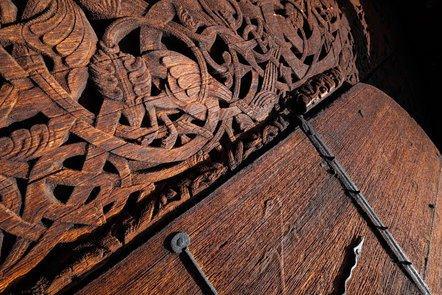
Stave Churches in Norway are admired worldwide for their rich history and intricate architecture. Some have been standing for almost 1,000 years and one, the Urnes Stave Church, is a UNESCO World Heritage Site.
On this course, you will explore what makes Norwegian Stave Churches unique and how they have been preserved.
You will learn the definition of Stave Churches and what makes them different from each other. With real-life examples, you will explore the traditional craftmanship and tools used to restore Stave Churches in Norway, as well as understand the challenges in preserving them.

What topics will you cover?

  • The definition of a Stave Church
  • Different types of Stave Churches
  • Challenges in preserving Stave Churches
  • Examples of restoring Stave Churches

What will you achieve?
By the end of the course, you'll be able to...

  • Identify the characteristics of a Stave Church
  • Explain the remaining groups of Stave Churches in Norway
  • Reflect upon the challenges in preserving the Norwegian Stave Churches
  • Explore a national cultural heritage initiative exemplified by the Norwegian Stave Church Restoration Programme
Go to Class
MOOC List is learner-supported. When you buy through links on our site, we may earn an affiliate commission.

Related Courses

Empire: The Controversies of British Imperialism (FutureLearn) FutureLearn
University of Exeter

Empire: The Controversies of British Imperialism (FutureLearn)

The British Empire continues to cause enormous disagreement among historians. Find out why and join the debate. Explore the British Empire through six controversial themes. Over six weeks, we’ll explore the British Empire through six themes - money, violence, race, religion, gender and sex, and propaganda. You’ll get to hear the stories of the fascinating individuals who contributed to both its rise and fall.

Available Now
5-12 Weeks
World War 1: Aviation Comes of Age (FutureLearn) FutureLearn
University of Birmingham

World War 1: Aviation Comes of Age (FutureLearn)

Investigate how the white heat of innovation in World War 1 shaped the history of human flight. Investigate how the early days of aviation gripped the imagination of the general public, galvanised industry and excited far-sighted members of the military, with this free online course from the University of Birmingham’s Centre for War Studies.

No sessions available
3 Weeks
Norwegian for Beginners 1 (FutureLearn) FutureLearn
Norwegian University of Science and Technology

Norwegian for Beginners 1 (FutureLearn)

Master the basics of the Norwegian language. Gain confidence in speaking and understanding common phrases. Learn how to have a basic conversation in Norwegian. For anyone moving to Norway to live or work, learning the Norwegian language is key to integrating into Norwegian life. On this course, you’ll learn the basics of Norwegian. You’ll start by finding out how to introduce yourself and others. You’ll learn how to say where you live and describe where you are from.

Available now
4 Weeks
World War 1: Trauma, Memory, Controversy (FutureLearn) FutureLearn
The Open University

World War 1: Trauma, Memory, Controversy (FutureLearn)

Explore the traumatic effects of WW1 on soldiers and civilians. Discover how we remember and debate the history of this war. In this free online course, you will study the social, cultural, medical and diplomatic history of the First World War. Topics range from physical and mental trauma suffered by combatants to the traumatic experiences of civilians in wartime.

Self Paced
4 Weeks
Accounting for Death in War: Separating Fact from Fiction (FutureLearn) FutureLearn
Royal Holloway, University of London,Every Casualty Counts

Accounting for Death in War: Separating Fact from Fiction (FutureLearn)

Discover the main methods used to account for war deaths, how they've been used and practice using them yourself. Calculating the number of deaths during a war is a difficult, but necessary, task - having accurate information is crucial for political and societal debates and decisions. On this course you will explore the methods currently used to account for war deaths and then apply these methods to particular wars.

Self Paced
3 Weeks
The Scottish Highland Clans: Origins, Decline and Transformation (FutureLearn) FutureLearn
University of Glasgow

The Scottish Highland Clans: Origins, Decline and Transformation (FutureLearn)

Explore fascinating Scottish history by learning about the Highland clans and how clanship has changed across hundreds of years. Discover the important history of the Highland clans. The Highland, Gaelic speaking clans are a vital part of Scotland’s history. They also shape how the world imagines Scotland today.

Self Paced
3 Weeks
New Zealand History, Culture and Conflict: A Museum Perspective (FutureLearn) FutureLearn
Museum of New Zealand Te Papa Tongarewa

New Zealand History, Culture and Conflict: A Museum Perspective (FutureLearn)

Discover the social history of Aotearoa New Zealand, learning how the country’s bicultural national consciousness was formed. Identify the factors that have contributed to New Zealand’s cultural identity. New Zealand’s social history is built on a foundation of exploration and colonial conflict. On this three-week course, you’ll access artefacts, treasures, and exhibitions within Te Papa Tongarewa’s collections to discover how New Zealand culture has evolved over time, identifying key historical moments that have impacted the formation of a national identity.

Self Paced
3 Weeks
Teaching the Holocaust: Innovative Approaches to the Challenges We Face (FutureLearn) FutureLearn
University College London,Yad Vashem

Teaching the Holocaust: Innovative Approaches to the Challenges We Face (FutureLearn)

Explore history, delve into pedagogical challenges revealed by research, and find practical solutions for teaching the Holocaust. The Holocaust was the murder of approximately 6 million Jews perpetrated by Nazi Germany and its collaborators. That this atrocity proved possible raises many complex questions which remain relevant for young people today.

Self Paced
3 Weeks
World War 1: Changing Faces of Heroism (FutureLearn) FutureLearn
University of Leeds

World War 1: Changing Faces of Heroism (FutureLearn)

Learn how the war moved us away from traditional views of heroism and created new kinds of heroes and heroines. Did the First World War make heroism meaningless or was it the conflict that gave it the most meaning? We’ve designed this course in partnership with the BBC to help you explore, discuss and challenge the ways in which First World War heroism has been remembered. Our experts will take you through the changing British, French and German views of heroism and discuss important similarities and differences.

No sessions available
3 Weeks