Accounting for Death in War: Separating Fact from Fiction (FutureLearn)

Accounting for Death in War: Separating Fact from Fiction (FutureLearn)

Discover the main methods used to account for war deaths, how they've been used and practice using them yourself. Calculating the number of deaths during a war is a difficult, but necessary, task - having accurate information is crucial for political and societal debates and decisions. On this course you will explore the methods currently used to account for war deaths and then apply these methods to particular wars.

Class Deals by MOOC List - Click here and see FutureLearn's Active Discounts, Deals, and Promo Codes.

Along the way you will debunk some widely circulated war-death claims. You will focus mainly on direct, violent deaths but will also cover some estimates of non-violent deaths caused indirectly by war.
What topics will you cover?

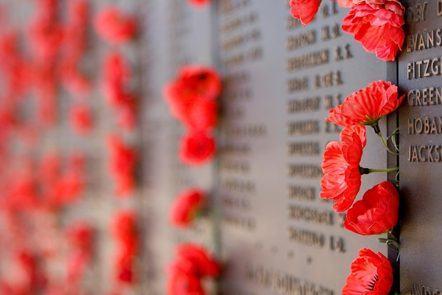
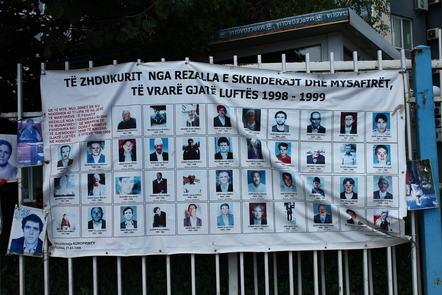
  • Memorializing people who people who have died in wars, both combatants and civilians
  • The idea of casualty recording; listing war dead name-by-name or event-by-event with details about each case
  • Using statistical methods to estimate the total number of war deaths and breakdowns by categories
  • Estimating the number of non-violent deaths caused indirectly by war
  • Applications to air strikes and explosive violence worldwide and to wars in Kosovo, Iraq, the Democratic Republic of Congo and beyond

What will you achieve?
By the end of the course, you'll be able to...

  • Explain the main methods used to account for war deaths
  • Describe the state of war-death knowledge for several modern wars, including some that have been misrepresented by faulty statistics
  • Evaluate the quality of war-death numbers and debate their strengths and weaknesses
  • Calculate war-death estimates from some basic pieces of information
Go to Class
MOOC List is learner-supported. When you buy through links on our site, we may earn an affiliate commission.
Related Courses

Lancaster Castle and Northern English History: The View from the Stronghold (FutureLearn) FutureLearn
Lancaster University

Lancaster Castle and Northern English History: The View from the Stronghold (FutureLearn)

We will use the iconic building of Lancaster Castle to investigate how 2000 years of history has shaped the north-west of England. This course takes an innovative approach to exploring history, focusing on Lancaster Castle as a microcosm of broader trends. This fascinating location provides a wealth of evidence from the remains of Roman forts to its life as a prison and visitor attraction.

Oct 18th 2021
5-12 Weeks
Terrorism and Counterterrorism: Comparing Theory and Practice (FutureLearn) FutureLearn
Leiden University

Terrorism and Counterterrorism: Comparing Theory and Practice (FutureLearn)

Delve into the research behind terrorism as you unpack the assumptions and impacts of both terrorism and counterterrorism. Explore terrorism and counterterrorism studies. Terrorism has arguably been one of the defining factors of our age. It frequently makes headlines, threatening or attacking governments, private businesses, and ordinary citizens. In many parts of the world, it has been one of the most important threats to peace, security, and stability – but what does this mean exactly? On this six-week course from Leiden University, you’ll explore the essence of terrorism and discover why it is so difficult to define.

Apr 25th 2022
5-12 Weeks
Hadrian's Wall: Life on the Roman Frontier (FutureLearn) FutureLearn
Newcastle University

Hadrian's Wall: Life on the Roman Frontier (FutureLearn)

Explore the archaeology of the most heavily fortified frontier in the Roman Empire, its people and their lives. Hadrian’s Wall stretches over 73 miles (117 km), from coast to coast in what is now Northern England. The Wall, complemented by a sophisticated system of outposts and coastal watch stations, offers a remarkable glimpse of ancient society. In addition to housing one of the largest concentrations of Roman soldiers anywhere in the Empire’s provinces, Hadrian’s frontier system was home to an incredibly cosmopolitan array of civilians. This six week course offers a comprehensive introduction to Hadrian’s Wall and its people and raises fascinating issues concerning colonisation, cultural transformation, immigration, integration and imperialism.

No sessions available
5-12 Weeks
How We Remember War and Violence: Theory and Practice (FutureLearn) FutureLearn
University of Bath

How We Remember War and Violence: Theory and Practice (FutureLearn)

Compare three models of remembering, exploring how the new model of ‘agonistic memory’ can help us better understand conflict. Consider how we recall war and violence and discover a different way to remember. Our memories of conflict are often used against us. Nationalist movements manipulate the story - offering confrontational, harmful perspectives. But there’s a different way.

No sessions available
4 Weeks
Discover the Hidden History of York (FutureLearn) FutureLearn
University of York

Discover the Hidden History of York (FutureLearn)

Investigate York’s cultural and social history and the pivotal events and people that helped define a nation. Uncover fascinating facts about the city of York, from medieval times to today. York is a city bursting with engaging and unusual episodes from its rich and diverse history. On this three-week course, you’ll delve into the city’s past and learn about some of the most interesting events and people to have contributed to York’s story.

Jul 7th 2022
3 Weeks
Military Ethics: An Introduction (FutureLearn) FutureLearn
UNSW Sydney - University of New South Wales

Military Ethics: An Introduction (FutureLearn)

We explore the ethical responsibilities that weigh on military professionals, who are ‘managers of violence’. Military professionals are unusual in having the use of lethal force as a central, defining feature of their role, and unique in the level of force that they are authorized to use. This fact places a considerable ethical weight on military practitioners as well as the civilian decision-makers who authorize military missions.

No sessions available
5-12 Weeks
Environmental Challenges: Scarcity and Conflict in the Natural Environment (FutureLearn) FutureLearn
University of Leeds

Environmental Challenges: Scarcity and Conflict in the Natural Environment (FutureLearn)

War and conflict can severely disrupt the governance of the environment. What is the impact on both people and the environment? This course explores three aspects of conflict and resource scarcity, and applies these to explore decision making and negotiation skills. Human conflict has both short and long term effects on the natural world.

Nov 25th 2024
2 Weeks