Confronting Captain Cook: Memorialisation in museums and public spaces (FutureLearn)

Confronting Captain Cook: Memorialisation in museums and public spaces (FutureLearn)

Explore the importance and far-reaching effects of the voyages of Captain Cook, and delve into the modern controversy around him. Learn about the complex and controversial legacy of Captain James Cook.

Class Deals by MOOC List - Click here and see FutureLearn's Active Discounts, Deals, and Promo Codes.

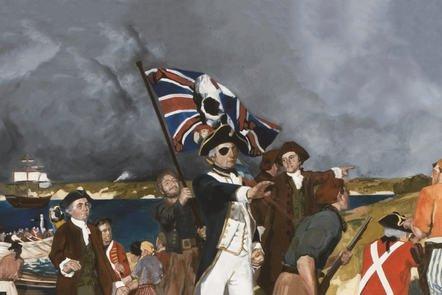
2018 marked the 250th anniversary of the departure of the Endeavour for Tahiti under the command of Captain James Cook. But, as the defacing of his statues in Australia suggests, not everyone sees the explorer’s legacy in a positive light.
In this course you’ll learn about the scientific ambition and historical context of the journeys undertaken by Cook, uncovering the complex relationships between Europeans and Pacific Islanders. You’ll also consider the impact of these voyages on our modern world and how various communities and societies relate differently to this legacy.

What topics will you cover?

  • Week 1 - Introduction to the voyages and the problematic legacies of Captain James Cook and how these are viewed in the Pacific and beyond.
  • Week 2 - How do we use critical and historical enquiry skills to examine and question the historical record of Captain Cook and the impacts of these voyages?
  • Week 3 - How Cook’s death lead to a turning point in Britain’s policy and an examination of colonialisation in the Pacific and Australia.
  • Week 4 - The complexities around memorialisation in the 21st century through the legacy of Captain James Cook.
  • Week 5 - The broader discussions around memorialisation in public spaces.

What will you achieve?
By the end of the course, you'll be able to...

  • Assess the complex history of exploration in the enlightenment era by exploring the historical record
  • Apply skills of critical and historical enquiry to compare different primary sources
  • Identify outcomes of the voyages of James Cook with particular reference to the process of colonisation in the Pacific
  • Engage with, and reflect on, ideas about memorialisation and the display of objects in our museums and public spaces
  • Debate and discuss the key theme of memoralisation in public spaces through the lens of James Cook
Go to Class
MOOC List is learner-supported. When you buy through links on our site, we may earn an affiliate commission.

Related Courses

Discover the Hidden History of York (FutureLearn) FutureLearn
University of York

Discover the Hidden History of York (FutureLearn)

Investigate York’s cultural and social history and the pivotal events and people that helped define a nation. Uncover fascinating facts about the city of York, from medieval times to today. York is a city bursting with engaging and unusual episodes from its rich and diverse history. On this three-week course, you’ll delve into the city’s past and learn about some of the most interesting events and people to have contributed to York’s story.

Self Paced
3 Weeks
Global Geordies: The North East of England and the World (FutureLearn) FutureLearn
Northumbria University Institute of the Humanities

Global Geordies: The North East of England and the World (FutureLearn)

Get an introduction to the hidden history, culture and people of the North East of England. Where was the light bulb invented? What about the first steam locomotive, or hydroelectricity? They were all invented in the North East of England. This course introduces you to the historical, technological and cultural connections between the people and places of the North East and the wider world.

No sessions available
5-12 Weeks
The Holocaust: The Destruction of European Jewry (Coursera) Coursera
University of California, Santa Cruz

The Holocaust: The Destruction of European Jewry (Coursera)

The Holocaust: The Destruction of European Jewry is an adaptation of an on-campus course that has been co-taught by Murray Baumgarten, Distinguished Professor of English and Comparative Literature (Literature Department), and Peter Kenez, Professor Emeritus (History Department), for over 20 years at UC Santa Cruz. In this course, you will explore the Holocaust from the overlapping perspectives of literature and history—through memoirs, historical documents, poetry, documentary footage, filmic representations, and novels.

Sep 21st 2026
5-12 Weeks
World War 1: Paris 1919 - A New World Order? (FutureLearn) FutureLearn
University of Glasgow

World War 1: Paris 1919 - A New World Order? (FutureLearn)

This course reassesses the legacy of the Paris Peace Conference (1919) and how it sought to create a new world order. The Paris Peace Conference of 1919 ended a Great War, but it also designed the post-war future. In 1919, world leaders assembled in Paris redrew the map of the world, partitioned and created countries, and ushered in a new era of international relations. The naivety of the peace-makers of 1919 has been justly criticised. However, in setting up a permanent ‘world organisation’, the League of Nations, they changed the management of world affairs forever…

No sessions available
3 Weeks
Terrorism and Counterterrorism: Comparing Theory and Practice (FutureLearn) FutureLearn
Leiden University

Terrorism and Counterterrorism: Comparing Theory and Practice (FutureLearn)

Delve into the research behind terrorism as you unpack the assumptions and impacts of both terrorism and counterterrorism. Explore terrorism and counterterrorism studies. Terrorism has arguably been one of the defining factors of our age. It frequently makes headlines, threatening or attacking governments, private businesses, and ordinary citizens. In many parts of the world, it has been one of the most important threats to peace, security, and stability – but what does this mean exactly? On this six-week course from Leiden University, you’ll explore the essence of terrorism and discover why it is so difficult to define.

Apr 25th 2022
5-12 Weeks
How We Remember War and Violence: Theory and Practice (FutureLearn) FutureLearn
University of Bath

How We Remember War and Violence: Theory and Practice (FutureLearn)

Compare three models of remembering, exploring how the new model of ‘agonistic memory’ can help us better understand conflict. Consider how we recall war and violence and discover a different way to remember. Our memories of conflict are often used against us. Nationalist movements manipulate the story - offering confrontational, harmful perspectives. But there’s a different way.

No sessions available
4 Weeks
Accounting for Death in War: Separating Fact from Fiction (FutureLearn) FutureLearn
Royal Holloway, University of London,Every Casualty Counts

Accounting for Death in War: Separating Fact from Fiction (FutureLearn)

Discover the main methods used to account for war deaths, how they've been used and practice using them yourself. Calculating the number of deaths during a war is a difficult, but necessary, task - having accurate information is crucial for political and societal debates and decisions. On this course you will explore the methods currently used to account for war deaths and then apply these methods to particular wars.

Self Paced
3 Weeks
Poetry and the Holocaust (FutureLearn) FutureLearn
Yad Vashem

Poetry and the Holocaust (FutureLearn)

Explore personal accounts of the Holocaust through poetry and discover how poems can help you understand events of the past. Study Holocaust poetry to better comprehend this dark period in history. On this course, you’ll understand the events of the Holocaust and World War II through poetry which underlines the individual experience.

Available Now
3 Weeks
Dead Interesting: Uncovering Roman Britain in Old Museum Collections (FutureLearn) FutureLearn
University of Reading,Colchester Musuems

Dead Interesting: Uncovering Roman Britain in Old Museum Collections (FutureLearn)

Explore the archaeology of early Roman Britain an d learn techniques to build a profile of an individual from the first century AD. Uncover the history of early Roman Britain. What did a Roman funeral look, sound, and smell like? And how can you tell just from a person’s remains? Join a research team uncovering exciting new information about cremation burials excavated over 100 years ago in Colchester, the site of Camulodunum, one of Britain’s oldest towns and its first Roman capital city.

Self Paced
2 Weeks
The Tudors (FutureLearn) FutureLearn
University of Roehampton

The Tudors (FutureLearn)

Go back in time to learn about the dramatic rule of the Tudor monarchs and religious change of the sixteenth century reformation. Uncover the turbulent history of Tudor England and its lasting impact. From magnificence and martyrs to weddings and war, the Tudor period was one of the most eventful in British history. The reigns of the five (or was it six?) monarchs during the late fifteenth to seventeenth century has enthralled historians, students and television and film producers alike.

Self Paced
5-12 Weeks
Enlightening the Dark Ages: Early Medieval Archaeology in Italy (FutureLearn) FutureLearn
University of Padova

Enlightening the Dark Ages: Early Medieval Archaeology in Italy (FutureLearn)

Learn what innovative methods and tools applied to the material culture of the past can tell us about the Early Middle Ages. Discovering the cultural heritage of Medieval Europe through archaeology On this archaeology course, you will explore what we can learn about the past through material culture. It focuses on the history of Medieval Europe, from the end of the Roman Empire in the West.

Self Paced
4 Weeks