The Scottish Highland Clans: Origins, Decline and Transformation (FutureLearn)

Offered by University of Glasgow,
The Scottish Highland Clans: Origins, Decline and Transformation (FutureLearn)

Explore fascinating Scottish history by learning about the Highland clans and how clanship has changed across hundreds of years. Discover the important history of the Highland clans. The Highland, Gaelic speaking clans are a vital part of Scotland’s history. They also shape how the world imagines Scotland today.

Class Deals by MOOC List - Click here and see FutureLearn's Active Discounts, Deals, and Promo Codes.

This course uses the expertise of University of Glasgow academics to explain the structure, economy and culture of the clans. It covers the centuries between the fall of the MacDonald Lords of the Isles in 1493 until around 1800, when the clans dissolved away as a result of social economic change. It then discusses how the legacies of clanship shaped global images of Scotland up until the present.

What topics will you cover?

  • Week 1:Defining the Clans: Meet the chiefs and the clan gentry. See how different forms of family, kinship and strong links to land helped bind a clan together. Explore how archaeology and history can help explain the castles, churches, defensive sites, and overall function of the clans
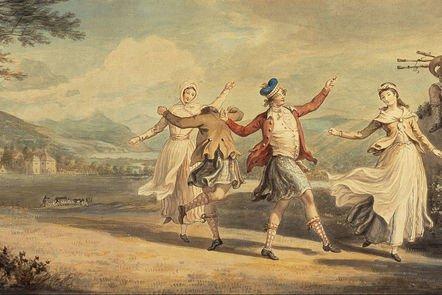
  • Week 2:Clan Society and Culture: Explore daily life for ordinary people living under the authority the chiefs. Why and how did clans feud, and what made the Scottish Crown seek to ‘civilise’ the Highlands? Learn about Gaelic musical culture, poetry and dress. Discover how clan involvement in the religious and civil wars of the seventeenth century was high profile and traumatic. Lastly, consider how new cultural and social-economic changes resulted in a slow decline of the clans as a form of community
  • Week 3:Decline and Transformation: Assess the debates around clan involvement in the Jacobite risings between 1689 and 1746. Discover the latest thinking on the Battle of Culloden and the ‘Clearances’. Finally, appreciate how the literature of Walter Scott, the romantic poets, as well as Highland Games, theatre and film reinvented the clans as a romantic Scottish and global emblem.

What will you achieve?
By the end of the course, you'll be able to...

  • Develop an understanding of the origins and functions of the Scottish Highland clans, and assess their social structures, economy and culture
  • Investigate the contrast between hostile stereotypes of the clans as barbaric and warlike and their day-to-day role as complex social communities
  • Reflect on the processes of feuding, civil war, revolt and social-economic change between 1500 and 1800 that resulted in the slow transformation and decline of the clans
  • Explore how the clans were reinvented and romanticised in the later eighteenth and nineteenth centuries through literature and poetry
  • Identify and assess the modern legacies of the clans in events such as Highland Games, Clan Societies and Tartan Parades, as well as their portrayal in film and television
  • Assess in an informed way the key charactertistics of Scottish Highland clanship, their history, their decline and their modern reinvention.
  • Assess in an informed way the key charactertistics of Scottish Highland clanship, their history, their decline and their modern reinvention.
Go to Class
MOOC List is learner-supported. When you buy through links on our site, we may earn an affiliate commission.

Related Courses

Irish Lives in War and Revolution: Exploring Ireland's History 1912-1923 (FutureLearn) FutureLearn
Trinity College Dublin

Irish Lives in War and Revolution: Exploring Ireland's History 1912-1923 (FutureLearn)

Explore the lives of men, women and children living through war and revolution and social changes that made modern Ireland. How do people experience war and revolution? How does political change, violence, total war, affect life in its most basic ways? Looking at Ireland through war and revolution, this course considers these and other questions about Irish life between 1912 and 1923.

No sessions available
5-12 Weeks
Søren Kierkegaard - Subjectivity, Irony and the Crisis of Modernity (Coursera) Coursera
University of Copenhagen

Søren Kierkegaard - Subjectivity, Irony and the Crisis of Modernity (Coursera)

In this course created by former associate professor at the Søren Kierkegaard Research Centre, Jon Stewart, we will explore how Kierkegaard deals with the problems associated with relativism, the lack of meaning and the undermining of religious faith that are typical of modern life. His penetrating analyses are still highly relevant today and have been seen as insightful for the leading figures of Existentialism, Post-Structuralism and Post-Modernism.

Jun 22nd 2026
5-12 Weeks
Scotland and Wales Vote 2016: Understanding the Devolved Elections (FutureLearn) FutureLearn
University of Edinburgh

Scotland and Wales Vote 2016: Understanding the Devolved Elections (FutureLearn)

This course will examine the issues, ideas and institutions involved in the Scottish Parliament and Welsh Assembly elections. 2016 is an exciting year for elections in the United Kingdom. Towards the end of the year we might have a referendum on the UK’s EU membership, but we definitely know that there will be elections to the Scottish Parliament and Welsh Assembly in May. Both of these institutions have a significant impact on people’s lives in Scotland and Wales: they control big public policy issues like health, education and transport.

No sessions available
4 Weeks
World War 1: Changing Faces of Heroism (FutureLearn) FutureLearn
University of Leeds

World War 1: Changing Faces of Heroism (FutureLearn)

Learn how the war moved us away from traditional views of heroism and created new kinds of heroes and heroines. Did the First World War make heroism meaningless or was it the conflict that gave it the most meaning? We’ve designed this course in partnership with the BBC to help you explore, discuss and challenge the ways in which First World War heroism has been remembered. Our experts will take you through the changing British, French and German views of heroism and discuss important similarities and differences.

No sessions available
3 Weeks
History of Slavery in the British Caribbean (FutureLearn) FutureLearn
University of Glasgow,University of the West Indies - UWI

History of Slavery in the British Caribbean (FutureLearn)

Explore the history and legacy of British colonial slavery and oppression in the Caribbean through historical slave accounts. Learn about Britain’s involvement in the transatlantic slave trade. On this course, you’ll be introduced to the history of slavery and the lived experiences of enslaved people in the British Caribbean.

Available Now
4 Weeks
Zoroastrianism: History, Religion, and Belief (FutureLearn) FutureLearn
SOAS University of London

Zoroastrianism: History, Religion, and Belief (FutureLearn)

Explore the ancient religion of Zoroastrianism, its languages, and the challenges faced by Zoroastrian communities today. Delve into the rich visual history of the Zoroastrian religion Zoroastrianism has had a profound influence on major world religions. Its history tells the story of imperial culture, persecution, migration and the establishment of diasporic communities.

Jul 26th 2021
4 Weeks
The Life and Afterlife of Mary Queen of Scots (FutureLearn) FutureLearn
University of Glasgow

The Life and Afterlife of Mary Queen of Scots (FutureLearn)

Explore the 16th century life of Mary Queen of Scots, and her place in cultural history in the centuries that followed. Discover the life and lasting legacy of Mary Queen of Scots. Mary Queen of Scots was born and ascended to the throne of Scotland in 1542, before being forced to abdicate in 1567. She was married three times, first to the king of France, and then to two noblemen from the British Isles, one of whom was spectacularly murdered.

Mar 13th 2023
3 Weeks
Discover the Hidden History of York (FutureLearn) FutureLearn
University of York

Discover the Hidden History of York (FutureLearn)

Investigate York’s cultural and social history and the pivotal events and people that helped define a nation. Uncover fascinating facts about the city of York, from medieval times to today. York is a city bursting with engaging and unusual episodes from its rich and diverse history. On this three-week course, you’ll delve into the city’s past and learn about some of the most interesting events and people to have contributed to York’s story.

Jul 7th 2022
3 Weeks
Learning from the Past: A Guide for the Curious Researcher (FutureLearn) FutureLearn
University of Birmingham,The University of Nottingham,British Library

Learning from the Past: A Guide for the Curious Researcher (FutureLearn)

Learn how to understand the past to explain the present, and get to know the amazing sources and resources of the British Library. Discover sources that help you understand the past, and explain the present! The language of history determines how we view our world and understand urgent issues, such as the environment, conflict and human rights.

Available now
3 Weeks