In the Night Sky: Orion (FutureLearn)

Offered by The Open University,
In the Night Sky: Orion (FutureLearn)

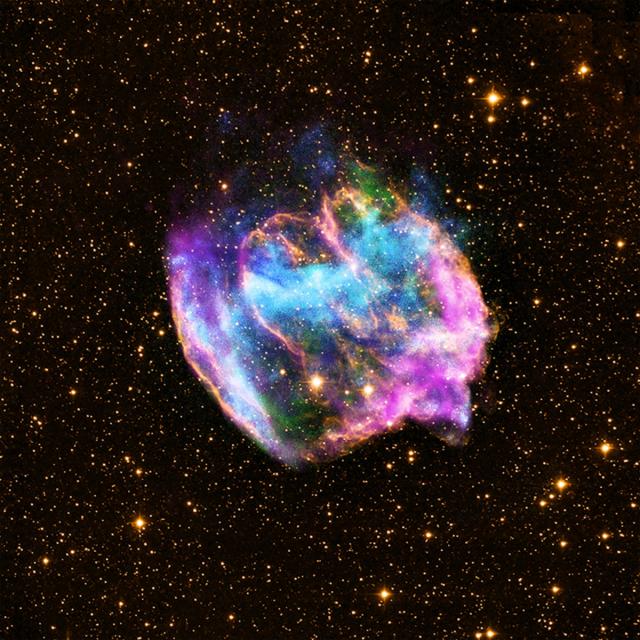
Explore the night sky and improve your knowledge of astronomy, all through the constellation of Orion. This online astronomy course will change the way you see the night sky.

Class Deals by MOOC List - Click here and see FutureLearn's Active Discounts, Deals, and Promo Codes.

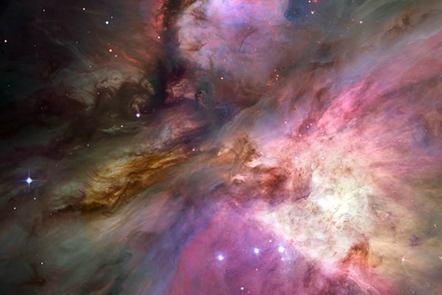
You’ll examine one of the most famous constellations Orion. Starting with its nebula, where new stars and planets are formed, you’ll take a look at the seven brightest stars that make up Orion using high-quality images, including from the Hubble Space Telescope.
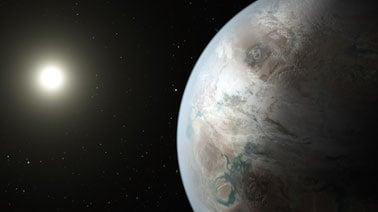
You’ll learn about exoplanets and the secrets to life outside our Solar System. And you’ll think about the Milky Way, considering the history of the universe from the Big Bang to the present.
The course was produced with the kind support of Dangoor Education.

What topics will you cover?

  • Find the constellation of Orion in the night sky
  • Learn all about the legend of Orion
  • Discover how the constellations were used for navigation
  • Discover the amazing process that causes stars to form
  • Find out what happens to different stars over their lifetime
  • Learn what happens when stars run out of fuel
  • Find out what the night sky can reveal about the Big Bang theory
  • Get involved with classifying galaxies into different shapes
  • Take a tour of space through the PIRATE telescope
  • Find out what is important about the Earth’s position
  • Discuss whether you think there are other planets just like ours
  • Find out about The Open University’s project to map the stars

What will you achieve?
By the end of the course, you'll be able to...

  • Apply facts, concepts, principles, theories, classification systems and language used in astronomy.
  • Develop the knowledge and understanding of the range of sizes, distances and motions of objects in the night sky.
  • Develop the knowledge and understanding of the structure, evolution and the main processes operating in stars.
  • Develop the knowledge and understanding of the properties of planets in our Solar System and exoplanetary systems.
  • Demonstrate the knowledge and understanding of the history of the Universe.
Go to Class
MOOC List is learner-supported. When you buy through links on our site, we may earn an affiliate commission.

Related Courses

Particle Physics: an Introduction (Coursera) Coursera
University of Geneva

Particle Physics: an Introduction (Coursera)

This course introduces you to subatomic physics, i.e. the physics of nuclei and particles. More specifically, the following questions are addressed: What are the concepts of particle physics and how are they implemented?; What are the properties of atomic nuclei and how can one use them?; How does one accelerate and detect particles and measure their properties?; What does one learn from particle reactions at high energies and particle decays?; How do electromagnetic interactions work and how can one use them?; How do strong interactions work and why are they difficult to understand?; How do weak interactions work and why are they so special?; What is the mass of objects at the subatomic level and how does the Higgs boson intervene?; How does one search for new phenomena beyond the known ones?; What can one learn from particle physics concerning astrophysics and the Universe as a whole?

Jun 15th 2026
5-12 Weeks
Science & Religion 101 (Coursera) Coursera
University of Alberta

Science & Religion 101 (Coursera)

This course examines the nature of both science and religion and attempts to explore the possible relationships between them. The primary purpose is to dispel the popular myth that science and religion are entrenched in a never-ending conflict. As a result, this course argues that if the limits of both science and religion are respected, then their relationship can be complementary.

Jun 8th 2026
5-12 Weeks
Gravity! The Big Bang, Black Holes and Gravitational Waves (FutureLearn) FutureLearn
Université Paris Diderot

Gravity! The Big Bang, Black Holes and Gravitational Waves (FutureLearn)

Gravity runs the Universe. This free online course explains why, exploring gravitational waves, black holes and the Big Bang. What is gravity? This fundamental force is the common theme between concepts as intriguing as the Big Bang, black holes, dark energy, space-time, gravitational waves and the expansion of the Universe. If these concepts pique your interest, this free online course is for you. It doesn’t require any background in physics or mathematics, just a simple curiosity about the Universe and our place in it.

No sessions available
5-12 Weeks
Astronomy and Space Physics: Teaching Secondary Science (FutureLearn) FutureLearn
Royal Observatory Greenwich

Astronomy and Space Physics: Teaching Secondary Science (FutureLearn)

Upgrade your secondary science lessons, boost your knowledge of space physics, and help students build key career skills. Broaden your science teaching skill set with the Royal Observatory Greenwich. Our world is increasingly driven by science and technology and, as a result, STEM is becoming a growing area of focus in education. On this course, you’ll learn how to impart key physics, space science, and astronomy knowledge while teaching transferable skills that will support your students in their schooling and career to come.

Available now
3 Weeks
Astrobiology: Exploring Other Worlds (Coursera) Coursera
University of Arizona

Astrobiology: Exploring Other Worlds (Coursera)

How are astronomers approaching their search for life in the universe? What have we learned from the surge of exoplanets discoveries? How likely is it that Earth does not host the only life in the Universe? In this course we explore the field of astrobiology, an emerging multidisciplinary field. Progress in astrobiology is driven by telescopes on the ground and in space, and by new insights on how life emerged on Earth and its diversity.

Jun 1st 2026
5-12 Weeks
Analyzing the Universe (Coursera) Coursera
Rutgers University

Analyzing the Universe (Coursera)

Using publicly available data from NASA of actual satellite observations of astronomical x-ray sources, we explore some of the mysteries of the cosmos, including neutron stars, black holes, quasars and supernovae. We will analyze energy spectra and time series data to understand how these incredible objects work. We utilize an imaging tool called DS9 to explore the amazing diversity of astronomical observations that have made x-ray astronomy one of the most active and exciting fields of scientific investigation in the past 50 years.

Jun 8th 2026
5-12 Weeks
Magic in the Middle Ages (Coursera) Coursera
University of Barcelona

Magic in the Middle Ages (Coursera)

Magical thought has always attracted human imagination. In this course we will introduce you to the Middle Ages through a wide conception of magic. Students will have an approach to medieval culture, beliefs and practices from the perspective of History and History of Science. Popular magic, as well as learned magic (alchemy, geomancy and necromancy) will be addressed. Moreover, we will also deal with how eastern practices and texts influenced western culture. In July 2016, the course will contain a brand-new module devoted to astrology. Magic in the Middle Ages offers a captivating overview of medieval society and promotes reflection about certain stereotypes associated with this period.

Jun 22nd 2026
5-12 Weeks
Journey of the Universe: The Unfolding of Life (Coursera) Coursera
Yale University

Journey of the Universe: The Unfolding of Life (Coursera)

Journey of the Universe weaves together the discoveries of the evolutionary sciences together with humanities such as history, philosophy, art, and religion. The course draws on the Emmy-award winning film, Journey of the Universe, and the book from Yale University Press. Journey explores cosmic evolution as a creative process based on connection, interdependence, and emergence. It examines a range of dynamic interactions in the unfolding of galaxies, Earth, life, and human communities. It investigates ways in which we understand evolutionary processes and the implications for humans and our ecological future.

Jun 22nd 2026
5-12 Weeks
Understanding Einstein: The Special Theory of Relativity (Coursera) Coursera
Stanford University

Understanding Einstein: The Special Theory of Relativity (Coursera)

In this course we will seek to “understand Einstein,” especially focusing on the special theory of relativity that Albert Einstein, as a twenty-six year old patent clerk, introduced in his “miracle year” of 1905. Our goal will be to go behind the myth-making and beyond the popularized presentations of relativity in order to gain a deeper understanding of both Einstein the person and the concepts, predictions, and strange paradoxes of his theory.

Jun 15th 2026
5-12 Weeks