Mysteries Of The Universe (FutureLearn)

Mysteries Of The Universe (FutureLearn)

Discover how more than ninety per cent of the universe is a mystery, and expand your knowledge of cosmology and astronomy. Investigate the most mysterious and fascinating aspects of the universe
The more we learn about how the universe works, the more we realise how much we don’t know. What is a black hole? What is dark energy? Will the universe eventually collapse in on itself? And how does the Earth fit into all this?

Class Deals by MOOC List - Click here and see FutureLearn's Active Discounts, Deals, and Promo Codes.

On this course, you’ll answer these questions and more. You’ll delve into the deepest and darkest mysteries of the cosmos, and come out the other side with up-to-date knowledge of the latest thinking in cosmology and astronomy.
Explore dark matter, dark energy, and black holes
Alongside Profesor Tomotsugu Goto at National Tsing Hua University, you’ll learn about the Lambda Cold Dark Matter (ΛCDM) Model and dark energy, seeing why astronomers are fascinated by these topics.
You’ll explore how dark energy is accelerating the expansion of the universe – but we don’t know why or how. You’ll study how dark energy makes up 25% of the energy in the universe – but we don’t know what it is.
Study black holes, and the universe’s origin and end
Black holes are some of the most mysterious entities in the universe. You’ll identify what they really are, and what we know about them, getting an overview of Newton and Einstein’s theories of gravity and gravitational lensing, and how they are being updated.
Ultimately, you’ll come away with a basic understanding of what we have left to discover about the universe – including how it began and how it might end – and what astronomers are doing to attempt to solve these great mysteries.

What topics will you cover?

  • Deep into the Universe
  • Advancements in Astronomy: Past, Present, and Future
  • Einstein’s Biggest Blunder
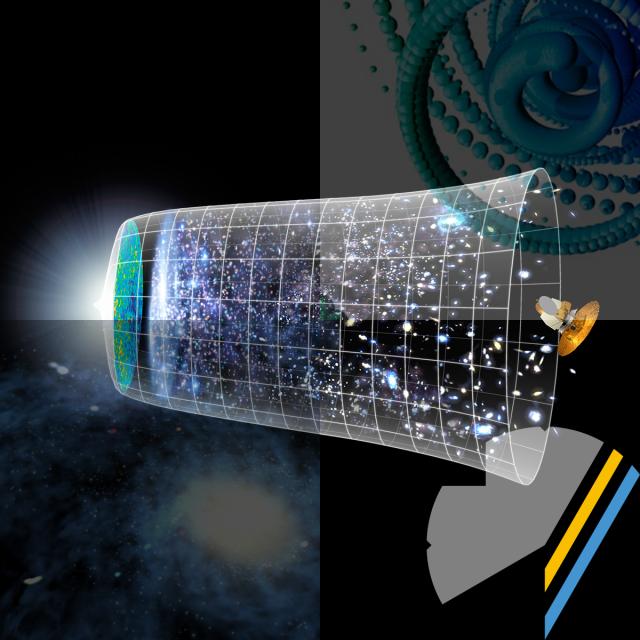
  • Cosmic Microwave Background
  • Inflation
  • Dark Matter and Dark Energy

Learning on this course
You can take this self-guided course and learn at your own pace. On every step of the course you can meet other learners, share your ideas and join in with active discussions in the comments.

Who is the course for?
This course is designed for learners with an interest in astronomy/cosmology and the universe. It uses as little as equations possible, and focuses on concepts rather than calculations.

Go to Class
MOOC List is learner-supported. When you buy through links on our site, we may earn an affiliate commission.

Related Courses

Super-Earths And Life (edX) EdX
HarvardX,Harvard University

Super-Earths And Life (edX)

Learn about the Earth, life, and how we can search for life elsewhere in the universe. Are we alone in this universe? What new information and observations on exoplanets have we discovered? In the past decade, astronomers have made incredible advances in the discovery of planets outside our solar system. Thirty years ago, we knew only of the planets in our own solar system. Now we know of thousands circling nearby stars.

Self Paced
Self-Paced
From the Big Bang to Dark Energy (Coursera) Coursera
The University of Tokyo

From the Big Bang to Dark Energy (Coursera)

We have learned a lot recently about how the Universe evolved in 13.7 billion years since the Big Bang. More than 80% of matter in the Universe is mysterious Dark Matter, which made stars and galaxies to form. The newly discovered Higgs-boson became frozen into the Universe a trillionth of a second after the Big Bang and brought order to the Universe.

Sep 7th 2026
4 Weeks
Financial Markets (Coursera) Coursera
Yale University

Financial Markets (Coursera)

An overview of the ideas, methods, and institutions that permit human society to manage risks and foster enterprise. Emphasis on financially-savvy leadership skills. Description of practices today and analysis of prospects for the future. Introduction to risk management and behavioral finance principles to understand the real-world functioning of securities, insurance, and banking industries. The ultimate goal of this course is using such industries effectively and towards a better society.

Aug 31st 2026
5-12 Weeks
The Discovery of the Higgs Boson (FutureLearn) FutureLearn
University of Edinburgh

The Discovery of the Higgs Boson (FutureLearn)

Should we be excited about the Higgs boson? Find out more about particle physics and understanding the universe. The discovery of a new fundamental particle at the Large Hadron Collider (LHC), CERN is the latest step in a long quest seeking to answer one of physics’ most enduring questions: why do particles have mass? The experiments’ much anticipated success confirms predictions made decades earlier by Peter Higgs and others, and offers a glimpse into a universe of physics beyond the Standard Model.

Self Paced
5-12 Weeks
Our Solar System and Beyond: Teaching Primary Science (FutureLearn) FutureLearn
Royal Observatory Greenwich

Our Solar System and Beyond: Teaching Primary Science (FutureLearn)

Improve your knowledge of space science to help you deliver primary science lessons that are out of this world. Understanding the Solar System and how to teach it can be a tricky business. Fortunately astronomers at the Royal Observatory Greenwich are here to help. In this online course, they’ll help you understand space, address some common misconceptions, and introduce you to the science and people behind real-life, cutting-edge discoveries.

Available now
3 Weeks
Big History - From the Big Bang until Today (Coursera) Coursera
University of Amsterdam

Big History - From the Big Bang until Today (Coursera)

Welcome to this Big History course! In this course, renowned scientists and scholars from the University of Amsterdam and beyond will take you on a journey from the Big Bang until today while addressing key questions in their fields. After completing this journey you will have developed a better understanding of how you and everything around you became the way they are today.

Aug 31st 2026
4 Weeks
The Science of the Solar System (Coursera) Coursera
Caltech

The Science of the Solar System (Coursera)

Learn about the science behind the current exploration of the solar system in this free class. Use principles from physics, chemistry, biology, and geology to understand the latest from Mars, comprehend the outer solar system, ponder planets outside our solar system, and search for habitability in our neighborhood and beyond. This course is generally taught at an advanced level assuming a prior knowledge of undergraduate math and physics, but the majority of the concepts and lectures can be understood without these prerequisites.

Sep 21st 2026
5-12 Weeks
The Sun and the Total Eclipse of August 2017 (Coursera) Coursera
University of Colorado Boulder

The Sun and the Total Eclipse of August 2017 (Coursera)

A total eclipse is one of the most spectacular sights you can ever see! It looks like the end of the world may be at hand. There is a black hole in the sky where the sun should be. Pink flames of solar prominences and long silver streamers of the sun's corona stretch across the sky. It gets cold, and animals do strange things. People scream and shout and cheer, and remember the experience their whole life. But total eclipses are important scientifically as well.

Aug 31st 2026
5-12 Weeks
Quantum Optics 1 : Single Photons (Coursera) Coursera
École Polytechnique

Quantum Optics 1 : Single Photons (Coursera)

This course gives you access to basic tools and concepts to understand research articles and books on modern quantum optics. You will learn about quantization of light, formalism to describe quantum states of light without any classical analogue, and observables allowing one to demonstrate typical quantum properties of these states. These tools will be applied to the emblematic case of a one-photon wave packet, which behaves both as a particle and a wave.

Sep 21st 2026
5-12 Weeks
Science & Religion 101 (Coursera) Coursera
University of Alberta

Science & Religion 101 (Coursera)

This course examines the nature of both science and religion and attempts to explore the possible relationships between them. The primary purpose is to dispel the popular myth that science and religion are entrenched in a never-ending conflict. As a result, this course argues that if the limits of both science and religion are respected, then their relationship can be complementary.

Aug 31st 2026
5-12 Weeks
Microwave engineering and antennas (Coursera) Coursera
Eindhoven University of Technology

Microwave engineering and antennas (Coursera)

This unique Master-level course provides you with in-depth know-how of microwave engineering and antennas. The course combines both passive and active microwave circuits as well as antenna systems. Future applications, like millimeter-wave 5G/beyond-5G wireless communications or automotive radar, require experts that can co-design highly integrated antenna systems that include both antennas and microwave electronics. We will provide you with the required theoretical foundation as well as hands-on experience using state-of-the-art design tools. The web lectures are supported by many on-line quizzes in which you can practice the background theory.

Aug 31st 2026
5-12 Weeks