Microwave engineering and antennas (Coursera)

Microwave engineering and antennas (Coursera)

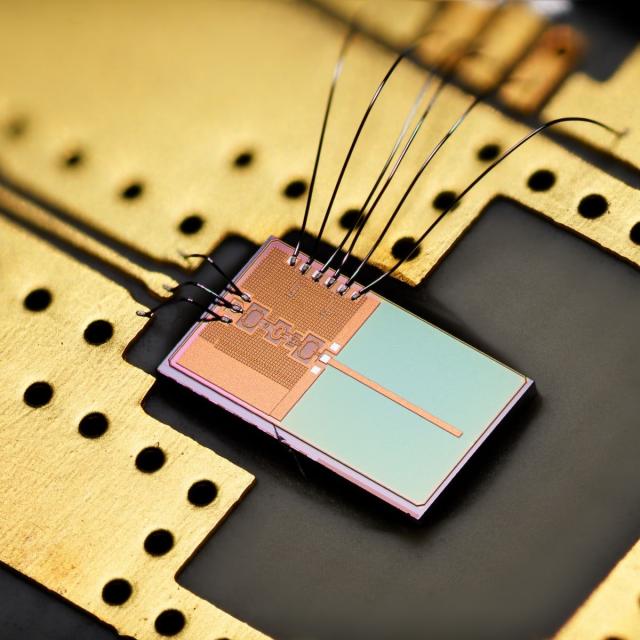
This unique Master-level course provides you with in-depth know-how of microwave engineering and antennas. The course combines both passive and active microwave circuits as well as antenna systems. Future applications, like millimeter-wave 5G/beyond-5G wireless communications or automotive radar, require experts that can co-design highly integrated antenna systems that include both antennas and microwave electronics. We will provide you with the required theoretical foundation as well as hands-on experience using state-of-the-art design tools. The web lectures are supported by many on-line quizzes in which you can practice the background theory.

Class Deals by MOOC List - Click here and see Coursera's Active Discounts, Deals, and Promo Codes.

Next to this, we will provide you hands-on experience in a design-challenge in which you will learn how to design microwave circuits and antennas. Throughout the course you will work on the design challenge in which you will design a complete active phased array system, including antennas, beamformers and amplifiers. The course is supported by a book written by the team of lecturers, which will be made available to the students. After finalizing the course a certificate can be obtained (5 ECTS), which can be used when you start a full MSc program at Eindhoven University of Technology.
The lecturers all have an academic and industrial background and are embedded in the Center for Wireless Technology Eindhoven (CWT/e) of Eindhoven University of Technology, The Netherlands.
What You Will Learn

  • Module 1: Introduction of the course, including an overview of applications and trends.
  • Module 2: Passive microwave circuits, covering transmission-line based circuits including impedance - matching, power combiners, filters.
  • Module 3: Antenna theory. This provides an introduction into antenna theory, including phased arrays.
  • Module 4: Active microwave circuits. Extension towards amplifiers, including low-noise amplifiers.

Syllabus

WEEK 1
Promo
In this short video the lecturers will introduce themselves and will provide a general overview of the scope of the course. The lecturers all have a solid academic and industrial background and are embedded in the Center for Wireless Technology Eindhoven (CWT/e) of Eindhoven University of Technology, The Netherlands.
Introduction (Module 1) and Passive Microwave Circuits (Module 2, part I)
In week 1 we will provide you with an introduction to the course including an overview of applications (Module 1). In addition, we will start with Passive Microwave Circuits (Module 2) by introducing transmission line theory. We will also introduce the design-challenge in which you will develop your own 4-channel phased array system including beamformer and active microwave electronics. Next to this, we will show you how to use the open-source design tool QUCS. We will use this tool for the design of passive and active microwave circuits.

WEEK 2
Passive Microwave Circuits (Module 2, part II)
In week 2 we will continue with Passive Microwave Circuits (Module 2) by introducing the concept of microwave networks. We will use this concept by analyzing power combiners. In addition, you will start your design challenge by designing a 4-channel beamformer network.

WEEK 3
Passive Microwave Circuits (Module 2, part III)
In week 3 we will finalize our journey into Passive Microwave Circuits (Module 2) by first introducing the Smith chart and by applying it for the design of matching circuits. Next to this, we will show how you can design microwave filters.

WEEK 4
Antenna Theory (Module 3, part I)
In week 4 we will start with Antenna Theory (Module 3) and introduce the concept of antennas by exploring the main characteristics of antennas, including directivity, antenna gain and input impedance. We will show how these parameters can be used to determine the range of wireless system or radar. As a first real antenna concept, we will introduce phased-array antennas. In addition, the design challenge will continue with an antenna design. This includes an introduction into the antenna design CST.

WEEK 5
Antenna Theory (Module 3, part II)
In this week the real hard-core theoretical antenna framework is presented. Starting from Maxwell's equations we will derive the general expression for the radiated fields by any antenna configuration. The framework will be applied to the electric dipole and wire antennas. In addition, your will participate in a workshop that introduces a state-of-the-art antenna design tool.

WEEK 6
Antenna Theory (Module 3, part III)
In this week we will extend our theoretical framework with magnetic sources. In this way, you can use the framework to analyze aperture antennas. We will show this by analyzing horn antennas, reflector antennas and microstrip antennas. We will also show how microstrip antennas can be used to create a phased-array system. We will finalize the week by providing you with some background knowledge in numerical methods. This will help you to understand the underlying principles of numerical electromagnetics used in commercial tools such as ADS and CST.

WEEK 7
Active Microwave Circuits (Module 4, part I)
In this week we will extend the theory on microwave circuits towards active circuits which make use of transistors to realize amplifiers. We will start by introducing the various definitions which are used to describe the gain of an amplifier. As a next step we will present a design methodology for low-noise amplifiers. You will also start with the last part of your design challenge by designing a low-noise amplifier.

WEEK 8
Active Microwave Circuits (Module 4, part II)
In the last week of the course we will dive deeper into the design of microwave amplifiers by exploring by exploring the stability conditions of amplifiers. When stability is secured, the amplifier performance can be further optimized by proper design of the input and output matching circuits. For this purpose the concept of constant-gain circles can be used.

Go to Class
MOOC List is learner-supported. When you buy through links on our site, we may earn an affiliate commission.

Related Courses

Single Page Web Applications with AngularJS (Coursera) Coursera
Johns Hopkins University

Single Page Web Applications with AngularJS (Coursera)

Do you want to write powerful, maintainable, and testable front end applications faster and with less code? Then consider joining this course to gain skills in one of the most popular Single Page Application (SPA) frameworks today, AngularJS. Developed and backed by Google, AngularJS is a very marketable skill to acquire.

Jun 22nd 2026
5-12 Weeks
Converter Control (Coursera) Coursera
University of Colorado Boulder

Converter Control (Coursera)

This course teaches how to design a feedback system to control a switching converter. The equivalent circuit models derived in the previous courses are extended to model small-signal ac variations. These models are then solved, to find the important transfer functions of the converter and its regulator system. Finally, the feedback loop is modeled, analyzed, and designed to meet requirements such as output regulation, bandwidth and transient response, and rejection of disturbances.

Jun 22nd 2026
4 Weeks
Game Design and Development 4: 3D Platformer (Coursera) Coursera
Michigan State University

Game Design and Development 4: 3D Platformer (Coursera)

If you love games and want to learn how to make them, then this course is your fourth step down that path. In this course you will learn the fundamentals of game design, including an understanding of game idea generation, design documentation, the business side of games, and social issues in games. You will continue developing video games using industry standard game development tools, including the Unity 2020 game engine. At the end of the course you will have completed a 3D Platformer game, and will be able to leverage an array of game development techniques to create your own basic games.

Jun 22nd 2026
4 Weeks
Light Emitting Diodes and Semiconductor Lasers (Coursera) Coursera
University of Colorado Boulder

Light Emitting Diodes and Semiconductor Lasers (Coursera)

You will learn about semiconductor light emitting diodes (LEDs) and lasers, and the important rules for their analysis, planning, design, and implementation. You will also apply your knowledge through challenging homework problem sets to cement your understanding of the material and prepare you to apply in your career.

Jun 22nd 2026
5-12 Weeks
Converter Circuits (Coursera) Coursera
University of Colorado Boulder

Converter Circuits (Coursera)

This course introduces more advanced concepts of switched-mode converter circuits. Realization of the power semiconductors in inverters or in converters having bidirectional power flow is explained. Power diodes, power MOSFETs, and IGBTs are explained, along with the origins of their switching times. Equivalent circuit models are refined to include the effects of switching loss. The discontinuous conduction mode is described and analyzed. A number of well-known converter circuit topologies are explored, including those with transformer isolation.

Jun 22nd 2026
4 Weeks
Writing Skills for Engineering Leaders (Coursera) Coursera
Rice University

Writing Skills for Engineering Leaders (Coursera)

Engineering leaders must write extensively for their jobs, and their writing needs to be professional, reader-focused, and error-free. What leaders write in particular can affect productivity and the bottom line, so the written communication that leaders create must be clear and concise. In this course, you’ll learn essential writing skills that you can apply in your daily activities on the job as an engineering leader.

Jun 22nd 2026
4 Weeks
Electrodynamics: In-depth Solutions for Maxwell’s Equations (Coursera) Coursera
Korea Advanced Institute of Science and Technology - KAIST

Electrodynamics: In-depth Solutions for Maxwell’s Equations (Coursera)

This course is the fourth course in the Electrodynamics series, and is directly proceeded by Electrodynamics: Electric and Magnetic Fields. Previously, we have learned about visualization of fields and solutions which were not time dependent. Here, we will return to Maxwell's Equations and use them to produce wave equations which can be used to analyze complex systems, such as oscillating dipoles. We will also introduce AC circuits, and how they can be simplified, solved, and applied.

Jun 22nd 2026
5-12 Weeks
Game Design and Development 1: 2D Shooter (Coursera) Coursera
Michigan State University

Game Design and Development 1: 2D Shooter (Coursera)

If you love games and want to learn how to make them, then this course will start you down that path. Making games is a creative and technical art form. In this course you will familiarize yourself with the tools and practices of game development and well as the process. You will get started developing video games using industry standard game development tools, including the Unity 2020 game engine. At the end of the course you will have completed two hands-on projects, including an Intro to Unity project and a 2D Shooter game, and will be able to leverage an array of game development techniques to create your own basic games.

Jun 22nd 2026
4 Weeks
Physics 102 - Magnetic Fields and Faraday's Law (Coursera) Coursera
Rice University

Physics 102 - Magnetic Fields and Faraday's Law (Coursera)

This course serves as an introduction to the physics of electricity and magnetism. Upon completion, learners will have an understanding of how the forces between electric charges are described by fields, and how these fields are related to electrical circuits. They will gain experience in solving physics problems with tools such as graphical analysis, algebra, vector analysis, and calculus. The course follows the typical progression of topics of a first-semester university physics course: charges, electric forces, electric fields potential, magnetic fields, currents, magnetic moments, electromagnetic induction, and circuits.

Jun 22nd 2026
4 Weeks