Medical Terminology I (Coursera)

Offered by Rice University,
Medical Terminology I (Coursera)

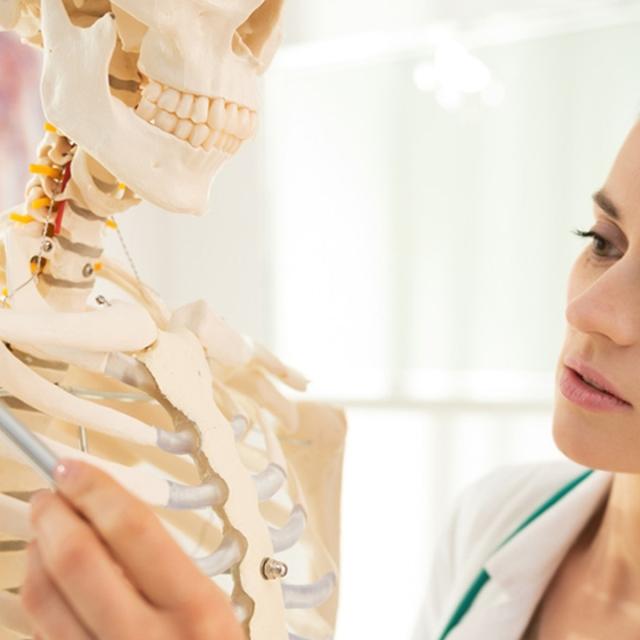
This course will discuss the importance of learning medical language as well as introduce basic word parts and concepts applied in medical terminology. We will also learn about common organization and terms seen in medical records before moving into system-specific terms for the integumentary system (skin), musculoskeletal system (muscles and bones), and urinary (kidneys).

Class Deals by MOOC List - Click here and see Coursera's Active Discounts, Deals, and Promo Codes.

Course 1 of 3 in the Medical Terminology Specialization.

Syllabus

WEEK 1
Welcome to Medical Terminology Part 1
Specialization introduction, integument, movement, and micturition
Introduction to Medical Language and Records
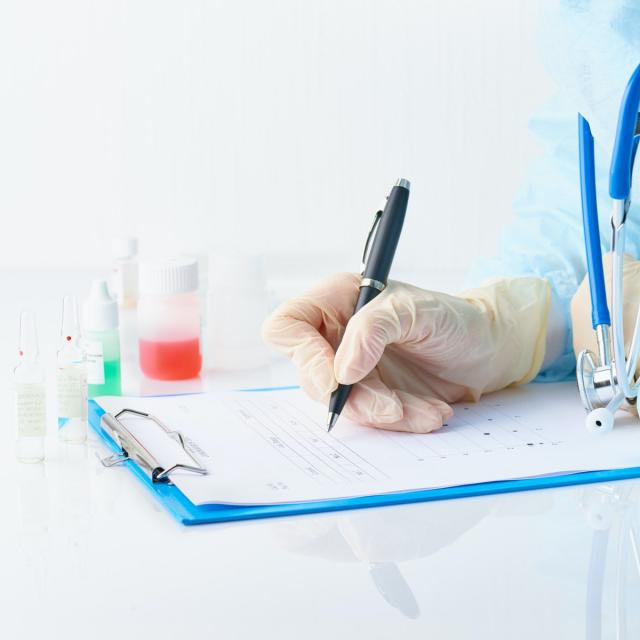
Greetings! Welcome to the Introduction to Medical Language and Records module. This is the foundational module designed to set you up for success in the remainder of the specialization. We will begin by examining the purpose of medical language. Then we will explore common word parts and the guidelines for building and breaking down medical terms. We will also explore health records and look at a common template used for all health records: the SOAP note. We will conclude with a list of abbreviations unique to this module but frequently used in health records.
Though the amount of memorization in this module can be a bit overwhelming, this information is CRUCIAL to your success in all future modules. Your investment in this early material will pay dividends for the remainder of the specialization! Let's get started...

WEEK 2
Integumentary System
Salutations! Welcome to the first of our body system modules: The Integumentary System. This module will introduce you to medical terms related to the skin. Following the SOAP note format, we will look at common complaints, tests, diagnoses, and treatments used in dermatology. Without further ado, let's get comfortable with our own skin...

WEEK 3
Musculoskeletal System
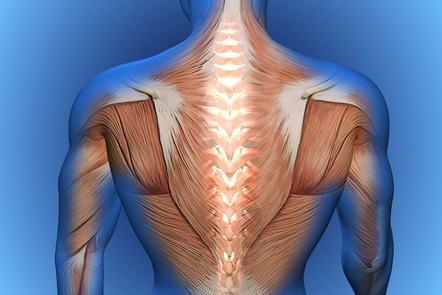
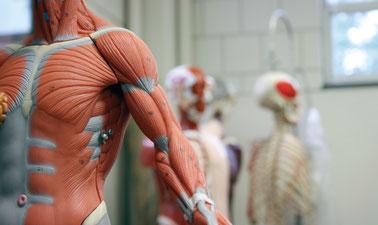
Hello! Welcome to the musculoskeletal system module. This module will introduce you to medical terms related to the muscles and bones. Following the SOAP note format, we will look at common complaints, tests, diagnoses, and treatments used in orthopedics. As your musculoskeletal system says to your body, let's get moving...

WEEK 4
Urinary System
Hi! Welcome to the urinary system module. This module will introduce you to medical terms related to the kidneys and bladder. Following the SOAP note format, we will look at common complaints, tests, diagnoses, and treatments used in urology and proctology.
Course Final Assessments and Conclusion
Congratulations on making it to the final assessment module of this course! This module is going to look a little different from the rest. The good news: you don't have watch any more lectures, take any notes, or play any Quizlet game in this module. The other news: you DO have to take an exam. But don't worry. As long as you've paid attention in the previous modules, you've got this. Besides, this exam is fun! You will see.

Go to Class
MOOC List is learner-supported. When you buy through links on our site, we may earn an affiliate commission.

Related Courses

Medical Terminology and the Human Body Fundamentals (Coursera) Coursera
MedCerts

Medical Terminology and the Human Body Fundamentals (Coursera)

In this Introduction to Medical Terminology and the Human Body course, you will learn about the medical language that is used to describe the human body. Throughout each Lesson, the roots of terms are explained to help students understand how medical terminology works in healthcare and to increase their knowledge and understanding of the material discussed.

Aug 31st 2026
4 Weeks
Anatomy: Cardiovascular, Urinary, and Respiratory Systems (edX) EdX
University of Michigan,MichiganX

Anatomy: Cardiovascular, Urinary, and Respiratory Systems (edX)

Learn the multifaceted structures and functions of the cardiovascular, urinary, and respiratory systems. This course is a primer for the cardiovascular, respiratory, and urinary systems in which students learn the pertinent details of the structures and functions through a combination of lectures, videos, labeling activities and quizzes.

Self Paced
Self-Paced
Ergonomics in Design (edX) EdX
The Hong Kong University of Science and Technology - HKUST,HKUSTx

Ergonomics in Design (edX)

The course is designed to provide a basic understanding of ergonomics in design through the introduction of human anatomy, anthropometry, and modeling techniques with the aim of improving safety, productivity, comfort and health of people. Ergonomics is the application of scientific information about people in order to design products and systems so that they are safe, productive, comfortable and healthy for people to use.

Self Paced
Self-Paced
Musculoskeletal Health: A Public Health Approach (FutureLearn) FutureLearn
Public Health England

Musculoskeletal Health: A Public Health Approach (FutureLearn)

Learn about the important public health messages of how to maintain good musculoskeletal health (MSK). Using the evidence to inform public health policy decisions for good MSK. Having and maintaining a healthy musculoskeletal system is crucial for your overall health. So, what public health approaches can policy makers and organisations take to ensure that for everyone? On this three-week course you’ll learn about the importance of maintaining good musculoskeletal health.

Self Paced
3 Weeks
The Musculoskeletal System: the Science of Staying Active into Old Age (FutureLearn) FutureLearn
The University of Sheffield

The Musculoskeletal System: the Science of Staying Active into Old Age (FutureLearn)

Demystify the ageing Demystify the ageing process and learn how our everyday behaviours are likely to affect our long-term musculoskeletal health. On this course, you’ll learn why our bones, joints and muscles function less well as we age, and discover how best to live well as we get older.

Available now
3 Weeks
Climate and Climate Change in New Jersey (Coursera) Coursera
American Museum of Natural History

Climate and Climate Change in New Jersey (Coursera)

Welcome to the American Museum of Natural History's (AMNH) primer called Climate and Climate Change in New Jersey! This primer includes numerous elements that will provide you with an understanding of our climate system and climate change in New Jersey, and encourage you to think about viable solutions for climate change impacts. It is divided into four parts, which may be completed sequentially as it was designed or in your sequence. We estimate that it will take approximately 2.5 hours to complete. We are also happy to inform you that you can receive 2.5 professional development hours and a Certificate of Attendance upon successful completion of this course.

Sep 7th 2026
4 Weeks
Promote your Scientific Results (Coursera) Coursera
Institut Mines-Telecom

Promote your Scientific Results (Coursera)

Whether you are a member of the natural or human science community, if you are a PhD student, professor, part of an academic department or international research team, or self-employed and you wish to showcase your work to a wider audience then this is the perfect course for you. You will learn how to promote your work to professional peers, the general public, as well as the media.

Sep 7th 2026
5-12 Weeks
Paleontology: Ancient Marine Reptiles (Coursera) Coursera
University of Alberta

Paleontology: Ancient Marine Reptiles (Coursera)

Paleontology: Ancient Marine Reptiles is a four-lesson course teaching a comprehensive overview of the evolutionary changes that occur when air-breathing terrestrial animals return to water. This course examines the diversity, adaptations, convergence, and phylogenetic relationships of extinct marine reptiles. Students will explore three major groups of marine reptiles: ichthyosaurs, plesiosaurs, and mosasaurs.

Sep 2nd 2026
4 Weeks
Movement Capabilities Depend on Neuromuscular Properties (Coursera) Coursera
University of Colorado Boulder

Movement Capabilities Depend on Neuromuscular Properties (Coursera)

Movement Capabilities Depend on Neuromuscular Properties is the third course of the specialization "Science of Movement". Get ready to delve into the fascinating world of how our neuromuscular properties shape our movement capabilities in various contexts. In this course, we will explore the intricate association between our nervous system and muscles, and how they work together to determine our physical performance, adaptability, and recovery.

Sep 14th 2026
4 Weeks
The Human Body's Communication Systems (Coursera) Coursera
MedCerts

The Human Body's Communication Systems (Coursera)

In this course on The Human Body's Communication Systems, you will learn about the wonderful diversity of the nervous and endocrine systems and the medical language that is used to describe these systems. Throughout each Lesson, the roots of terms are explained to help students understand how medical terminology works in healthcare and to increase their knowledge and understanding of the material discussed.

Aug 24th 2026
3 Weeks
Medical Terminology, Anatomy, and Physiology Fundamentals (Coursera) Coursera
MedCerts

Medical Terminology, Anatomy, and Physiology Fundamentals (Coursera)

In this Introduction to Medical Terminology and the Human Body course, you will learn about the medical language that is used to describe the human body. Throughout each Lesson, the roots of terms are explained to help students understand how medical terminology works in healthcare and to increase their knowledge and understanding of the material discussed.

Aug 24th 2026
4 Weeks