Anatomy & Physiology: Support & Movement (Coursera)

Offered by Rice University,
Anatomy & Physiology: Support & Movement (Coursera)

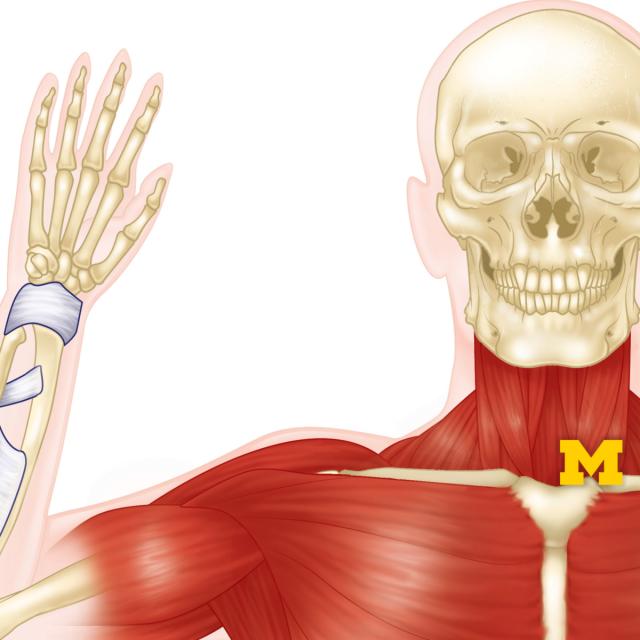
The second course begins the systems-based approach to human anatomy and physiology at the organ, organ system, and organism level. Three major body systems related to support and movement will be explored in detail: the skeletal and muscular systems. Course material will cover both the structure (anatomy) and function (physiology) of each system with direct application to human development and disease.

Class Deals by MOOC List - Click here and see Coursera's Active Discounts, Deals, and Promo Codes.

Syllabus

WEEK 1
Welcome to Support & Movement
Skeletal System - Function, Formation, & Fractures

WEEK 2
Skeletal System - Bones & Joints

WEEK 3
Muscular System - Control, Muscle Types, & Development

WEEK 4
Muscular System - Muscles
Course Final Assessments & Summary

Go to Class
MOOC List is learner-supported. When you buy through links on our site, we may earn an affiliate commission.

Related Courses

Visualizing the Living Body: Diagnostic Imaging (Coursera) Coursera
Yale University

Visualizing the Living Body: Diagnostic Imaging (Coursera)

This course teaches learners the underlying principles behind conventional radiography, computerized axial tomography (CT), magnetic resonance imaging (MRI), and ultrasound. The radiology of chest, abdomen, pelvis, extremities, spine and brain are taught in this course using a combination of lectures and extensive practical activities and assessments.

Jun 15th 2026
5-12 Weeks
Anatomy of the Abdomen and Pelvis; a journey from basis to clinic. (Coursera) Coursera
Leiden University,Leiden University Medical Center

Anatomy of the Abdomen and Pelvis; a journey from basis to clinic. (Coursera)

In this anatomy course you will explore the organs involved in our food digestion and discover the common causes of abdominal and pelvic pain. The latest graphics and animations will help you to find new insights and understanding of this part of the body, that has been the focus of anatomical research for centuries and presently arouses renewed scientific interest. You will explore the 3D anatomy of the organs from a basic level, providing thorough anatomical understanding, to its advanced application in surgical procedures.

May 18th 2026
5-12 Weeks
Biomedical Visualisation (Coursera) Coursera
University of Glasgow

Biomedical Visualisation (Coursera)

Visualisation is a rapidly progressive specialty in academia, research and industry, and becoming the future of science. With the advancement of digital technologies and their applications, biomedical visualisation is an evolving and popular field. With new techniques and technologies to image, process and analyse data related to the human body, and its biological processes, it is at the forefront of the digital revolution.

Jun 15th 2026
4 Weeks
Anatomy of the Chest, Abdomen, and Pelvis (Coursera) Coursera
Yale University

Anatomy of the Chest, Abdomen, and Pelvis (Coursera)

Human structure is important to all of us as it has been for millennia. Artists, teachers, health care providers, scientists and most children try to understand the human form from stick figure drawings to electron microscopy. Learning the form of people is of great interest to us – physicians, nurses, physician assistants, emergency medical services personnel and many, many others. Learning anatomy classically involved dissection of the deceased whether directly in the laboratory or from texts, drawings, photographs or videos. There are many wonderful resources for the study of anatomy. Developing an understanding of the human form requires significant work and a wide range of resources.

Jun 8th 2026
4 Weeks
Digestion, Micturition, and Reproduction (Coursera) Coursera
MedCerts

Digestion, Micturition, and Reproduction (Coursera)

In this course on Digestion, Micturition, and Reproduction, you will learn about the wonderful diversity of the digestive, urinary, and reproductive systems and the medical language that is used to describe these systems. Throughout each Lesson, the roots of terms are explained to help students understand how medical terminology works in healthcare and to increase their knowledge and understanding of the material discussed.

Jun 15th 2026
3 Weeks
Engineering Health: Introduction to Yoga and Physiology (Coursera) Coursera
New York University Tandon School of Engineering

Engineering Health: Introduction to Yoga and Physiology (Coursera)

This course gives you access to an exploration of physiological systems from the perspective of overall health and wellness. In particular, a focus on yoga, meditation and mindfulness as a therapeutic intervention in chronic illness and long term treatment. This course is intended for yoga practitioners and teachers, as well as college students and medical practitioners looking for a deeper understanding of the physiological benefits of yoga.

Jun 8th 2026
5-12 Weeks
Alexander Technique: Balanced Posture for Ease and Comfort (Coursera) Coursera
University of Michigan

Alexander Technique: Balanced Posture for Ease and Comfort (Coursera)

Many of us spend our days sitting at a desk, looking down at our phones, or moving in ways that cause significant discomfort for our bodies. In the Alexander Technique: Balanced Posture for Ease and Comfort, explore how this novel approach to your body’s organization and coordinated movement can help relieve pain and tension, promote calm, improve sleep, and allow you to breathe fully and easily without effort.

Jun 22nd 2026
5-12 Weeks
EMT Foundations (Coursera) Coursera
University of Colorado System

EMT Foundations (Coursera)

In this course, you will get a thorough introduction to the emergency medical services system, and learn the foundation components to how it works as a whole. You will also learn the nuts and bolts of becoming a healthcare provider, and gain some basic knowledge about the human body.

Jun 22nd 2026
5-12 Weeks
Medical Terminology I (Coursera) Coursera
Rice University

Medical Terminology I (Coursera)

This course will discuss the importance of learning medical language as well as introduce basic word parts and concepts applied in medical terminology. We will also learn about common organization and terms seen in medical records before moving into system-specific terms for the integumentary system (skin), musculoskeletal system (muscles and bones), and urinary (kidneys).

Jun 15th 2026
4 Weeks