FUN

Medical Entomology (FUN)

Offered by Institut Pasteur,
Medical Entomology (FUN)

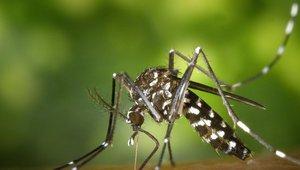
Which mosquitoes transmit the parasites responsible for malaria? Is the Asian tiger mosquito vector of the Zika virus? How is the transmission from vectors to humans and from humans to vector? Here are some of the questions that will find answers in the MOOC Pasteur "Medical entomology".

About 25% of annual deaths worldwide are related to infectious diseases and 23% of them are directly related to vector-borne diseases. Vector-borne diseases have a zoonotic origin meaning that the pathogen is transmitted from animals to humans. Pathogens such as bacteria, parasites and viruses are primarily maintained within an enzootic cycle between populations of non-human primates or other mammals and zoophilic vectors. This “wild” cycle sometimes spills over with infections of humans and domestic animals. Lifestyle changes, incursions by humans into natural habitats, and changes in agropastoral practices create opportunities that make the borders between wildlife and humans more permeable. Some vector-borne diseases have dispensed with the need for amplification in wild or domestic animals before being transmitted to humans. The design of control strategies for vector-borne diseases should be guided by research in emergence mechanisms in order to understand how a wild cycle can produce a pathogen that goes on to cause devastating urban epidemics.

The MOOC “Medical entomology” aims at providing the understanding in medical and veterinary entomology at the university level. It will teach the role of vectors in the functioning of ecosystems and, in a lot of cases, how to interrupt the vector transmission chain. It is organized from an entomological perspective, with each session devoted to a particular taxonomic group of insects and ticks.
What you will learn
At the end of this course, you will be able to:

  • know what is medical entomology,
  • learn how do the most fearsome arboviral diseases be transmitted by tiny little insects,
  • discover what are our natural alliances against the transmission.

Format
This MOOC is organized in 6 weeks of 3-6 sequences. Each sequence is composed of a 10 minutes video and a multiple choice test to help students check their understanding. The videos are in English, subtitled in French and English. All the tests are in English.
The MOOC students are invited to actively interact with the teaching team and the other students through the forum and during live stream hangouts.

Course syllabus

Week 1: Introduction to medical entomology

  • Arthropods of medical and veterinary importance
  • Orientation towards hosts in hematophagous insects
  • Hematophagy and transmission of pathogens
  • Genetic and Environmental determinants of vector-pathogen interactions
  • Vector-parasite interactions: what is a population & why do we care
  • Insecticide resistance in insect vectors

Week 2: Mosquitoes and Arboviruses

  • Zika, the new threat
  • Dengue fever
  • Yellow fever
  • Chikungunya, vector change and emergence
  • Infection by West-Nile virus
  • Natural history of Rift Valley fever

Week 3: Insect vectors and Parasites

  • History of malaria control strategies, a cycle of euphoria and apathy?
  • The global malaria strategy
  • Population genetics of Malaria vectors
  • Tsetse flies and African trypanosomiasis
  • Triatominae and Chagas disease

Week 4 - Other insects and related pathogens

  • Culicoides biting midges and transmission of Blue tongue
  • Fleas and plague
  • Black flies and onchocerciasis
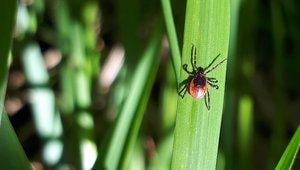
  • Ticks: biology, medical and veterinary importance
  • Phlebotomine sandflies
  • Role of sand flies in the transmission of arboviruses

Week 5: New methods and concepts to approach vector-borne diseases

  • Mathematical modelling of epidemics
  • Emerging and Re-emerging viruses, what did we learn?
  • RNA virus, genetic variability and evolution

Week 6: Insect immunity, microbiome and miscellaneous

  • Skin interface and arthropod borne diseases
  • RNAi-mediated antiviral immunity in insects
  • Importance of the insect microbiome in vector adaptation and pathogen transmission
Go to Class
MOOC List is learner-supported. When you buy through links on our site, we may earn an affiliate commission.

Related Courses

Public Involvement in Research (Coursera) Coursera
Imperial College London

Public Involvement in Research (Coursera)

This course focuses on participatory approaches in research, known as 'public involvement' in the UK. You'll specifically, consider why citizens and patients would be involved in research and explore participatory approaches across and within the research cycle in more detail, diving into questions such as: What kinds of participation can be undertaken at each of the 7 stages of the cycle? How can you utilise participation in research? What examples of using participatory approaches exist in research?

Jun 24th 2026
4 Weeks
Réhabilitation Améliorée après Chirurgie (FUN) FUN
Aix-Marseille Université

Réhabilitation Améliorée après Chirurgie (FUN)

Améliorer la prise en charge chirurgicale de nos patients, accélérer la reprise d’une activité autonome, limiter les complications liées à la chirurgie, et ainsi, diminuer les durées de séjour hospitalier, ce sont les bénéfices de la Réhabilitation Améliorée Après Chirurgie (RAAC). La RAAC vise en effet à accélérer le processus de récupération du patient, après une intervention chirurgicale par voie « mini-invasive » (coelioscopie conventionnelle ou robot assistée) chaque fois que possible ou par voie ouverte (laparotomie). Ces programmes permettent d’optimiser la prise en charge péri opératoire en standardisant des parcours de soins coordonnés, de la consultation chirurgicale jusqu’au retour à domicile.

No sessions available
5-12 Weeks
MOOC PRE-ECLAMPSIE (FUN) FUN
Université Sorbonne Paris Cité

MOOC PRE-ECLAMPSIE (FUN)

Ce MOOC propose une mise à jour des connaissances sur la pré-éclampsie et a pour but de vous faire connaitre les dernières nouveautés dans ce domaine. La pré-éclampsie est une des principales complications de la grossesse, pouvant avoir des conséquences graves pour la mère comme pour le fœtus. Les outils et les modalités de prise en charge évoluent régulièrement, et nécessitent une constante mise à jour des connaissances des professionnels de santé.

No session available
5-12 Weeks
Epidemiology: The Basic Science of Public Health (Coursera) Coursera
University of North Carolina

Epidemiology: The Basic Science of Public Health (Coursera)

Often called “the cornerstone” of public health, epidemiology is the study of the distribution and determinants of diseases, health conditions, or events among populations and the application of that study to control health problems. By applying the concepts learned in this course to current public health problems and issues, students will understand the practice of epidemiology as it relates to real life and makes for a better appreciation of public health programs and policies. This course explores public health issues like cardiovascular and infectious diseases – both locally and globally – through the lens of epidemiology.

Jun 22nd 2026
5-12 Weeks
Simulation en Santé, des principes aux applications (FUN) FUN
Université Sorbonne Paris Cité

Simulation en Santé, des principes aux applications (FUN)

Le Mooc « Simulation en Santé » a pour ambition de donner à des non spécialistes un ensemble de connaissances permettant d'appréhender la simulation appliquée aux métiers de la santé, ses principes, ses outils, ses bonnes pratiques, et pour les plus motivés les premières données essentielles pour aborder un cours d’instructeur en simulation (Train the trainer program) et devenir demain formateur en simulation en santé.

No sessions available
5-12 Weeks
At the heart of medical radioactivity (FUN) FUN
Université de Nantes

At the heart of medical radioactivity (FUN)

After a brief introduction on the physical basis of radioactivity, the MOOC "at the heart of medical radioactivity", will present in different stages the interest of medical radioactivity, from the design of a radiopharmaceutical to its use in the patient. The public objective of this MOOC is to demonstrate the medical use of radioactivity and its modalities.

No sessions available
5-12 Weeks
Méditation et médecine en 2021 : éloge du care ? (FUN) FUN
Université de Paris

Méditation et médecine en 2021 : éloge du care ? (FUN)

Un parcours en 5 semaines pour Cultiver le prendre soin - S'interroger, Se nourrir, Ressentir, Respirer. Etudiantes en médecines, nous avons rencontré la méditation de pleine conscience comme une manière de rentrer en résonance, un moment avec soi, un souffle, une respiration, une manière de prendre soin de nous, pour mieux prendre soin des autres. Touchées par la vie, la mort, l’humain, l’impermanence, le doute, la peur, l'échec…Aujourd’hui femmes, médecins, nous l’avons transmis aux étudiants par l'enseignement.

Feb 5th 2022
5-12 Weeks
Health for All Through Primary Health Care (Coursera) Coursera
Johns Hopkins University

Health for All Through Primary Health Care (Coursera)

This course explores why primary health care is central for achieving Health for All. It provides examples of how primary health care has been instrumental in approaching this goal in selected populations and how the principles of primary health care can guide future policies and actions. Two of the most inspiring, least understood, and most often derided terms in global health discourse are “Health for All” and “Primary Health Care.”

Jun 28th 2026
5-12 Weeks
Maladie de Parkinson (FUN) FUN
Université de Nantes

Maladie de Parkinson (FUN)

Le MOOC maladie de Parkinson vise à mieux faire connaître cette maladie qui, en France, touche environ 1% des personnes âgées de plus 70 ans. Cette seconde session, totalement remaniée et enrichie de nouveaux contenus s’adresse au grand public, aux patients et à leurs aidants, ainsi qu’aux étudiants en biologie/santé et aux soignants.

No sessions available
5-12 Weeks
Au cœur de la radioactivité médicale (FUN) FUN
Université de Nantes

Au cœur de la radioactivité médicale (FUN)

L’objectif général de ce MOOC est de replacer les enjeux de l’utilisation de la radioactivité en santé. Il aborde les notions essentielles à savoir sur la radioactivité, sur la production d’isotopes radioactifs et sur les médicaments radiopharmaceutiques. Les applications médicales et les règles élémentaires de radioprotection y sont traitées au travers d’exemples concrets.

No sessions available
5-12 Weeks