FUN

Diagnosis and prognosis biomarkers in global health (FUN)

Offered by Institut Pasteur,
Diagnosis and prognosis biomarkers in global health (FUN)

Biomarkers are the subject of considerable interest by scientists and researchers worldwide: they determine the use of targeted treatments (a major therapeutic advance in medicine), allow to measure the evolution of a disease or to indicate a particular physiological event. The aim of this MOOC is to review the interest of biomarkers for public health, based in particular on the research activities of the thirty-three institutes of the Institut Pasteur international network.

After a period of enthusiasm, it is clear that the development of reliable biomarkers is long and complex and must respect rigorous methodological constraints. Due to the extraordinary development of genomics and proteomics and the exposure of the Institut Pasteur international network (IPIN) to emerging diseases, the Institut Pasteur is particularly well-positioned to study the interest of biomarkers for diseases diagnosis and prognosis in global health.

This MOOC is organized into four chapters. The first chapter introduces the subject and delas with the definition and methodological aspects of biomarkers; the second chapter, based on targeted examples (HIV, arbovirus, malaria, tuberculosis, etc.), focuses on the use of biomarkers in infectious diseases. The third chapter is dedicated to biomarkers in oncology. The fourth chapter sheds light on the use of biomarkers in the context of non-communicable diseases (rare diseases, Alzheimer's disease, liver disease, etc.).
This MOOC revolves around two important points: first, the undeniable diagnostic, prognostic and / or therapeutic interest of biomarkers. At each stage of a patient’s care, from the diagnosis of a disease to its treatment, biomarkers are useful and make it possible to hope for a "personalized medicine". The second important point refers to the limits of most biomarkers: insufficient sensitivity or specificity; possible application to a subgroup of patients only, for a given pathology; short duration of their half-life, reducing their clinical relevance (due to the emergence of more effective biomarkers or therapeutic progress). Research on biomarkers remains essential to overcome these limitations, to define new combinations of different biomarkers and to optimize their performance and hence their use. We hope that this MOOC and the associated multiple-choice questions will clarify the use of bio-markers in tomorrow’s medicine and highlight both their advantages and limitations.

Course syllabus

Chap I : Introduction
Françoise Barré-Sinoussi : Biomarkers and IPIN
Stanislas Pol : What are we up to with biomarkers?
Antonin Ginguay : The role of CA 125 and HE4 in the history of biomarkers +
Catherine Larue : Validation of biomarkers
Arnaud Fontanet : Definition of a good biomarker from a statistical point of view
Amalio Telenti : Use of pharmacogenetics
Matthew Albert : Biomarkers: from research to industrial development

Chap II : Biomarkers in infectious diseases
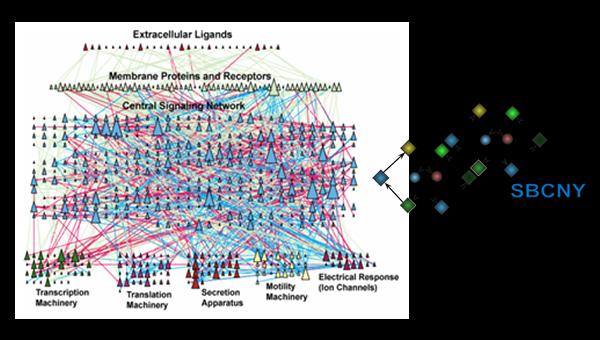
Iryna Nikolayeva : Systems Biology Lab and Functional Genetics of Infectious Diseases Unit
Laetitia Velly : Early biomarkers for the diagnosis of bacterial infection in emergency departments
Yves Germani : biomarkers for meningitis diagnostics
Didier Ménard : Biomarks of resistance to artemisinin
Béatrice Jacquelin : Creation of diagnostic tools in case of outbreak : the Ebola example
Brigitte Gicquel : Biomarkers for multi-drug resistance tuberculosis
Elhem Yacoub : Biomarkers for Serodiagnosis of Human Mollicutes Infections
Sean Kennedy : Biomarkers of microbiota
John Hiscott : Biomarkers for patients infected with Human T cell Leukemia Virus
Desmukh Gopaul : A device for the detection of (re)-emerging arboviral diseases

Chap III : Biomarkers in oncology
Dominique Bellet : Biomarkers and therapeutic indications in oncology
Iradj Sobhani : Colon and Rectal Cancer (CRC) et Biomarkers
Pascal Pineau : Biomarkers and HCC

Chap IV : Biomarkers in metabolic and inflammatory diseases
Darragh Duffy : Ultrasensitive detection of protein biomarkers for diagnosis of rare diseases
Wilson Savino : biomarkers for non-communicable diseases : the case of Duchesne distrophy
Sofiane Samir Salah : biomarkers for non-communicable diseases : the case of rheumatoid arthritis
Vincent Chouraki : Biomarkers in Alzheimer
Cosmin Voican : Biomarkers of excessive alcoholic intake

Chap V : Conclusions
Sara Eyangoh : Development of biomarkers in IPIN – perspectives for biomarkers in the future
Marie-Astrid Vernet : Conclusion - Take home messages

Go to Class
MOOC List is learner-supported. When you buy through links on our site, we may earn an affiliate commission.

Related Courses

Les conduites suicidaires : identifier et prévenir (FUN) FUN
Université de Montpellier

Les conduites suicidaires : identifier et prévenir (FUN)

Faire face à un suicide abouti ou une personne suicidaire nous questionne sur notre propre expérience. Ces personnes sont des personnes comme les autres, comme nous tous, pour lesquelles la vie est devenue source de souffrance. Les comprendre, c'est nous comprendre, découvrir les faiblesses de notre personnalité, les manques de notre environnement, de notre société. Avec ce MOOC, nous proposons une formation accessible à toutes les personnes s’intéressant à la problématique suicidaire, pour des raisons personnelles, professionnelles, scientifiques voire philosophiques.

No sessions available
5-12 Weeks
Diabetes - a Global Challenge (Coursera) Coursera
University of Copenhagen

Diabetes - a Global Challenge (Coursera)

Diabetes and obesity are growing health problems in rich and poor countries alike. With this course you will get updated on cutting-edge diabetes and obesity research including biological, genetic and clinical aspects as well as prevention and epidemiology of diabetes and obesity. All lectures are provided by high-profile scientists from one the world's leading universities in diabetes research.

Sep 14th 2026
5-12 Weeks
Au cœur de la radioactivité médicale (FUN) FUN
Université de Nantes

Au cœur de la radioactivité médicale (FUN)

L’objectif général de ce MOOC est de replacer les enjeux de l’utilisation de la radioactivité en santé. Il aborde les notions essentielles à savoir sur la radioactivité, sur la production d’isotopes radioactifs et sur les médicaments radiopharmaceutiques. Les applications médicales et les règles élémentaires de radioprotection y sont traitées au travers d’exemples concrets.

No sessions available
5-12 Weeks
Training and Learning Programs for Volunteer Community Health Workers (Coursera) Coursera
Johns Hopkins University

Training and Learning Programs for Volunteer Community Health Workers (Coursera)

Volunteer community health workers (CHWs) are a major strategy for increasing access to and coverage of basic health interventions. Our village health worker training course reviews the process of training and continuing education of CHWs as an important component of involving communities in their own health service delivery. Participants will be guided through the steps of planning training and continuing education activities for village volunteers. The course draws on real-life examples from community-directed onchocerciasis control, village health worker programs, community case management efforts, peer educators programs and patent medicine vendor training programs, to name a few.

Sep 14th 2026
5-12 Weeks
Chemicals and Health (Coursera) Coursera
Johns Hopkins University

Chemicals and Health (Coursera)

This course covers chemicals in our environment and in our bodies and how they impact our health. It addresses policies and practices related to chemicals, particularly related to how they get into our bodies (exposures), what they do when they get there (toxicology), how we measure them (biomonitoring) and their impact on our health. Most examples are drawn from the US.

Sep 14th 2026
5-12 Weeks
"Care for carers" Aider une personne âgée : un rôle à part entière. Conseils et soutien (FUN) FUN
Université Fédérale Toulouse Midi-Pyrénées

"Care for carers" Aider une personne âgée : un rôle à part entière. Conseils et soutien (FUN)

This course is entended for anyone engaged in a care relationship with older people in disability or dependency situations, whether formal or informal caregivers. This module is part of Care Campus, a unique partner ship of academic institutions companies cities and governemental agencies that aim to improve the quality of care of older citizens in Europe.

No sessions available
5-12 Weeks
Changement climatique et santé en contexte africain (FUN) FUN
Université Sorbonne Paris Cité

Changement climatique et santé en contexte africain (FUN)

Le MOOC «Changement climatique et santé dans le contexte africain» ne se contente pas de fournir des explications sur la réalité du changement climatique et de ses impacts sanitaires en Afrique, il constitue un véritable espace de réflexion en commun sur la meilleure façon de se préparer, s'adapter et prévenir au mieux les risques sur la santé.

No sessions available
5-12 Weeks
Santé sexuelle pour tous (partie 1) (FUN) FUN
Université Sorbonne Paris Cité

Santé sexuelle pour tous (partie 1) (FUN)

Ce MOOC s’inscrit dans une stratégie nationale de santé sexuelle agenda 2030 pour la France et l’international. De plus il s’inscrit dans les Objectifs du Développement Durable 2030 des N.U. notamment les cibles 3.3 Mettre fin aux épidémies du VIH/sida et des IST, 3.4 Promouvoir la santé mentale et le bien être sexuel, 3.7 Assurer l’accès, pour tous, aux services de soins de santé sexuelle et procréative, à l’information et à l’éducation, en lien avec les 16 autres objectifs.

No sessions available
5-12 Weeks
Simulation en Santé, des principes aux applications (FUN) FUN
Université Sorbonne Paris Cité

Simulation en Santé, des principes aux applications (FUN)

Le Mooc « Simulation en Santé » a pour ambition de donner à des non spécialistes un ensemble de connaissances permettant d'appréhender la simulation appliquée aux métiers de la santé, ses principes, ses outils, ses bonnes pratiques, et pour les plus motivés les premières données essentielles pour aborder un cours d’instructeur en simulation (Train the trainer program) et devenir demain formateur en simulation en santé.

No sessions available
5-12 Weeks
Ouvrez les portes du laboratoire: cellules et cellules souches (FUN) FUN
Université de Nantes

Ouvrez les portes du laboratoire: cellules et cellules souches (FUN)

Comment cultiver des cellules humaines ? Comment les reprogrammer en cellules souches ? A la suite des travaux du prix Nobel Shinya Yamanaka, découvrez les principales étapes de la reprogrammation des cellules humaines en cellules souches, et abordons ensemble les connaissances de base de la biologie cellulaire, ses méthodes expérimentales et la publication scientifique.

No sessions available
5-12 Weeks