FUN

Eléments de santé au travail pour les ingénieurs et managers (FUN)

Offered by le cnam,
Eléments de santé au travail pour les ingénieurs et managers (FUN)

Le MOOC éléments de santé au travail pour les ingénieurs et managers, ne vise pas à former des spécialistes de la santé au travail. Son but est de fournir des éléments permettant aux cadres ou futurs cadres d’intégrer cette dimension dans leur pratique professionnelle. Pour cela, le contenu du cours s’articule autour de trois axes.

Le premier est de fournir aux cadres des éléments leur permettant de réfléchir à leur pratique, de leur permettre de comprendre le réseau de contraintes dans lequel ils se situent.
Le deuxième est de développer des compétences managériales pour favoriser une relation entre le travail et la santé qui soit profitable tant pour les équipes que pour la performance globale des entreprises.

Le troisième est de présenter le cadre juridique et institutionnel de la santé au travail et les responsabilités qui incombent aux employeurs ainsi que les grands pièges à éviter. Pour transmettre ces connaissances et ces compétences, un cours en ligne offre de nombreux atouts. Il permet de conjuguer des séquences de cours classiques, des témoignages d’acteurs et des outils d’auto apprentissage. En quelques heures d’étude, il permet de comprendre les enjeux de la santé au travail d’une façon plus dynamique et pratique que les formes d’enseignement traditionnelles.
Enfin, il est particulièrement adapté à un large public qu’il serait impossible de rejoindre autrement.

Plan du cours:

Semaine 1 : La relation travail – santé
Pourquoi la santé concerne toutes les entreprises
La prévention des risques, un facteur de performance
Une nouvelle approche de la prévention
Les coûts et les bénéfices de la prévention

Semaine 2 : Les acteurs de la santé au travail
Les principes généraux de prévention
Les responsabilités civiles et pénales - Délégation de pouvoir
L'importance du dialogue social
Rôle et mission des principaux acteurs en santé travail
Les services de santé au travail

Semaine 3 : Les grands problèmes de santé liés au travail
Les grands enjeux de la santé au travail
Risques et dangers
Risques connus et risques émergents
Démarche d'évaluation des risques
Risques psychosociaux : de quoi parle-t-ton ?

Semaine 4 : Les outils d'action
Organiser la prévention
Vie personnelle, vie professionnelle et bien-être : quelles interactions ?
La culture santé
L'approche ergonomique

Semaine 5 : Intégrer la prévention au quotidien
Définition de la politique santé et sécurité au travail et des objectifs
Les référentiels de management
Prendre en compte la santé dans les projets de réorganisation
La relation médecins-managers
Le manager et le dialogue social

Semaine 6 : Que peuvent faire les managers ?
La posture managériale favorable à la santé
L'approche managériale du stress
Comprendre les comportements face au risque
Le témoignage d'un manager
Éviter et gérer les crises : une synthèse
Go to Class
MOOC List is learner-supported. When you buy through links on our site, we may earn an affiliate commission.

Related Courses

Medical Neuroscience (Coursera) Coursera
Duke University

Medical Neuroscience (Coursera)

Medical Neuroscience explores the functional organization and neurophysiology of the human central nervous system, while providing a neurobiological framework for understanding human behavior. In this course, you will discover the organization of the neural systems in the brain and spinal cord that mediate sensation, motivate bodily action, and integrate sensorimotor signals with memory, emotion and related faculties of cognition. The overall goal of this course is to provide the foundation for understanding the impairments of sensation, action and cognition that accompany injury, disease or dysfunction in the central nervous system. The course will build upon knowledge acquired through prior studies of cell and molecular biology, general physiology and human anatomy, as we focus primarily on the central nervous system.

Sep 14th 2026
13-24 Weeks
Innate Immunity (FUN) FUN
Institut Pasteur

Innate Immunity (FUN)

More than a century ago, Elie Metchnikoff established the bases of cellular innate immunity when he discovered the mechanism of phagocytosis. However, during most of the XXth century, adaptive immunity (also known as specific immunity) focused most of the interest of the researchers, until Charles Janeway and Polly Matzinger revisited the definition of immunology. What was called “non-specific immunity” was renamed “innate immunity”, and the understanding of the sensing of the exogenous or endogenous dangers signals, and their identification revolutionized our understanding of the early mechanism aimed to defend the integrity of the host against any type of attacks including pathogens.

Jan 14th 2022
5-12 Weeks
An Introduction to the U.S. Food System: Perspectives from Public Health (Coursera) Coursera
Johns Hopkins University

An Introduction to the U.S. Food System: Perspectives from Public Health (Coursera)

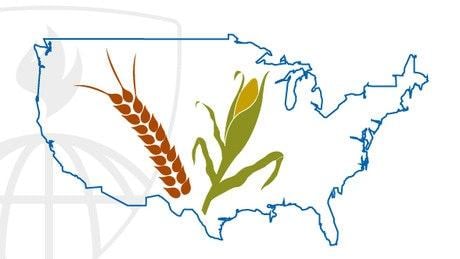
A food system encompasses the activities, people and resources involved in getting food from field to plate. Along the way, it intersects with aspects of public health, equity and the environment. In this course, we will provide a brief introduction to the U.S. food system and how food production practices and what we choose to eat impacts the world in which we live. Through several case studies, we will discuss some key historical and political factors that have helped shape the current food system and consider alternative approaches from farm to fork.

Sep 14th 2026
5-12 Weeks
Epidemiology: The Basic Science of Public Health (Coursera) Coursera
University of North Carolina

Epidemiology: The Basic Science of Public Health (Coursera)

Often called “the cornerstone” of public health, epidemiology is the study of the distribution and determinants of diseases, health conditions, or events among populations and the application of that study to control health problems. By applying the concepts learned in this course to current public health problems and issues, students will understand the practice of epidemiology as it relates to real life and makes for a better appreciation of public health programs and policies. This course explores public health issues like cardiovascular and infectious diseases – both locally and globally – through the lens of epidemiology.

Sep 14th 2026
5-12 Weeks
Training and Learning Programs for Volunteer Community Health Workers (Coursera) Coursera
Johns Hopkins University

Training and Learning Programs for Volunteer Community Health Workers (Coursera)

Volunteer community health workers (CHWs) are a major strategy for increasing access to and coverage of basic health interventions. Our village health worker training course reviews the process of training and continuing education of CHWs as an important component of involving communities in their own health service delivery. Participants will be guided through the steps of planning training and continuing education activities for village volunteers. The course draws on real-life examples from community-directed onchocerciasis control, village health worker programs, community case management efforts, peer educators programs and patent medicine vendor training programs, to name a few.

Sep 14th 2026
5-12 Weeks
Chemicals and Health (Coursera) Coursera
Johns Hopkins University

Chemicals and Health (Coursera)

This course covers chemicals in our environment and in our bodies and how they impact our health. It addresses policies and practices related to chemicals, particularly related to how they get into our bodies (exposures), what they do when they get there (toxicology), how we measure them (biomonitoring) and their impact on our health. Most examples are drawn from the US.

Sep 14th 2026
5-12 Weeks
Career 911: Your Future Job in Medicine and Healthcare (Coursera) Coursera
Northwestern University

Career 911: Your Future Job in Medicine and Healthcare (Coursera)

This course aims to help high school students, recent graduates, and those considering career transitions explore health care career options and learn strategies for entry into the health care workforce and health related fields. There are lots of amazing job opportunities in medicine and healthcare! Join us, as we share the strategies and secrets for getting those jobs.

Sep 14th 2026
5-12 Weeks
Ouvrez les portes du laboratoire: cellules et cellules souches (FUN) FUN
Université de Nantes

Ouvrez les portes du laboratoire: cellules et cellules souches (FUN)

Comment cultiver des cellules humaines ? Comment les reprogrammer en cellules souches ? A la suite des travaux du prix Nobel Shinya Yamanaka, découvrez les principales étapes de la reprogrammation des cellules humaines en cellules souches, et abordons ensemble les connaissances de base de la biologie cellulaire, ses méthodes expérimentales et la publication scientifique.

No sessions available
5-12 Weeks
Maladie de Parkinson (FUN) FUN
Université de Nantes

Maladie de Parkinson (FUN)

Le MOOC maladie de Parkinson vise à mieux faire connaître cette maladie qui, en France, touche environ 1% des personnes âgées de plus 70 ans. Cette seconde session, totalement remaniée et enrichie de nouveaux contenus s’adresse au grand public, aux patients et à leurs aidants, ainsi qu’aux étudiants en biologie/santé et aux soignants.

No sessions available
5-12 Weeks
The Social Context of Mental Health and Illness (Coursera) Coursera
University of Toronto

The Social Context of Mental Health and Illness (Coursera)

Learn how social factors promote mental health, influence the onset and course of mental illness, and affect how mental illnesses are diagnosed and treated. This course explores how our understanding of mental health and illness has been influenced by social attitudes and social developments in North America and around the world. The course begins by situating our contemporary mental health practices in historical context, then looks at different aspects of mental health, mental illness and mental health services and their connections to what’s going on in our social environment.

Sep 14th 2026
5-12 Weeks