Lead Selection & Optimization (Coursera)

Offered by Novartis,
Lead Selection & Optimization (Coursera)

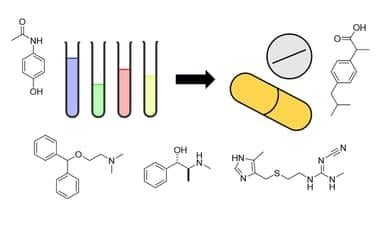
This course covers the stages of drug discovery in which promising compounds (leads) are identified, their optimal and suboptimal characteristics determined, and the suboptimal characteristics optimized to create a candidate suitable for the clinic.  The course is built around a case study on the discovery of an antimalarial therapy. 

Class Deals by MOOC List - Click here and see Coursera's Active Discounts, Deals, and Promo Codes.

Assays useful for screening new compounds are outlined, examples of selection criteria for leads are discussed - such as potency, efficacy, and pharmacokinetics - and the structure activity relationships that contribute to the optimization of a lead series are considered.  The phenotypic approach used by the antimalarial program will be briefly contrasted with a target-based program on a different target.
Target audience: This course is suitable for life scientists, clinicians, and individuals from fields that support drug discovery (e.g., patents, finance, licensing, etc.) interested in learning more about the pharmaceutical/biotechnology sector. Advanced undergraduate coursework or practical familiarity/working knowledge in biological sciences and organic chemistry is recommended.
This course is part of the Drug Hunting: The Science of Making New Medicines Specialization.

Syllabus

Lead Selection & Optimization, part 1
Welcome, by the end of the course students will be able to: Recognize malaria as a neglected tropical disease and understand its significance as an unmet medical need. Identify and describe some of the characteristics an effective small molecule therapeutic should possess, and liabilities to avoid. Describe the principles and common approaches used in defining and optimizing a lead compound's pharmacophore.

Lead Selection & Optimization, part 2

Lead Selection & Optimization, part 3

Go to Class
MOOC List is learner-supported. When you buy through links on our site, we may earn an affiliate commission.

Related Courses

The Brain and Space (Coursera) Coursera
Duke University

The Brain and Space (Coursera)

This course is about how the brain creates our sense of spatial location from a variety of sensory and motor sources, and how this spatial sense in turn shapes our cognitive abilities. Knowing where things are is effortless. But “under the hood,” your brain must figure out even the simplest of details about the world around you and your position in it.

Jun 22nd 2026
5-12 Weeks
Career 911: Your Future Job in Medicine and Healthcare (Coursera) Coursera
Northwestern University

Career 911: Your Future Job in Medicine and Healthcare (Coursera)

This course aims to help high school students, recent graduates, and those considering career transitions explore health care career options and learn strategies for entry into the health care workforce and health related fields. There are lots of amazing job opportunities in medicine and healthcare! Join us, as we share the strategies and secrets for getting those jobs.

Jun 22nd 2026
5-12 Weeks
Innovate & Regulate: Drug Research, Costs, Clinical Trials & Approval (edX) EdX
Davidson College,DavidsonX

Innovate & Regulate: Drug Research, Costs, Clinical Trials & Approval (edX)

At some point in their life, essentially everyone needs to use medication for some type of disease treatment or cure. While medications offer great benefits, the cost of drugs, especially new drugs, and the lack of treatment for some diseases can raise questions about business activity behind the creation of new drugs. Better understanding of how drugs are discovered and developed as well as the legal and regulatory factors that affect the industry can help one better recognize both the shortcomings and opportunities faced by the drug industry at large.

Self Paced
Self-Paced
Drug Discovery in Prevention and Treatment of COVID-19 (edX) EdX
Tsinghua University,TsinghuaX

Drug Discovery in Prevention and Treatment of COVID-19 (edX)

This curriculum includes research into fundamental knowledge of clinical diagnosis, prevention and treatment of COVID-19. The beginning of 2020 have witnessed the emergence of COVID-19 escalating to a world pandemic. This virus have claimed more than 100,000 death reported by WHO, 10 times more than the seasonal flu does. Since the severity of the virus is becoming crystal clear, it is essential to grasp related knowledge to prepare us for self-protection and future drug development.

Self Paced
Self-Paced
Future Healthcare Payment Models (Coursera) Coursera
Northeastern University

Future Healthcare Payment Models (Coursera)

This course will review the drivers of healthcare cost and solutions that have been proposed to address cost, quality and value of health care. Many point blame for high costs on payment models that pay healthcare providers for every service they provide to patients, essentially paying more for volume and service intensity. This is called a Fee for Service (FFS) payment model. Some solutions, arguably the more sustainable solutions, are the combined strategies of new payment models, care management, insurance plan designs, consumer engagement tools, and technology.

Jun 24th 2026
4 Weeks
Introduction to Drug Hunting (Coursera) Coursera
Novartis

Introduction to Drug Hunting (Coursera)

This course introduces and summarizes the different steps of preclinical drug discovery, wrapping up with a brief description of the subsequent clinical trials and the importance of competitive intelligence in project strategy.  It provides a high-level overview for those interested in a more general understanding of the topic and forms the foundation for a more in-depth exploration of topics covered in other courses in this series.

Jun 15th 2026
3 Weeks
Epidemics - the Dynamics of Infectious Diseases (Coursera) Coursera
Pennsylvania State University

Epidemics - the Dynamics of Infectious Diseases (Coursera)

Not so long ago, it was almost guaranteed that you would die of an infectious disease. In fact, had you been born just 150 years ago, your chances of dying of an infectious disease before you've reached the tender age of 5 would have been extremely high. Since then, science has come a long way in understanding infectious diseases - what they are, how they spread, and how they can be prevented. But diseases like HIV/AIDS, Malaria, Tuberculosis, or the flu are still major killers worldwide, and novel emerging diseases are a constant threat to public health. In addition, the bugs are evolving. Antibiotics, our most potent weapon against bacterial infections, are losing their power because the bacteria are becoming resistant. In this course, we'll explore the major themes of infectious diseases dynamics.

Jun 22nd 2026
5-12 Weeks
Primeros Auxilios Psicológicos (PAP) (Coursera) Coursera
Universitat Autònoma de Barcelona

Primeros Auxilios Psicológicos (PAP) (Coursera)

Este curso on-demand (ABIERTO, se puede cursar en cualquier momento), impartido en castellano por la Universidad Autónoma de Barcelona y el Centro de Crisis de Barcelona, está destinado a entrenar en la aplicación de primeros auxilios psicológicos (PAP) a personas afectadas por situaciones altamente estresantes, abarcando tanto emergencias cotidianas (incidentes críticos estadísticamente frecuentes que afectan de manera muy intensa: un accidente de tráfico, una hospitalización, una agresión o la muerte traumática o repentina de una persona, etc.) como emergencias comunitarias y/o masivas (sucesos infrecuentes, que afectan a muchas personas o a una comunidad entera y que sobrepasan con mucho lo que sucede habitualmente en ella: una catástrofe natural, un accidente ferroviario o aéreo o un atentado).

Jun 22nd 2026
5-12 Weeks
Dino 101: Dinosaur Paleobiology (Coursera) Coursera
University of Alberta

Dino 101: Dinosaur Paleobiology (Coursera)

Dino 101: Dinosaur Paleobiology is a 12-lesson course teaching a comprehensive overview of non-avian dinosaurs. Topics covered: anatomy, eating, locomotion, growth, environmental and behavioral adaptations, origins and extinction. Lessons are delivered from museums, fossil-preparation labs and dig sites. Estimated workload: 3-5 hrs/week.

Jun 27th 2026
5-12 Weeks
Data Management for Clinical Research (Coursera) Coursera
Vanderbilt University

Data Management for Clinical Research (Coursera)

This course presents critical concepts and practical methods to support planning, collection, storage, and dissemination of data in clinical research. Understanding and implementing solid data management principles is critical for any scientific domain. Regardless of your current (or anticipated) role in the research enterprise, a strong working knowledge and skill set in data management principles and practice will increase your productivity and improve your science. Our goal is to use these modules to help you learn and practice this skill set.

Jun 22nd 2026
5-12 Weeks
Public Involvement in Research (Coursera) Coursera
Imperial College London

Public Involvement in Research (Coursera)

This course focuses on participatory approaches in research, known as 'public involvement' in the UK. You'll specifically, consider why citizens and patients would be involved in research and explore participatory approaches across and within the research cycle in more detail, diving into questions such as: What kinds of participation can be undertaken at each of the 7 stages of the cycle? How can you utilise participation in research? What examples of using participatory approaches exist in research?

Jun 24th 2026
4 Weeks