EdX

Introduction to Mao Zedong Thought | 毛泽东思想概论 (edX)

Introduction to Mao Zedong Thought | 毛泽东思想概论 (edX)

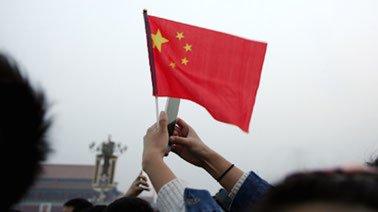
Mao Zedong founded the People's Republic of China in 1949, but who was he and how did his theories, strategies and policies shape modern China? 毛泽东思想是中国共产党治国理政的指南针、显微镜和望远镜。本课程将带你探索这些政治理论的来龙去脉、微言大义和现实影响等。

Class Deals by MOOC List - Click here and see EdX's Active Discounts, Deals, and Promo Codes.

With the world’s biggest population and second largest economy, China is a dynamic and ethnically diverse country with a history that spans more than 5,000 years. In 1949, revolutionary leader Mao Zedong founded modern China, or the People's Republic of China, as the leader of the Communist Party of China (CPC).
But who was Chairman Mao and how did his theories, strategies and policies shape modern China?
This course introduces Mao Zedong Thought and highlights how Chairman Mao’s theories dramatically shaped and influenced the political foundation what China has become today.
Introduction to Mao Zedong Thought gives learners around the world a rare peek into a course that millions of university students in China are required to take each year. Influenced by Marxism-Leninism Thought, Mao Zedong Thought incorporates ideological and political theories introduced by the first Chairman of the Communist Party of China.

What you'll learn:

  • Mao’s three major theories: New Democratic theory, Social Transformation theory and China’s Socialist Construction process
  • Impact of Mao Zedong Thought on modern-day China
  • An understanding of a political course required of undergraduate students in China
Go to Class
MOOC List is learner-supported. When you buy through links on our site, we may earn an affiliate commission.

Related Courses

China Humanities: The Individual in Chinese Culture (edX) EdX
HarvardX,Harvard University

China Humanities: The Individual in Chinese Culture (edX)

Explore Chinese history and culture from the perspective of the individual through philosophical texts, literary works, and art. In China’s history, there has been a longstanding belief that being cultured and being moral are necessary for a person to participate in public life. We often think of China in political terms – and focus on the history of government – or in social terms – and study the role of the family in society. But this course looks at the individual and the striving for culture and morality.

Self Paced
Self-Paced
Social Science Approaches to the Study of Chinese Society Part 1 (Coursera) Coursera
The Hong Kong University of Science and Technology - HKUST

Social Science Approaches to the Study of Chinese Society Part 1 (Coursera)

This course seeks to turn learners into informed consumers of social science research. It introduces concepts, standards, and principles of social science research to the interested non-expert. Learners who complete the course will be able to assess evidence and critically evaluate claims about important social phenomena. It reviews the origins and development of social science, describes the process of discovery in contemporary social science research, and explains how contemporary social science differs from apparently related fields. It describes the goals, basic paradigms, and methodologies of the major social science disciplines.

Jun 8th 2026
5-12 Weeks
Understanding China, 1700-2000: A Data Analytic Approach, Part 1 (Coursera) Coursera
The Hong Kong University of Science and Technology - HKUST

Understanding China, 1700-2000: A Data Analytic Approach, Part 1 (Coursera)

The purpose of this course is to summarize new directions in Chinese history and social science produced by the creation and analysis of big historical datasets based on newly opened Chinese archival holdings, and to organize this knowledge in a framework that encourages learning about China in comparative perspective. Our course demonstrates how a new scholarship of discovery is redefining what is singular about modern China and modern Chinese history.

Jun 8th 2026
5-12 Weeks
History of Chinese Architecture | 中国建筑史 (edX) EdX
Tsinghua University,TsinghuaX

History of Chinese Architecture | 中国建筑史 (edX)

This course explores China's rich and varied architectural history. (In Mandarin with English subtitles.) 体味中国古建筑之美,理解中国建筑的重要内涵 China's architectural history spans thousands of years. In this course, we will explore the ancient cities of Chang'an of Han, Luoyang of Northern Wei, Chang'an and Luoyang of Sui and Tang, Kaifeng of Song and Dadu of Yuan, and delve into the history of the awe-inspiring ancient buildings that still grace the landscape of these bustling cities.

No sessions available
13-24 Weeks
Mao to Now: On Chinese Marxism (edX) EdX
The University of Newcastle, Australia,NewcastleX

Mao to Now: On Chinese Marxism (edX)

An insightful study of Chinese Marxism, socialism and capitalism - critical for anyone who wishes to engage with China today. To make sense of modern China, you simply cannot ignore Marxism. ‘From Mao to Now’ presents current topics that anyone who wishes to engage with China should know. Rather than praising or condemning, the course focuses on building a deeper understanding of this history through two interwoven elements.

No session available
5-12 Weeks
Chinese Culture: Interaction (edX) EdX
The Hong Kong Polytechnic University,HKPolyUx

Chinese Culture: Interaction (edX)

This compact course introduces 5 interesting aspects of Chinese cultural exchange and interaction with other countries in history. They are (a) China and the West, (b) China and Central Asia (c) China and Vietnam, (d) Colonialism, Anti-Colonialism and Pan-Asianism, and (e) Chinese Food and Cuisine. This dynamic course forms part of the HKPolyUx series on Chinese culture.

Self Paced
Self-Paced
文物精品与文化中国:农业与制造业 | Relics in Chinese History - Part 1: Agriculture and Manufacturing (edX) EdX
Tsinghua University,TsinghuaX

文物精品与文化中国:农业与制造业 | Relics in Chinese History - Part 1: Agriculture and Manufacturing (edX)

Discover manufacturing and agriculture’s role in the history of China as we explore Chinese culture through artifacts and relics. 本课程以精品文物作引子,将学术界探索中华文明的过程作为线索,介绍古代中国在造船、玉器等诸多领域的杰出成就

Self Paced
Self-Paced
Literati China: Examinations, Neo-Confucianism, and Later Imperial China (edX) EdX
HarvardX,Harvard University

Literati China: Examinations, Neo-Confucianism, and Later Imperial China (edX)

Explore China’s imperial period, with a focus on the Song dynasty and the role of the exam system in government. Fundamental changes in government, the economy, and broader society took place between the 8th and 11th centuries in China. The state aristocracy gave way to new literati elite: educated men who sought to enter government through competitive examinations. A new kind of Confucianism also took shape, which prized the moral autonomy of individuals. With this, the later imperial period of China’s history begins.

Self Paced
Self-Paced
Modern China’s Foundations: The Manchus and the Qing (edX) EdX
HarvardX,Harvard University

Modern China’s Foundations: The Manchus and the Qing (edX)

Learn how the Manchus conquered the Qing and established the last of the imperial dynasties. This course, part of a comprehensive series on China, looks at the Qing state in the early 1600s and the challenges that the Manchus faced as minority rulers. While living in Chinese cities and surrounded by Chinese culture — a culture that was far more sophisticated than their own — the Manchus struggled to hold onto their identity as a conquesting people.

Self Paced
Self-Paced
International Politics in the Korean Peninsula (edX) EdX
Seoul National University,SNUx

International Politics in the Korean Peninsula (edX)

Explore the genesis, expansion, projection and challenges of the Chinese World Order in China and East Asia. This course is divided into three parts. First, you’ll learn how the Chinese World Order emerged in the ancient world, focusing on the concept of the "heavenly mandate" (天命) as the ultimate source of political power.

Self Paced
Self-Paced