EdX

80000901_2x: History of Chinese Architecture: Part 2 (edX)

Offered by Tsinghua University,
80000901_2x: History of Chinese Architecture: Part 2 (edX)

Architecture from the 13th century to the early 20th century in China, mainly wood structures.

Class Deals by MOOC List - Click here and see EdX's Active Discounts, Deals, and Promo Codes.

A newer version of this course is available here:
History of Chinese Architecture | 中国建筑史

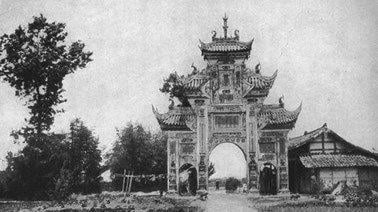
In 8000901-1X, History of Chinese Architecture: Part 1, we know the development of Chinese architecture from the remote antiquity to the Song, Liao and Jin dynasty. In Part 2 we’ll go on looking at Chinese architecture of the Yuan, Ming and Qing period. We’ll explore the city of Dadu of Yuan and Beijing of Ming and Qing, and delve into the history of the awe-inspiring ancient buildings that still grace the landscape of these bustling cities. The course will cover construction and aesthetics of these imperial palaces, religious structures, pagodas, tombs and gardens. The course will culminate in an examination of the Summer Palace in Beijing, the ancient royal garden at the Chengde Mountain Resort, and the private gardens of the Ming and Qing dynasties. Dwellings from various region and nationalities of China blossomed. The seminal textbook in the Qing dynasty will also be included in this course.

Prerequisites: History of Chinese Architecture: Part 1
Go to Class
MOOC List is learner-supported. When you buy through links on our site, we may earn an affiliate commission.

Related Courses

文物精品与文化中国:农业与制造业 | Relics in Chinese History - Part 1: Agriculture and Manufacturing (edX) EdX
Tsinghua University,TsinghuaX

文物精品与文化中国:农业与制造业 | Relics in Chinese History - Part 1: Agriculture and Manufacturing (edX)

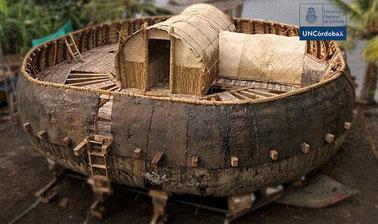
Discover manufacturing and agriculture’s role in the history of China as we explore Chinese culture through artifacts and relics. 本课程以精品文物作引子,将学术界探索中华文明的过程作为线索,介绍古代中国在造船、玉器等诸多领域的杰出成就

Self Paced
Self-Paced
ChinaX Book Club: Five Authors, Five Books, Five Views of China (edX) EdX
HarvardX,Harvard University

ChinaX Book Club: Five Authors, Five Books, Five Views of China (edX)

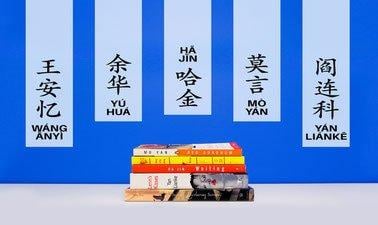
An exploration of the dynamics of contemporary China using the tools of close reading, discussion, and analysis. How can literature and literary analysis allow us to understand the dynamics of contemporary China? China’s historical and cultural transformations, and its imaginary and actual engagements in everyday life are vividly dramatized by five Chinese authors featured in this course.

Self Paced
Self-Paced
Creating Modern China: The Republican Period to the Present (edX) EdX
HarvardX,Harvard University

Creating Modern China: The Republican Period to the Present (edX)

Explore the birth of modern China with a focus on the time between the fall of the Qing and the end of World War II. What does it mean to be modern? What constitutes modern politics, modern institutions, a modern military, and modern infrastructure? In this period of great excitement and experimentation, the country is asking itself: How do you become modern and remain true to the Chinese national identity?

Self Paced
Self-Paced
Interpreting Vernacular Architecture in Asia (edX) EdX
University of Hong Kong,HKUx

Interpreting Vernacular Architecture in Asia (edX)

Discover the value of local peoples' traditional built environments in Asia, find inspiration in these buildings, and learn how to conserve them for future generations. This course is about architecture. But it’s not about grand structures such as monuments or royal palaces. Rather, it is about the built environment that the ordinary people live in. Instead of the architectural techniques, we use stories to understand the processes through which people make their building decisions.

Self Paced
Self-Paced
Sustainability in Architecture: An Interdisciplinary Introduction (edX) EdX
Universitat Politècnica de València,UPValenciaX

Sustainability in Architecture: An Interdisciplinary Introduction (edX)

This course introduces the basic elements and trends that define sustainability practices in Architecture today. It follows an interdisciplinary approach that includes performance assessment and urban policies. This course offers an interdisciplinary approach to sustainability in Architecture. Learners will be introduced to the basic elements of sustainability assessments (first model layer), as well as trends informing the space today.

Self Paced
Self-Paced
Modern China’s Foundations: The Manchus and the Qing (edX) EdX
HarvardX,Harvard University

Modern China’s Foundations: The Manchus and the Qing (edX)

Learn how the Manchus conquered the Qing and established the last of the imperial dynasties. This course, part of a comprehensive series on China, looks at the Qing state in the early 1600s and the challenges that the Manchus faced as minority rulers. While living in Chinese cities and surrounded by Chinese culture — a culture that was far more sophisticated than their own — the Manchus struggled to hold onto their identity as a conquesting people.

Self Paced
Self-Paced
Tangible Things: Discovering History Through Artworks, Artifacts, Scientific Specimens, and the Stuff Around You (edX) EdX
HarvardX,Harvard University

Tangible Things: Discovering History Through Artworks, Artifacts, Scientific Specimens, and the Stuff Around You (edX)

Gain an understanding of history, museum studies, and curation by looking at, organizing, and interpreting art, artifacts, scientific curiosities, and the stuff of everyday life. Have you ever wondered about how museum, library, and other kinds of historical or scientific collections all come together? Or how and why curators, historians, archivists, and preservationists do what they do?

Self Paced
Self-Paced
China’s First Empires and the Rise of Buddhism (edX) EdX
HarvardX,Harvard University

China’s First Empires and the Rise of Buddhism (edX)

Learn about the Qin and Han dynasties, and how Buddhism and ideas of self-realization influenced the medieval period. This course, the second in a collection on Chinese history and culture, addresses how the Qin dynasty conquered China and established a new system of government and how the Han dynasty built a stable, centralized empire that lasted for hundreds of years. We cover the early history of Buddhism in China and how the rising feudal aristocracy responded to the loss of empire by looking inward.

Self Paced
Self-Paced