EdX

Chinese Culture: Transformation (edX)

Chinese Culture: Transformation (edX)

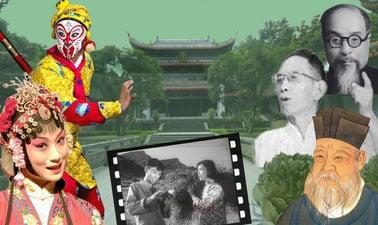
This compact course introduces 5 interesting aspects of Chinese culture in transformation. They are (a) The Four Great Classical Chinese Novels, (b) the art of Chinese opera, (c) private Confucian academies since the Song dynasty, (d) New Confucianism in the 20th century, and (e) gender politics in early New China. This dynamic course forms part of the HKPolyUx series on Chinese culture.

Class Deals by MOOC List - Click here and see EdX's Active Discounts, Deals, and Promo Codes.

Owing to its rapid development in recent years, China has been in the spotlight of the international arena. While understanding modern China's economy, technology and politics is important, knowing its cultural roots and evolution is no less crucial for seeing the full picture of Chinese culture. This course introduces 5 interesting aspects of Chinese culture in transformation.

Key questions of the course

  • What are the Four Great Classical Chinese Novels? What are the stories about? Why are they so famous and influential in Chinese literature?
  • What is special about the art of Chinese operas? What are the symbolic meanings behind the face make-up, gestures and costumes? How do the operas serve as a medium for transmitting knowledge in Chinese culture?
  • Why did the private Confucian academies thrive in the Song dynasty? Why was the famous Donglin Academy suppressed by the state in the Ming dynasty? How were the private academies engaged in the state educational reforms in the late Qing dynasty?
  • How did New Confucianism emerge as a movement in the 20th century? What were the aspirations of the New Confucians? How did they address modern challenges to the development of Chinese science, democracy and cosmology? Did they succeed in modernizing Confucianism?
  • What were the traditional expectations of gender roles in China? How was gender politics heightened in the labour force in early New China? What light does the film Li Shuangshuang shed on the gender awareness of Chinese socialism?

Course Design

  • A team of 5 experts in Chinese culture has designed the course. They are, in alphabetical order, Dr Chun, Dr. Li, Dr Lin, Dr Wu and Dr Zhang.
  • The compact design of the mini-lectures suits the busy schedule of edX learners.
  • Introduction by animation hosts highlights the key questions of each unit.
  • Illustrations and maps are designed to liven up the mini-lectures.
  • Self-learning is supported by review questions and forums.
  • Cross-referencing enhances a fruitful learning experience across the units of the HKPolyUx series on Chinese culture.

This course is part of the Chinese Culture: Tradition, Transformation and Interaction XSeries Program.
What you'll learn

  • The Four Great Classical Chinese Novels
  • The art of Chinese opera
  • The private Confucian academies since the Song dynasty and their impact on education
  • New Confucianism in the 20th century
  • Labor and gender politics in early New China

Syllabus

The Four Great Classical Chinese Novels: A New Genre

  • Introduction
  • Outlaws of the Marsh
  • The Romance of the Three Kingdoms
  • Journey to the West
  • Dream of the Red Chamber

Chinese Operas: A Dynamic Diversity

  • Introduction
  • The aesthetics of operas
  • Various themes of the operas
  • Chinese operas and public life

Confucian Academies and Education

  • Introduction
  • Neo-Confucianism and academies in the Song dynasty
  • The case of Donglin Academy in the Ming dynasty
  • Academies and educational reforms in the Qing dynasty

New Confucianism in the 20th century

  • Introduction
  • Confucianism as a living and practical philosophy
  • Synthetic nature of Confucianism
  • New challenges to China in the 20th century
  • Feng Youlan on life's meanings
  • Mou Zongsan on inner sageliness and outer kingliness

Gender Politics in the Early New China

  • Introduction
  • Mao Zedong and new culture
  • The socialist movie Li Shuangshuang
  • Revolution, labor and gender
  • Gender politics of socialism
Go to Class
MOOC List is learner-supported. When you buy through links on our site, we may earn an affiliate commission.

Related Courses

Géopolitique de la Chine contemporaine (FUN) FUN
Institut Catholique de Paris

Géopolitique de la Chine contemporaine (FUN)

Dans bien des domaines, la Chine est déjà la première puissance économique du monde. Son développement mais aussi ses difficultés, en un mot son évolution même engage notre propre avenir. Le marché chinois transforme les circuits commerciaux et industriels, bouleverse les savoirs et les pratiques du monde. Il est donc important, sinon urgent, de connaître l’histoire de cet Etat-continent, la nature de son régime et de ses ambitions en matière de politique étrangère. Ce MOOC est le premier portant sur la géopolitique de la Chine. Il convient à tout public désireux de se former aux affaires chinoises et plus particulièrement aux personnes qui, dans leur domaine professionnel, seront amenées à travailler en rapport avec la Chine.

No sessions available
5-12 Weeks
文物精品与文化中国:农业与制造业 | Relics in Chinese History - Part 1: Agriculture and Manufacturing (edX) EdX
Tsinghua University,TsinghuaX

文物精品与文化中国:农业与制造业 | Relics in Chinese History - Part 1: Agriculture and Manufacturing (edX)

Discover manufacturing and agriculture’s role in the history of China as we explore Chinese culture through artifacts and relics. 本课程以精品文物作引子,将学术界探索中华文明的过程作为线索,介绍古代中国在造船、玉器等诸多领域的杰出成就

Self Paced
Self-Paced
The Civil War and Reconstruction - 1850-1861: A House Divided (edX) EdX
Columbia University,ColumbiaX

The Civil War and Reconstruction - 1850-1861: A House Divided (edX)

Discover how the issue of slavery came to dominate American politics, and how political leaders struggled and failed to resolve the growing crisis in the nation. A House Divided: The Road to Civil War, 1850-1861 begins by examining how generations of historians have explained the crisis of the Union. After discussing the institution of slavery and its central role in the southern and national economies, it turns to an account of the political and social history of the 1850s.

Self Paced
Self-Paced
In Search for the Origins of Korean Philosophy (Coursera) Coursera
Sungkyunkwan University - SKKU

In Search for the Origins of Korean Philosophy (Coursera)

This course will give you an insight into the formative years of “Korean” culture and thought and uncover together who were the earliest people we could describe as being “Korean.” Korea is unique, but not of a single origin. Through this course, you will rediscover “Korea” today as a unique linguistic-cultural continuum. And from this, you may gain a deeper understanding of yourself by acknowledging the various factors that have influenced you to form your mature identity.

Aug 10th 2026
5-12 Weeks
Structuring Values in Modern China (Coursera) Coursera
The Chinese University of Hong Kong

Structuring Values in Modern China (Coursera)

This sequence of four courses will propose a multi-disciplinary approach to the study of Chinese cultural history conceived of as a succession of modes of rationality (philosophical, bureaucratic, and economic). The focus will be on the moments of paradigm shift from one mode of rationality to another. For each of these moments, cultural facts and artifacts—thought, literature, ritual—will be examined in relationship to changing social, political, and economic systems.

Aug 17th 2026
5-12 Weeks
Sino-Japanese Interactions Through Rare Books (FutureLearn) FutureLearn
Keio University

Sino-Japanese Interactions Through Rare Books (FutureLearn)

Learn about the role of books in the relationship between the cultures of Japan and China, with this free online course. Books have played a major role in the formation of Japan’s culture, particularly those brought from China. On this course we’ll examine how big an impact these books have had, as well as looking at how books and religion are connected in Japan and East Asia, and the history of publishing in Japan.

Self Paced
3 Weeks
Cosmopolitan Tang: Aristocratic Culture in China (edX) EdX
HarvardX,Harvard University

Cosmopolitan Tang: Aristocratic Culture in China (edX)

Explore the reunification of China under the Tang with a focus on aristocratic culture — from poetry to calligraphy to literature. By the Tang period, China was divided into northern and southern dynasties with different rulers and political systems. The north was conquered by relatively unsophisticated barbarians, but in the south, the aristocratic families established a refined appreciation of writing and literature.

Self Paced
Self-Paced
Religion and Thought in Modern China: the Song, Jin, and Yuan (Coursera) Coursera
The Chinese University of Hong Kong

Religion and Thought in Modern China: the Song, Jin, and Yuan (Coursera)

This sequence of four courses will propose a multi-disciplinary approach to the study of Chinese cultural history conceived of as a succession of modes of rationality (philosophical, bureaucratic, and economic). The focus will be on the moments of paradigm shift from one mode of rationality to another. For each of these moments, cultural facts and artifacts—thought, literature, ritual—will be examined in relationship to changing social, political, and economic systems.

Aug 17th 2026
5-12 Weeks
Chinese Language in Culture: Level 1 (edX) EdX
MIT,MITx

Chinese Language in Culture: Level 1 (edX)

Learn both cultural competence and language proficiency for successful participation in Mandarin-speaking societies. This subject is the first of a series that forms an introduction to modern standard Chinese, commonly called Mandarin, the language with the largest number of native speakers in the world. It is the official language of Mainland China and Taiwan, and one of the official languages of Singapore.The course presupposes no prior background in the language.

Apr 21st 2022
5-12 Weeks
Chinese Thought: Ancient Wisdom Meets Modern Science - Part 2 (edX) EdX
The University of British Columbia,UBCx

Chinese Thought: Ancient Wisdom Meets Modern Science - Part 2 (edX)

An introduction to early Chinese thought, exploring connections with Western philosophy, spirituality, mindfulness, modern science and everyday life. This course is designed to give students a thorough introduction to early (pre-221 BCE) Chinese thought, its contemporary implications, and the role of religion in human well-being. Important themes to be discussed include the ideal of wu-wei or “effortless action,” the paradox of how one can consciously try not to try, mindfulness techniques and self-cultivation, models of the self and society, rationality versus emotions, trust and human cooperation, and the structure and impact of different spiritual and political ideals.

No sessions available
5-12 Weeks
The Beauty of Kunqu Opera (Coursera) Coursera
The Chinese University of Hong Kong

The Beauty of Kunqu Opera (Coursera)

This course will focus on the historical and cultural background, literary aesthetics, music, and performance of Kunqu, China’s classical opera. After viewing the lecture videos presented by scholars and renowned maestros in the field of Kunqu, students’ understanding and appreciation of Chinese performing arts, classical literature and traditional culture will be enhanced.

Aug 3rd 2026
5-12 Weeks