EdX

Cosmopolitan Tang: Aristocratic Culture in China (edX)

Cosmopolitan Tang: Aristocratic Culture in China (edX)

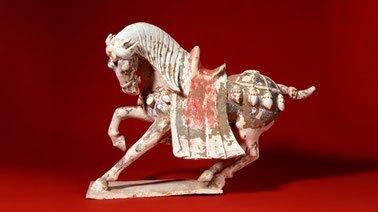
Explore the reunification of China under the Tang with a focus on aristocratic culture — from poetry to calligraphy to literature. By the Tang period, China was divided into northern and southern dynasties with different rulers and political systems. The north was conquered by relatively unsophisticated barbarians, but in the south, the aristocratic families established a refined appreciation of writing and literature.

Class Deals by MOOC List - Click here and see EdX's Active Discounts, Deals, and Promo Codes.

In this course, the third in a large collection covering all of Chinese history, you’ll learn about the Cosmopolitan Tang and the reemergence of great aristocratic clans. You’ll discover how these clans formed a kind of state aristocracy that dominated Tang government and society.

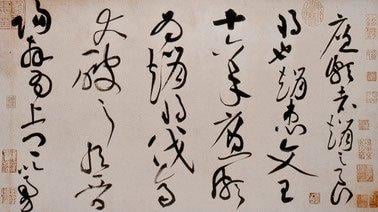
This period — a product of the Medieval period, and of the development of Buddhism and Daoism — gave the world a model for modern statehood the great cosmopolitan empire that defined it is among the highest achievements in Medieval culture. Join us to discover those achievements through readings of classical Chinese poetry and a review of the ancient art of calligraphy.
This course is part of the History of China: Bronze Age to the Last Dynasties XSeries program.

What you'll learn

  • How the dynasties of north and south were reunified under the Sui and Tang.
  • How to analyze China’s first multi-ethnic empire and its foreign relations.
  • How to compose and analyze poetry and calligraphy.
  • How to understand a romantic story as both history and literature.
Go to Class
MOOC List is learner-supported. When you buy through links on our site, we may earn an affiliate commission.

Related Courses

Global China: From the Mongols to the Ming (edX) EdX
HarvardX,Harvard University

Global China: From the Mongols to the Ming (edX)

Explore the impact of the conquest dynasties and the world of the Ming. In the 13th century, by force of arms, the Mongols created the greatest empire in human history. Yet by the end of the Ming dynasty in the late 16th century, a new global economy emerged. New World silver brought together the Americas, Europe, and East Asia, and the intellectuals of East and West began to speak to each other directly.

Self Paced
Self-Paced
China and Communism (edX) EdX
HarvardX,Harvard University

China and Communism (edX)

Explore the Maoist period of China, from the Communist Party to the death of Mao and the reopening of China. How did the Communists conquer China? What role does culture play? What are the successes and failures of the Chinese Communist Party after seizing power in 1949? What constitutes liberation?

Self Paced
Self-Paced
Programmation et Politiques Financières, Première Partie: Analyse des Comptes Macroéconomiques (edX) EdX
International Monetary Fund - IMF,IMFx

Programmation et Politiques Financières, Première Partie: Analyse des Comptes Macroéconomiques (edX)

Un cours sur les comptes macroéconomiques, leurs interrelations, et l’analyse des événements économiques. Quel est l’état de santé de l’économie ? Comment la politique économique peut-elle rétablir ou contribuer à la bonne santé d’un pays ? Ces questions sont au cœur de la programmation financière. Nos cours de PPF (Programmation et politiques financières) vous permettront d’acquérir les bases nécessaires pour y répondre.

Self Paced
Self-Paced
Chinese History From Warring States to the Tang Dynasty | 资治通鉴 (edX) EdX
Tsinghua University,TsinghuaX

Chinese History From Warring States to the Tang Dynasty | 资治通鉴 (edX)

Guides you through the Chinese masterpiece _Zizhi Tongjian, _an unprecedented work of governance and philosophical thinking spanning from the Warring States Period to the Tang Dynasty. Through the teacher's guided reading, students can go deep into the interior of this classic text, gain an overview of thousands of years of history, and improve their literacy in Chinese studies.

Self Paced
Self-Paced
The Einstein Revolution (edX) EdX
HarvardX,Harvard University

The Einstein Revolution (edX)

Traces Albert Einstein’s engagement with relativity, quantum mechanics, Nazism, nuclear weapons, philosophy, the arts, and technology. Albert Einstein has become the icon of modern science. Following his scientific, cultural, philosophical, and political trajectory, this course aims to track the changing role of physics in the 20th and 21st centuries.

Self Paced
Self-Paced
Financial Programming and Policies, Part 2: Program Design (edX) EdX
International Monetary Fund - IMF,IMFx

Financial Programming and Policies, Part 2: Program Design (edX)

Learn how to forecast macroeconomic accounts and design an economic program for a case study country. In this macroeconomics course, you will improve your skills in macroeconomic policy analysis and learn to design an economic and financial program, using real economic data. The financial programming exercise simulates what IMF (International Monetary Fund) desk economists routinely do in their country surveillance and program work.

Self Paced
Self-Paced
The Civil War and Reconstruction - 1850-1861: A House Divided (edX) EdX
Columbia University,ColumbiaX

The Civil War and Reconstruction - 1850-1861: A House Divided (edX)

Discover how the issue of slavery came to dominate American politics, and how political leaders struggled and failed to resolve the growing crisis in the nation. A House Divided: The Road to Civil War, 1850-1861 begins by examining how generations of historians have explained the crisis of the Union. After discussing the institution of slavery and its central role in the southern and national economies, it turns to an account of the political and social history of the 1850s.

Self Paced
Self-Paced
Tangible Things: Discovering History Through Artworks, Artifacts, Scientific Specimens, and the Stuff Around You (edX) EdX
HarvardX,Harvard University

Tangible Things: Discovering History Through Artworks, Artifacts, Scientific Specimens, and the Stuff Around You (edX)

Gain an understanding of history, museum studies, and curation by looking at, organizing, and interpreting art, artifacts, scientific curiosities, and the stuff of everyday life. Have you ever wondered about how museum, library, and other kinds of historical or scientific collections all come together? Or how and why curators, historians, archivists, and preservationists do what they do?

Self Paced
Self-Paced
Economics: Consumer Demand (edX) EdX
Babson College

Economics: Consumer Demand (edX)

Learn the fundamental economic principles of consumer demand and how the relationship between price, quantity and demand affect the market. Demand is a simple yet challenging concept that is essential to understanding how markets function. In this economics course, you will gain a solid understanding of demand, its underlying principles, major determinants and how they are beneficial for individuals, decision makers inside the firm, and policy makers.

Self Paced
Self-Paced
Inspiring and Motivating Arts and Culture Teams (edX) EdX
University of Michigan,MichiganX

Inspiring and Motivating Arts and Culture Teams (edX)

Learn critical leadership skills that enable you to inspire and motivate individuals and teams, specifically in Arts and Culture organizations. Offered by the Ross School of Business at the University of Michigan in collaboration with National Arts Strategies Senior Management Institute, this course focuses on equipping senior leaders of arts and culture organizations and/or nonprofits with the critical skills for inspiring employee engagement and performance while motivating people to adjust behavior and embrace change.

Self Paced
Self-Paced