EdX

US-China Relations: Past, Present and Future (edX)

US-China Relations: Past, Present and Future (edX)

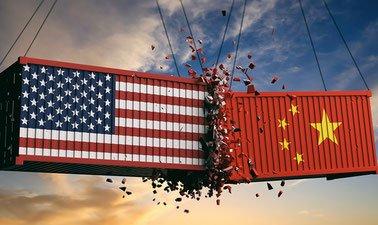
This course will provide an overview of the economic, military, political and cultural dimensions of the rising United States-China geopolitical contest. It will examine the strategic perspectives and mistakes of both countries, and suggest what can be done to prevent further escalation of the contest.

Class Deals by MOOC List - Click here and see EdX's Active Discounts, Deals, and Promo Codes.

A major geopolitical contest has broken out between the US and China. It will be the main driving force of global geopolitics for the next decade or two. The main goal of “US-China Relations: Past, Present and Future” is to provide a deeper understanding of the historical roots and the structural forces driving the contest. It will elucidate the major misunderstandings between the two countries, and discuss possible alternative approaches that could result in win-win outcomes for America and China.

A major source of misunderstanding between the United States and China arises from the very different historical experiences their people have lived through in recent centuries: a century of humiliation is meeting a century of triumphalism. In this course, you’ll learn how a country’s historical past influences deeply its understanding of international relations and national security and plays a critical role in the formulation of its foreign policies.
This course will discuss in depth the US-China bilateral relationship from 1949 to 2020, covering issues ranging from climate change and foreign affairs, to economic and trade relations. Part of this programme will also consider more recent issues like the Trump Administration and China’s responses to the COVID-19 pandemic, and the US-China trade and technology wars. We will explore in depth the fundamental misunderstandings that have developed between the two powers over the years. The goal is to develop a more objective and accurate understanding of the strategic perspectives and behavioural patterns of the United States and China in the global order.
Join us as we seek to understand how this US-China geopolitical contest is, paradoxically, both inevitable and avoidable.

What you'll learn

Week One:
The clashing histories of US and China that provide the backdrop to this contest – an American Century of Triumphalism vs a Chinese Century of Humiliation

Week Two:
The modern history of US-China relations, including its three phases: hostility; cooperation and ambiguity; and the recent triggers of their contest

Week Three:
The strategic, political and ideological misunderstandings underpinning the US-China geopolitical contest

Week Four:
The reactions of the global community to the contest, and some areas of possible cooperation between the two great powers that may help to mitigate the tensions - and prevent this geopolitical rivalry from escalating to more dangerous levels. They include issues such as Covid-19 and climate change.

Go to Class
MOOC List is learner-supported. When you buy through links on our site, we may earn an affiliate commission.

Related Courses

Understanding China, 1700-2000: A Data Analytic Approach, Part 2 (Coursera) Coursera
The Hong Kong University of Science and Technology - HKUST

Understanding China, 1700-2000: A Data Analytic Approach, Part 2 (Coursera)

The purpose of this course is to summarize new directions in Chinese history and social science produced by the creation and analysis of big historical datasets based on newly opened Chinese archival holdings, and to organize this knowledge in a framework that encourages learning about China in comparative perspective. Our course demonstrates how a new scholarship of discovery is redefining what is singular about modern China and modern Chinese history.

Jun 8th 2026
4 Weeks
English for Doing Business in Asia - Speaking (edX) EdX
The Hong Kong University of Science and Technology - HKUST,HKUSTx

English for Doing Business in Asia - Speaking (edX)

Introducing strategies for developing your spoken English communication skills in the context of doing business in Asia. The use of English for doing business in multinational settings is a fact of life for many business people. As Asian economies expand and become more involved in the global economy, a lingua franca – a language used to communicate among groups of people who do not share a mother tongue – is needed to exchange information.

Self Paced
Self-Paced
More Chinese for Beginners (Coursera) Coursera
Peking University

More Chinese for Beginners (Coursera)

This is an advanced course for Chinese for beginners. Learners will expand vocabularies about personal information, daily life, food and drink, healthy, and expressions about greeting, suggestion, agreement, comparison, complaint, prohibition, experience, plan, recommendation, etc. Learners can improve their listening and speaking and know much more about Chinese social cultures.

Jun 8th 2026
5-12 Weeks
Global China: From the Mongols to the Ming (edX) EdX
HarvardX,Harvard University

Global China: From the Mongols to the Ming (edX)

Explore the impact of the conquest dynasties and the world of the Ming. In the 13th century, by force of arms, the Mongols created the greatest empire in human history. Yet by the end of the Ming dynasty in the late 16th century, a new global economy emerged. New World silver brought together the Americas, Europe, and East Asia, and the intellectuals of East and West began to speak to each other directly.

Self Paced
Self-Paced
Critical Issues in Urban Education (edX) EdX
University of Chicago,UChicagoX

Critical Issues in Urban Education (edX)

Debate the polarized issues of education reform with experts from the field, and learn about the history of American public schooling. Urban school reform in the United States is characterized by contentious, politicized debate. This course explores a set of critical issues in the education and educational reform space, with a focus on aspects of the field that have sparked controversy and polarized views.

No sessions available
4 Weeks
Creating Modern China: The Republican Period to the Present (edX) EdX
HarvardX,Harvard University

Creating Modern China: The Republican Period to the Present (edX)

Explore the birth of modern China with a focus on the time between the fall of the Qing and the end of World War II. What does it mean to be modern? What constitutes modern politics, modern institutions, a modern military, and modern infrastructure? In this period of great excitement and experimentation, the country is asking itself: How do you become modern and remain true to the Chinese national identity?

Self Paced
Self-Paced
China Humanities: The Individual in Chinese Culture (edX) EdX
HarvardX,Harvard University

China Humanities: The Individual in Chinese Culture (edX)

Explore Chinese history and culture from the perspective of the individual through philosophical texts, literary works, and art. In China’s history, there has been a longstanding belief that being cultured and being moral are necessary for a person to participate in public life. We often think of China in political terms – and focus on the history of government – or in social terms – and study the role of the family in society. But this course looks at the individual and the striving for culture and morality.

Self Paced
Self-Paced
文物精品与文化中国:文字与乐礼 | Relics of Chinese History - Part 3: Writing System, Rites and Music (edX) EdX
Tsinghua University,TsinghuaX

文物精品与文化中国:文字与乐礼 | Relics of Chinese History - Part 3: Writing System, Rites and Music (edX)

Discover how writing systems and music played a major role in Chinese history through the study of artifacts and relics. 本课程以精品文物作引子,将学术界探索中华文明的过程作为线索,介绍古代中国在造船、玉器等诸多领域的杰出成就

Self Paced
Self-Paced
Chinese Culture: Interaction (edX) EdX
The Hong Kong Polytechnic University,HKPolyUx

Chinese Culture: Interaction (edX)

This compact course introduces 5 interesting aspects of Chinese cultural exchange and interaction with other countries in history. They are (a) China and the West, (b) China and Central Asia (c) China and Vietnam, (d) Colonialism, Anti-Colonialism and Pan-Asianism, and (e) Chinese Food and Cuisine. This dynamic course forms part of the HKPolyUx series on Chinese culture.

Self Paced
Self-Paced