EdX

Mao to Now: On Chinese Marxism (edX)

Mao to Now: On Chinese Marxism (edX)

An insightful study of Chinese Marxism, socialism and capitalism - critical for anyone who wishes to engage with China today. To make sense of modern China, you simply cannot ignore Marxism. ‘From Mao to Now’ presents current topics that anyone who wishes to engage with China should know. Rather than praising or condemning, the course focuses on building a deeper understanding of this history through two interwoven elements.

Class Deals by MOOC List - Click here and see EdX's Active Discounts, Deals, and Promo Codes.

The first structures the course in terms of some ‘red tourism’ to the sites important to the communist revolution in the first half of the twentieth century.

Much of the course footage was filmed on location in China, including Shaoshan, Ruijin, Yan’an and important locations in Beijing, such as Tiananmen and the Nationalities Museum (minzuyuan).
The second element of the course will take those experiences and use them to help answer some fundamental questions:

  • Is China socialist or capitalist today, or is it perhaps both at one and the same time?
  • Is there such a thing as Chinese socialist democracy, and, if so, what is it?
  • Does China have its own theory of human rights, drawn from the long Chinese tradition and Marxism?

If the Chinese state is a form that has not been seen before, then what is it?

What you'll learn

  • How Mao Zedong is understood today in China
  • The relationship between socialism and capitalism in China
  • The nature of socialist democracy and a Chinese approach to human rights
  • What a Chinese socialist state might be
  • The meaning of ‘socialism with Chinese characteristics’

Course Syllabus

The course has five sections (covering 18 lessons). From each place visited on the ‘red tour’, we examine a key concept that arises from the place:

Topic 1. Shaoshan, in Hunan Province. Chairman Mao’s birthplace.
Shaoshan leads us to ask: Is China socialist or capitalist today, or is it perhaps both at one and the same time? To answer this question, you’ll examine Marxist approaches to contradiction and the unique Chinese way of facing contradictions.

Topic 2. Ruijin, at the border between Fuxian and Jiangxi provinces. Here the first experiments in socialism began.
The ethos of Ruijin raises the question of human rights. Is there a Chinese Marxist approach to human rights, and, if so, what is it?

Topic 3. Yan’an, in Shaanxi province. Home for the movement after the Long March and the cradle of modern China.
The origins of modern China begin in Yan’an, especially in terms of the state. Here you’ll delve into some heavier political thought, asking: if China is not an empire, a colonising power, federation or liberal nation-state, then what is it?

Topic 4. Beijing, the national day (1 October). On this day in 1949, Chairman Mao proclaimed the People’s Republic in Tiananmen square.
Arising from the national day, we’ll examine Chinese democracy. After distinguishing between different types of democracy you’ll explore what socialist democracy in a Chinese situation means.

Topic 5. Mao’s Mausoleum. At the centre of Tiananmen lies the body of Chairman Mao.
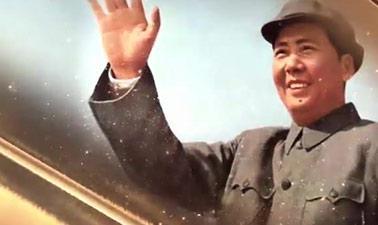
What does Mao mean today? We’ll examine how he is reinterpreted in China, with an eye on Socialism with Chinese Characteristics. With new knowledge, you’ll identify the key elements of what Socialism means in a Chinese situation.

Go to Class
MOOC List is learner-supported. When you buy through links on our site, we may earn an affiliate commission.

Related Courses

Will China Rise as a Disruptive Force? The Insiders' Perspective (edX) EdX
Tsinghua University,TsinghuaX

Will China Rise as a Disruptive Force? The Insiders' Perspective (edX)

An insiders’ perspective on the economic, social and political impact of China’s rise on the world stage. China, one of the world’s oldest countries, is currently undergoing massive political, social and economic changes. The rapid emergence of China as a key player in the global political and economic landscape has led many to question how China’s decision makers perceive today’s world.

Self Paced
Self-Paced
Global China: From the Mongols to the Ming (edX) EdX
HarvardX,Harvard University

Global China: From the Mongols to the Ming (edX)

Explore the impact of the conquest dynasties and the world of the Ming. In the 13th century, by force of arms, the Mongols created the greatest empire in human history. Yet by the end of the Ming dynasty in the late 16th century, a new global economy emerged. New World silver brought together the Americas, Europe, and East Asia, and the intellectuals of East and West began to speak to each other directly.

Self Paced
Self-Paced
The amazing world of the ethnic groups of Yunnan Province (Coursera) Coursera
Shanghai Jiao Tong University

The amazing world of the ethnic groups of Yunnan Province (Coursera)

Yunnan, abbreviated as Yun and called Dian for short, is a multi-ethnic province which has historically been situated in the southwest frontier of China. Over time, the ethnic minorities evolved into splendid cultures, each with their own unique social life, religious beliefs and customs. The course is taught in English and provides an introduction to 25 ethnic minorities in Yunnan Province, namely the Yi, Bai, Hani, Dai, Zhuang, Miao, Hui, Lisu, Lahu, Wa, Naxi, Yao, Jingpo, Tibetan, Bulang, Buyi, Achang, Pumi, Mongolian, Nu, Jinuo, De'ang, Shui, Man and Dulong nationalities.

Aug 10th 2026
5-12 Weeks
Intellectual Change in Early China: Warring States and Han (Coursera) Coursera
The Chinese University of Hong Kong

Intellectual Change in Early China: Warring States and Han (Coursera)

This sequence of four courses will propose a multi-disciplinary approach to the study of Chinese cultural history conceived of as a succession of modes of rationality (philosophical, bureaucratic, and economic). The focus will be on the moments of paradigm shift from one mode of rationality to another. For each of these moments, cultural facts and artifacts—thought, literature, ritual—will be examined in relationship to changing social, political, and economic systems.

Aug 10th 2026
5-12 Weeks
Creating Modern China: The Republican Period to the Present (edX) EdX
HarvardX,Harvard University

Creating Modern China: The Republican Period to the Present (edX)

Explore the birth of modern China with a focus on the time between the fall of the Qing and the end of World War II. What does it mean to be modern? What constitutes modern politics, modern institutions, a modern military, and modern infrastructure? In this period of great excitement and experimentation, the country is asking itself: How do you become modern and remain true to the Chinese national identity?

Self Paced
Self-Paced
Development in Emerging Economies: The Case of China (edX) EdX
Peking University,PekingX

Development in Emerging Economies: The Case of China (edX)

Curious about China's development and the Chinese market but haven't known where to start? Peking University brings you an easy-to-understand primer. Guanghua's professors will unpack China's development over five weeks, first giving an overview of China's economic growth as context before addressing private equity, real estate financing, banking, the stock market, wealth management, and other topics associated with China's financial markets.

Self Paced
Self-Paced
A Global History of Architecture (edX) EdX
MIT,MITx

A Global History of Architecture (edX)

Learn about humanity’s rich architectural history on this journey around the globe – from 100,000 BCE to ca. 1,600 CE. How do we understand architecture? One way of answering this question is by looking through the lens of history, beginning with First Societies and extending to the 16th century. This course in architectural history is not intended as a linear narrative, but rather aims to provide a more global view, by focusing on different architectural "moments."

Oct 18th 2023
5-12 Weeks
Modern China’s Foundations: The Manchus and the Qing (edX) EdX
HarvardX,Harvard University

Modern China’s Foundations: The Manchus and the Qing (edX)

Learn how the Manchus conquered the Qing and established the last of the imperial dynasties. This course, part of a comprehensive series on China, looks at the Qing state in the early 1600s and the challenges that the Manchus faced as minority rulers. While living in Chinese cities and surrounded by Chinese culture — a culture that was far more sophisticated than their own — the Manchus struggled to hold onto their identity as a conquesting people.

Self Paced
Self-Paced
China’s First Empires and the Rise of Buddhism (edX) EdX
HarvardX,Harvard University

China’s First Empires and the Rise of Buddhism (edX)

Learn about the Qin and Han dynasties, and how Buddhism and ideas of self-realization influenced the medieval period. This course, the second in a collection on Chinese history and culture, addresses how the Qin dynasty conquered China and established a new system of government and how the Han dynasty built a stable, centralized empire that lasted for hundreds of years. We cover the early history of Buddhism in China and how the rising feudal aristocracy responded to the loss of empire by looking inward.

Self Paced
Self-Paced