EdX

History of Chinese Architecture | 中国建筑史 (edX)

History of Chinese Architecture | 中国建筑史 (edX)

This course explores China's rich and varied architectural history. (In Mandarin with English subtitles.) 体味中国古建筑之美,理解中国建筑的重要内涵 China's architectural history spans thousands of years. In this course, we will explore the ancient cities of Chang'an of Han, Luoyang of Northern Wei, Chang'an and Luoyang of Sui and Tang, Kaifeng of Song and Dadu of Yuan, and delve into the history of the awe-inspiring ancient buildings that still grace the landscape of these bustling cities.

Class Deals by MOOC List - Click here and see EdX's Active Discounts, Deals, and Promo Codes.

The course will cover construction and aesthetics of these imperial palaces, religious structures, pagodas, tombs and gardens. We will study the basis of Chinese architecture, the wood framed building, as well as the brick and stone construction of many Buddhist pagodas and tombs. The course will culminate in an examination of the Summer Palace in Beijing, the ancient royal garden at the Chengde Mountain Resort, and the private gardens of the Ming and Qing dynasties. Two seminal textbooks on the Song and Qing dynasties are included in the course in electronic form.
Course videos are presented in Mandarin with English subtitles.

关于本课程
数千年的中国历史上,曾出现了很多伟大的城市,汉长安、北魏洛阳、隋唐长安和洛阳、北宋开封、元大都,都是当时世界上最繁华的大都市。这些城市虽已星光黯淡,却留下了一座座优美壮丽的建筑杰作,令人叹为观止。中国的宫殿、宗教建筑、佛塔、陵寝和园林等建筑类型,无论建造技术还是美学追求,都达到了很高的水平。中国古代的建筑有着自成体系的一套营造方法,以木结构为主,也有不少砖石结构的佛塔和陵寝。历史上建造了大量宫殿建筑,北京故宫是现存世界上最大宫殿建筑群。自南北朝至唐,出现了大批佛教寺院与石窟寺。南北朝以来各地建造的砖石塔,也使中国砖石建筑达到很高水平。唐、辽、宋、金时期留下了一大批宗教建筑遗存,包括大型殿堂,多层楼阁,与高度达67米的高层木塔。明清时期坛壝、祠庙、陵墓与民居,有了高度发展,北京天坛,曲阜孔庙、明十三陵,北京四合院等,是这一时期重要建筑实例。北京颐和园、承德避暑山庄是古代皇家园林代表,明清私家园林则是数千年中国园林艺术的结晶。宋《营造法式》和清《工部工程做法则例》是中国官式建筑两部重要文本,对于理解中国建筑有着重要的意义。课程资料中也将包括这两部著作的电子版。

What you'll learn

  • History and context of ancient buildings in Chinese cities such as Chang'an, Luoyang, Kaifeng, Dadu
  • Construction and aesthetics of Chinese imperial palaces, religious structures, pagodas, tombs and gardens
  • Foundations of Chinese architecture: the wood framed building and two books on the Song and Qing dynasties’ building methods
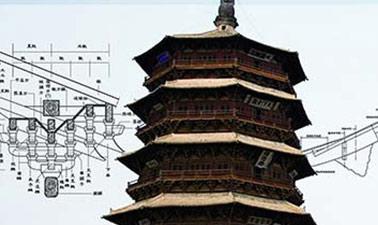
  • How cultural heritage is preserved through the building of structures such as the world's tallest timber pagoda
  • Impact and significance of royal gardens and private gardens of the Ming and Qing dynasties
Go to Class
MOOC List is learner-supported. When you buy through links on our site, we may earn an affiliate commission.

Related Courses

A Global History of Architecture (edX) EdX
MIT,MITx

A Global History of Architecture (edX)

Learn about humanity’s rich architectural history on this journey around the globe – from 100,000 BCE to ca. 1,600 CE. How do we understand architecture? One way of answering this question is by looking through the lens of history, beginning with First Societies and extending to the 16th century. This course in architectural history is not intended as a linear narrative, but rather aims to provide a more global view, by focusing on different architectural "moments."

Oct 18th 2023
5-12 Weeks
China and Communism (edX) EdX
HarvardX,Harvard University

China and Communism (edX)

Explore the Maoist period of China, from the Communist Party to the death of Mao and the reopening of China. How did the Communists conquer China? What role does culture play? What are the successes and failures of the Chinese Communist Party after seizing power in 1949? What constitutes liberation?

Self Paced
Self-Paced
Chinese Politics Part 1 - China and Political Science (Coursera) Coursera
The Hong Kong University of Science and Technology - HKUST

Chinese Politics Part 1 - China and Political Science (Coursera)

This course offers a conceptual framework for understanding China that highlights the intersection of politics and economics. It shows that rather than develop into a full blown market economy, state and party officials at all levels of the political system maintain significant influence in economic development. Such a “political” economy has had both positive and negative outcomes, which we will assess in detail.

Oct 12th 2026
5-12 Weeks
Religious Transformation in Early China: the Period of Division (Coursera) Coursera
The Chinese University of Hong Kong

Religious Transformation in Early China: the Period of Division (Coursera)

This sequence of four courses will propose a multi-disciplinary approach to the study of Chinese cultural history conceived of as a succession of modes of rationality (philosophical, bureaucratic, and economic). The focus will be on the moments of paradigm shift from one mode of rationality to another. For each of these moments, cultural facts and artifacts—thought, literature, ritual—will be examined in relationship to changing social, political, and economic systems.

Oct 5th 2026
5-12 Weeks
Invasions, Rebellions, and the Fall of Imperial China (edX) EdX
HarvardX,Harvard University

Invasions, Rebellions, and the Fall of Imperial China (edX)

An overview of modern Chinese history, including the fall of the Qing and the end of imperial China. In the 18th century, the Qing Dynasty is at its height; it is the wealthiest, most powerful, most civilized state on earth. And yet the 19th century brought enormous challenges for the Qing and for the place we call China. By the 20th century, a 2,000-year imperial tradition is gone. What happened?

Self Paced
Self-Paced
Chinese Language in Culture: Level 1 (edX) EdX
MIT,MITx

Chinese Language in Culture: Level 1 (edX)

Learn both cultural competence and language proficiency for successful participation in Mandarin-speaking societies. This subject is the first of a series that forms an introduction to modern standard Chinese, commonly called Mandarin, the language with the largest number of native speakers in the world. It is the official language of Mainland China and Taiwan, and one of the official languages of Singapore.The course presupposes no prior background in the language.

Apr 21st 2022
5-12 Weeks
Oriental Beliefs: Between Reason and Traditions (edX) EdX
LouvainX,Université Catholique de Louvain - UCL

Oriental Beliefs: Between Reason and Traditions (edX)

Explore the spiritual and magical beliefs of cultures, from ancient Egypt to modern Japan, as we discuss gods, the universe, cosmos, dreams and so much more! This course takes a journey through the world of beliefs as they have developed in a great variety of cultures, ranging from Ancient Egypt, the Near East to Central Asia, India, China, and the Far East.

No sessions available
5-12 Weeks
Development in Emerging Economies: The Case of China (edX) EdX
Peking University,PekingX

Development in Emerging Economies: The Case of China (edX)

Curious about China's development and the Chinese market but haven't known where to start? Peking University brings you an easy-to-understand primer. Guanghua's professors will unpack China's development over five weeks, first giving an overview of China's economic growth as context before addressing private equity, real estate financing, banking, the stock market, wealth management, and other topics associated with China's financial markets.

Self Paced
Self-Paced
Chinese History From Warring States to the Tang Dynasty | 资治通鉴 (edX) EdX
Tsinghua University,TsinghuaX

Chinese History From Warring States to the Tang Dynasty | 资治通鉴 (edX)

Guides you through the Chinese masterpiece _Zizhi Tongjian, _an unprecedented work of governance and philosophical thinking spanning from the Warring States Period to the Tang Dynasty. Through the teacher's guided reading, students can go deep into the interior of this classic text, gain an overview of thousands of years of history, and improve their literacy in Chinese studies.

Self Paced
Self-Paced
Contemporary China: The People's Republic, Taiwan, and Hong Kong (edX) EdX
HarvardX,Harvard University

Contemporary China: The People's Republic, Taiwan, and Hong Kong (edX)

Use the case study method to study China from the rise of Deng Xiaoping to the present. Using case studies from the Harvard Business School, this course will cover the contemporary Chinese scene by focusing on five main themes in China’s development: agriculture, entrepreneurship, education, environment, and literature.

Self Paced
Self-Paced