EdX

China Humanities: The Individual in Chinese Culture (edX)

China Humanities: The Individual in Chinese Culture (edX)

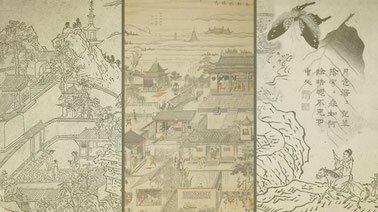
Explore Chinese history and culture from the perspective of the individual through philosophical texts, literary works, and art. In China’s history, there has been a longstanding belief that being cultured and being moral are necessary for a person to participate in public life. We often think of China in political terms – and focus on the history of government – or in social terms – and study the role of the family in society. But this course looks at the individual and the striving for culture and morality.

Class Deals by MOOC List - Click here and see EdX's Active Discounts, Deals, and Promo Codes.

In China Humanities, you will explore the idea of China as a country of individuals who create the thing we call Chinese culture through their own art, literature, and philosophy. The course will focus on how individuals pursue unique forms of expression, act upon their distinct experiences, and follow their own desires, creating enduring works that we continue to look to for inspiration and wisdom.

You will discuss the theories of early Chinese thinkers like Confucius and Zhuangzi, explore the poetry of writers like Tao Yuanming and Du Fu, read from novels such as the Dream of the Red Chamber, and learn how to see painting and calligraphy – all with a particular focus on how these works have shaped Chinese culture as we know it today.

What you'll learn

  • Cultural traditions that are revered in China today.
  • How to interpret Chinese philosophical texts.
  • How to analyze and appreciate masterpieces of Chinese literature.
  • How to see the “individual voice” in visual works.

Syllabus

Unit 1: Early Chinese Thinkers and Writers and their Notion of Self
Unit 2: Revealing the Individual in Chinese Poetry
Unit 3: Love and Literature: Yingying’s Story
Unit 4: Neo-Confucianism
Unit 5: Chinese Art: How to Paint the Inner Voice?
Unit 6: Love and Illusion in the Story of the Stone
Unit 7: Humanities Past and Present
Unit 8: Roundtable Discussion, on the Individual and Society
Go to Class
MOOC List is learner-supported. When you buy through links on our site, we may earn an affiliate commission.

Related Courses

Oriental Beliefs: Between Reason and Traditions (edX) EdX
LouvainX,Université Catholique de Louvain - UCL

Oriental Beliefs: Between Reason and Traditions (edX)

Explore the spiritual and magical beliefs of cultures, from ancient Egypt to modern Japan, as we discuss gods, the universe, cosmos, dreams and so much more! This course takes a journey through the world of beliefs as they have developed in a great variety of cultures, ranging from Ancient Egypt, the Near East to Central Asia, India, China, and the Far East.

No sessions available
5-12 Weeks
文物精品与文化中国:文字与乐礼 | Relics of Chinese History - Part 3: Writing System, Rites and Music (edX) EdX
Tsinghua University,TsinghuaX

文物精品与文化中国:文字与乐礼 | Relics of Chinese History - Part 3: Writing System, Rites and Music (edX)

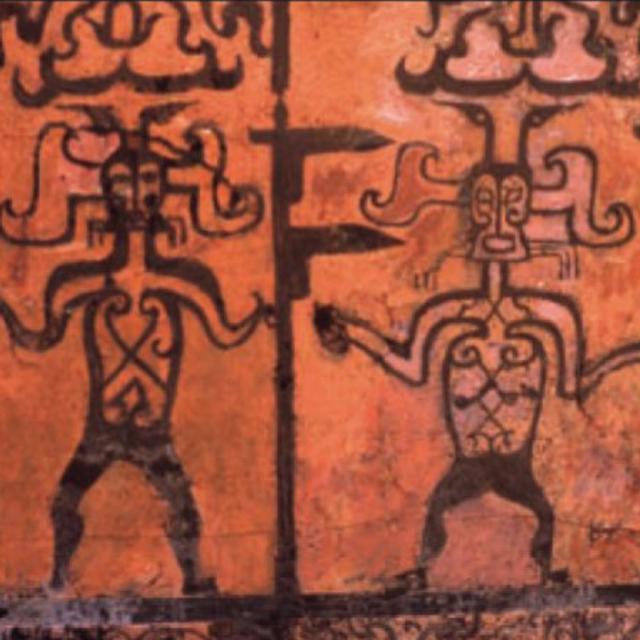
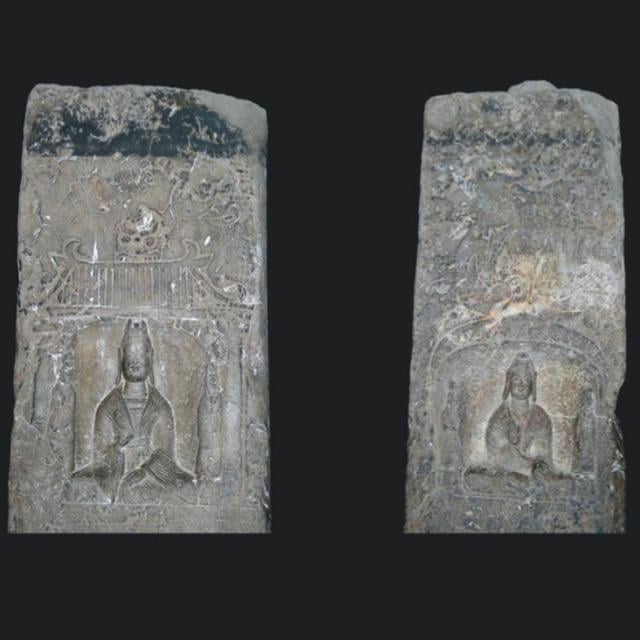
Discover how writing systems and music played a major role in Chinese history through the study of artifacts and relics. 本课程以精品文物作引子,将学术界探索中华文明的过程作为线索,介绍古代中国在造船、玉器等诸多领域的杰出成就

Self Paced
Self-Paced
Intellectual Change in Early China: Warring States and Han (Coursera) Coursera
The Chinese University of Hong Kong

Intellectual Change in Early China: Warring States and Han (Coursera)

This sequence of four courses will propose a multi-disciplinary approach to the study of Chinese cultural history conceived of as a succession of modes of rationality (philosophical, bureaucratic, and economic). The focus will be on the moments of paradigm shift from one mode of rationality to another. For each of these moments, cultural facts and artifacts—thought, literature, ritual—will be examined in relationship to changing social, political, and economic systems.

Nov 2nd 2026
5-12 Weeks
Religious Transformation in Early China: the Period of Division (Coursera) Coursera
The Chinese University of Hong Kong

Religious Transformation in Early China: the Period of Division (Coursera)

This sequence of four courses will propose a multi-disciplinary approach to the study of Chinese cultural history conceived of as a succession of modes of rationality (philosophical, bureaucratic, and economic). The focus will be on the moments of paradigm shift from one mode of rationality to another. For each of these moments, cultural facts and artifacts—thought, literature, ritual—will be examined in relationship to changing social, political, and economic systems.

Nov 2nd 2026
5-12 Weeks
Global China: From the Mongols to the Ming (edX) EdX
HarvardX,Harvard University

Global China: From the Mongols to the Ming (edX)

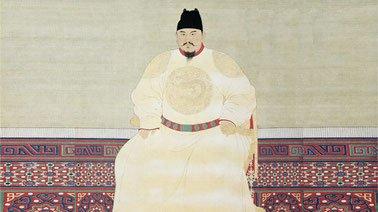
Explore the impact of the conquest dynasties and the world of the Ming. In the 13th century, by force of arms, the Mongols created the greatest empire in human history. Yet by the end of the Ming dynasty in the late 16th century, a new global economy emerged. New World silver brought together the Americas, Europe, and East Asia, and the intellectuals of East and West began to speak to each other directly.

Self Paced
Self-Paced
ChinaX Book Club: Five Authors, Five Books, Five Views of China (edX) EdX
HarvardX,Harvard University

ChinaX Book Club: Five Authors, Five Books, Five Views of China (edX)

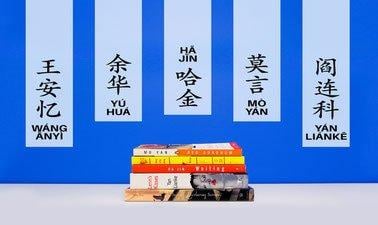
An exploration of the dynamics of contemporary China using the tools of close reading, discussion, and analysis. How can literature and literary analysis allow us to understand the dynamics of contemporary China? China’s historical and cultural transformations, and its imaginary and actual engagements in everyday life are vividly dramatized by five Chinese authors featured in this course.

Self Paced
Self-Paced
Humanity and Nature in Chinese Thought (edX) EdX
University of Hong Kong,HKUx

Humanity and Nature in Chinese Thought (edX)

We make ethical or behaviour guiding right / wrong judgments all the time but have you ever wondered where Ethics comes from, what it is about and why it is important? This course provides an introduction to traditional Chinese ethical thought and focuses on the pervasive contrast in the way Chinese and Westerners think about ethical guidance or guidance concerning what is right and what is wrong, good or bad.

No sessions available
5-12 Weeks
Western and Chinese Art: Masters and Classics (edX) EdX
Tsinghua University,TsinghuaX

Western and Chinese Art: Masters and Classics (edX)

From da Vinci to Zhang Xu, Wu Daozi and Warhol, explore immortal works of Western and Chinese art and gain an appreciation of culture, history and civilization. Throughout human history, art has served as a window into current events, traditions, societies and culture. And, Chinese and Western civilizations have produced some of the most famous artworks by world-renowned artists.

Self Paced
Self-Paced
Contemporary China: The People's Republic, Taiwan, and Hong Kong (edX) EdX
HarvardX,Harvard University

Contemporary China: The People's Republic, Taiwan, and Hong Kong (edX)

Use the case study method to study China from the rise of Deng Xiaoping to the present. Using case studies from the Harvard Business School, this course will cover the contemporary Chinese scene by focusing on five main themes in China’s development: agriculture, entrepreneurship, education, environment, and literature.

Self Paced
Self-Paced
Invasions, Rebellions, and the Fall of Imperial China (edX) EdX
HarvardX,Harvard University

Invasions, Rebellions, and the Fall of Imperial China (edX)

An overview of modern Chinese history, including the fall of the Qing and the end of imperial China. In the 18th century, the Qing Dynasty is at its height; it is the wealthiest, most powerful, most civilized state on earth. And yet the 19th century brought enormous challenges for the Qing and for the place we call China. By the 20th century, a 2,000-year imperial tradition is gone. What happened?

Self Paced
Self-Paced