Fundamentals of Fluid Power (Coursera)

Fundamentals of Fluid Power (Coursera)

In this course, you will be introduced to the fundamental principles and analytical modeling of fluid power components, circuits, and systems. You will learn the benefits and limitations of fluid power compared with other power transmission technologies; the operation, use, and symbols of common hydraulic components; how to formulate and analyze models of hydraulic components and circuits; and how to design and predict the performance of fluid power circuits.

Class Deals by MOOC List - Click here and see Coursera's Active Discounts, Deals, and Promo Codes.

Fluid power has the highest power density of all conventional power-transmission technologies. Learn the benefits and limitations of fluid power, how to analyze fluid power components and circuits, and how to design and simulate fluid power circuits for applications. This course is supported by the National Science Foundation Engineering Research Center for Compact and Efficient Fluid Power, and is endorsed by the National Fluid Power Association, the leading industry trade group in fluid power.

Syllabus

WEEK 1
Fundamentals of Fluid Power
This week: An overview of the course, introduction to hydraulics and pneumatics, and introduction to fundamental concepts of fluid power through the cylinder.

WEEK 2
Components and Concepts: Part 1
This week: circuit diagrams, the written language of fluid power, and how fluid flows through conduits. We hope that you find the hydraulic circuits on the mowing machine as interesting as we did.

WEEK 3
Components and Concepts: Part 2
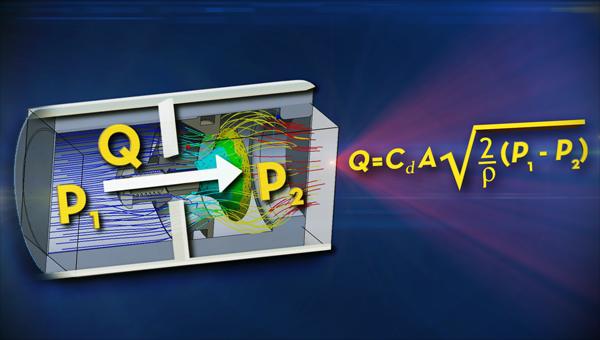
This will be a busy week diving into valves and pumps. We will discuss how basic valves function, how to use them in hydraulic circuits, and how to calculate pressure drop for a given flow rate, or vice versa. The videos will directly address the discussion on the forum about seeing hydraulic components working in real world circuits. In our discussion of pumps we will look at many different positive displacement pumps, exploring flow ripple and pump efficiency, look at the supporting components that form a hydraulic power supply, and see how we can make a transmission with a hydraulic pump and a motor. We are now into the heart of this course; we hope you enjoy seeing the components come together into useful circuits.

WEEK 4
Predicting Performance Through Simulation
This week is entirely devoted to you learning how to use Simscape Fluids (formerly SimHydraulics), the fluid power simulation application that we use in the course. The lecture provides an introduction to computer-based, object-oriented simulation, and goes through a demo of using Simscape Fluids. The homework assignment contains the real work because this is where you will learn to use Simscape Fluids. The homework ends with an open-ended problem that encourages you to branch out on your own and create and run simulations based on examples listed in the course Simscape Fluids resource page or on any other fluid power system that interests you. We will be monitoring the discussion boards to help you with any technical problems with Simscape Fluids. NOTE: The lecture videos were created using an earlier version of SimHydraulics; some small difference exist with the most recent version of Simscape Fluids, but the general approach is the same. THERE IS NO QUIZ THIS WEEK as we recognize that a few of you may not be able to get Simscape Fluids running on your computer. Happy simulating!

WEEK 5
Fluid Properties
This week we will take a dive into hydraulic fluids (no pun intended) and how their properties and behavior influence the circuit operation. In the lectures, you will see the water hammer effect and explore the assumption of fluid incompressibility. We encourage you to use your new knowledge of fluid behavior and simulation to create virtual experiments that explore how fluid properties influence the behavior of a circuit. Share your observations on the discussion forum.

WEEK 6
Advanced Components and Systems and Course Summary
This week you will learn about two new components, the accumulator, which stores hydraulic energy, and the servo valve, which provides fast and precise flow control. We will then be pulling together topics from throughout the course to look at servo hydraulic systems and hydraulic hybrid vehicles. You will get a chance to use simulation to explore how these advanced systems function and how the behavior of individual components influences the system operation.

Suggested Readings:

Go to Class
MOOC List is learner-supported. When you buy through links on our site, we may earn an affiliate commission.

Related Courses

Energy and Environment (Coursera) Coursera
Dartmouth College

Energy and Environment (Coursera)

This course deals with both renewable and non-renewable energy. By applying scientific principles and considering real-world examples, you will examine: 1. Non-renewable fossil fuels with a focus on coal, petroleum and natural gas and the benefits and consequences of using each. 2. Renewable fuels such as wind and solar and identify that even renewable “green” energy sources have impacts as well as benefits. 3. Biodiversity and global change, which are the integrating units of environmental science.

Jun 22nd 2026
4 Weeks
Mechanics of Materials I: Fundamentals of Stress & Strain and Axial Loading (Coursera) Coursera
Georgia Institute of Technology

Mechanics of Materials I: Fundamentals of Stress & Strain and Axial Loading (Coursera)

This course explores the topic of solid objects subjected to stress and strain. The methods taught in the course are used to predict the response of engineering structures to various types of loading, and to analyze the vulnerability of these structures to various failure modes. Axial loading with be the focus in this course.

Jun 22nd 2026
5-12 Weeks
Material Processing (Coursera) Coursera
Georgia Institute of Technology

Material Processing (Coursera)

Have you ever wondered why ceramics are hard and brittle while metals tend to be ductile? Why some materials conduct heat or electricity while others are insulators? Why adding just a small amount of carbon to iron results in an alloy that is so much stronger than the base metal? In this course, you will learn how a material’s properties are determined by the microstructure of the material, which is in turn determined by composition and the processing that the material has undergone.

Jun 22nd 2026
2 Weeks
Les transitions énergétique-écologiques dans les pays du Sud (Coursera) Coursera
École normale supérieure

Les transitions énergétique-écologiques dans les pays du Sud (Coursera)

Ce MOOC co-produit par l'Agence Française de Développement et l'ENS se situe à la confluence du développement des pays du Sud et le développement durable. Il a : une dimension macroéconomique et financière portée notamment par Gael Giraud et Alain Grandjean en tant qu’intervenants; une dimension écologique et climatique portée notamment par David Claessen et les intervenants de l’ENS, et une dimension de focus sur les pays du Sud portée notamment par les intervenants de l’AFD.

Jun 22nd 2026
5-12 Weeks
Machine Design Part I (Coursera) Coursera
Georgia Institute of Technology

Machine Design Part I (Coursera)

“Machine Design Part I” is the first course in an in-depth three course series of “Machine Design.” The “Machine Design” Coursera series covers fundamental mechanical design topics, such as static and fatigue failure theories, the analysis of shafts, fasteners, and gears, and the design of mechanical systems such as gearboxes. Throughout this series of courses we will examine a number of exciting design case studies, including the material selection of a total hip implant, the design and testing of the wing on the 777 aircraft, and the impact of dynamic loads on the design of an bolted pressure vessel. In this first course, you will learn robust analysis techniques to predict and validate design performance and life.

Jun 22nd 2026
5-12 Weeks
Modern Robotics, Course 6: Capstone Project, Mobile Manipulation (Coursera) Coursera
Northwestern University

Modern Robotics, Course 6: Capstone Project, Mobile Manipulation (Coursera)

The capstone project of the Modern Robotics specialization is on mobile manipulation: simultaneously controlling the motion of a wheeled mobile base and its robot arm to achieve a manipulation task. This project integrates several topics from the specialization, including trajectory planning, odometry for mobile robots, and feedback control. Beginning from the Modern Robotics software library provided to you (written in Python, Mathematica, and MATLAB), and software you have written for previous courses, you will develop software to plan and control the motion of a mobile manipulator to perform a pick and place task.

Jun 22nd 2026
4 Weeks
Dense Gases, Liquids and Solids (Coursera) Coursera
University of Colorado Boulder

Dense Gases, Liquids and Solids (Coursera)

Course 4 of Statistical Thermodynamics addresses dense gases, liquids, and solids. As the density of a gas is increased, intermolecular forces begin to affect behavior. For small departures from ideal gas behavior, known as the dense gas limit, one can estimate the change in properties using the concept of a configuration integral, a modification to the partition function.

Jun 22nd 2026
4 Weeks
General Chemistry: Concept Development and Application (Coursera) Coursera
Rice University

General Chemistry: Concept Development and Application (Coursera)

This course will cover the topics of a full year, two semester General Chemistry course. We will use a free on-line textbook, Concept Development Studies in Chemistry, available via Rice’s Connexions project. The fundamental concepts in the course will be introduced via the Concept Development Approach developed at Rice University. In this approach, we will develop the concepts you need to know from experimental observations and scientific reasoning rather than simply telling you the concepts and then asking you to simply memorize or apply them.

Jun 15th 2026
5-12 Weeks
Introduction to Chemistry: Reactions and Ratios (Coursera) Coursera
Duke University

Introduction to Chemistry: Reactions and Ratios (Coursera)

This is an introductory course for students with limited background in chemistry; basic concepts involved in chemical reactions, stoichiometry, the periodic table, periodic trends, nomenclature, and chemical problem solving will be emphasized with the goal of preparing students for further study in chemistry as needed for many science, health, and policy professions.

Jun 15th 2026
5-12 Weeks
Control of Nonlinear Spacecraft Attitude Motion (Coursera) Coursera
University of Colorado Boulder

Control of Nonlinear Spacecraft Attitude Motion (Coursera)

This course trains you in the skills needed to program specific orientation and achieve precise aiming goals for spacecraft moving through three dimensional space. First, we cover stability definitions of nonlinear dynamical systems, covering the difference between local and global stability. We then analyze and apply Lyapunov's Direct Method to prove these stability properties, and develop a nonlinear 3-axis attitude pointing control law using Lyapunov theory. Finally, we look at alternate feedback control laws and closed loop dynamics.

Jun 22nd 2026
4 Weeks