Understanding Modern Physics III: Simplicity and Complexity (Coursera)

Understanding Modern Physics III: Simplicity and Complexity (Coursera)

The 20th century was known as the century of physics. In the past 120 years, concepts such as space, time, energy, entropy and particles were understood to much deeper levels. New paradigms of thinking such as relativity and quantum mechanics emerged. This course is the third course in the Understanding Modern Physics series, which covers an introduction to action principle, fundamental particle physics, entropy & information and complexity.

Class Deals by MOOC List - Click here and see Coursera's Active Discounts, Deals, and Promo Codes.

This course offers a broad view between simplicity and complexity, to complement the first and second course in the Understanding Modern Physics series.

What You Will Learn

  • Introduction to action principle, fundamental particle physics, entropy & information and complexity

Syllabus

WEEK 1: Action Principle
WEEK 2: Particles and Strings
WEEK 3: Entropy and Information
WEEK 4: Complexity

Prerequisites
Calculus and general physics, Understanding Modern Physics I: Relativity and Cosmology and Understanding Modern Physics II: Quantum Mechanics and Atoms , and optionally a programming language for the complexity part

Go to Class
MOOC List is learner-supported. When you buy through links on our site, we may earn an affiliate commission.

Related Courses

Particle Physics: an Introduction (Coursera) Coursera
University of Geneva

Particle Physics: an Introduction (Coursera)

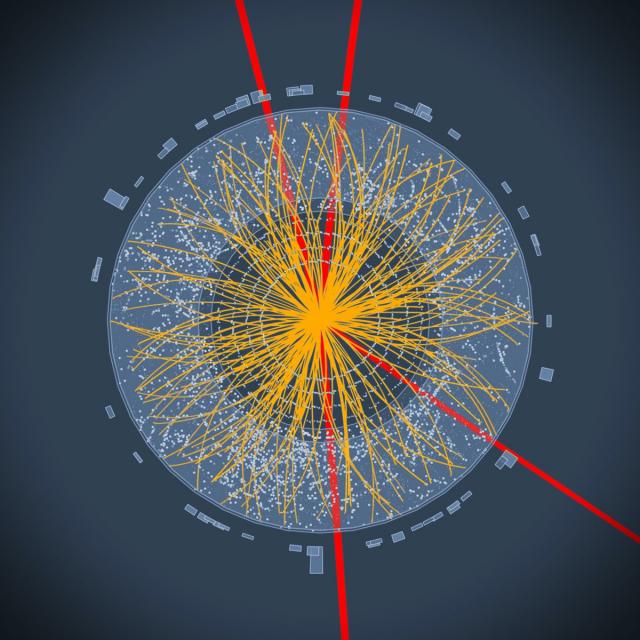
This course introduces you to subatomic physics, i.e. the physics of nuclei and particles. More specifically, the following questions are addressed: What are the concepts of particle physics and how are they implemented?; What are the properties of atomic nuclei and how can one use them?; How does one accelerate and detect particles and measure their properties?; What does one learn from particle reactions at high energies and particle decays?; How do electromagnetic interactions work and how can one use them?; How do strong interactions work and why are they difficult to understand?; How do weak interactions work and why are they so special?; What is the mass of objects at the subatomic level and how does the Higgs boson intervene?; How does one search for new phenomena beyond the known ones?; What can one learn from particle physics concerning astrophysics and the Universe as a whole?

Sep 7th 2026
5-12 Weeks
Nanotechnology and Nanosensors, Part 1 (Coursera) Coursera
Technion - Israel Institute of Technology

Nanotechnology and Nanosensors, Part 1 (Coursera)

Nanotechnology and nanosensors are broad, interdisciplinary areas that encompass (bio)chemistry, physics, biology, materials science, electrical engineering and more. The present course will provide a survey on some of the fundamental principles behind nanotechnology and nanomaterials and their vital role in novel sensing properties and applications. The course will discuss interesting interdisciplinary scientific and engineering knowledge at the nanoscale to understand fundamental physical differences at the nanosensors.

Sep 7th 2026
5-12 Weeks
The Science of the Solar System (Coursera) Coursera
Caltech

The Science of the Solar System (Coursera)

Learn about the science behind the current exploration of the solar system in this free class. Use principles from physics, chemistry, biology, and geology to understand the latest from Mars, comprehend the outer solar system, ponder planets outside our solar system, and search for habitability in our neighborhood and beyond. This course is generally taught at an advanced level assuming a prior knowledge of undergraduate math and physics, but the majority of the concepts and lectures can be understood without these prerequisites.

Sep 21st 2026
5-12 Weeks
Quantum Optics 1 : Single Photons (Coursera) Coursera
École Polytechnique

Quantum Optics 1 : Single Photons (Coursera)

This course gives you access to basic tools and concepts to understand research articles and books on modern quantum optics. You will learn about quantization of light, formalism to describe quantum states of light without any classical analogue, and observables allowing one to demonstrate typical quantum properties of these states. These tools will be applied to the emblematic case of a one-photon wave packet, which behaves both as a particle and a wave.

Sep 21st 2026
5-12 Weeks
Mechanics: Motion, Forces, Energy and Gravity, from Particles to Planets (Coursera) Coursera
UNSW Sydney - University of New South Wales

Mechanics: Motion, Forces, Energy and Gravity, from Particles to Planets (Coursera)

Most of the phenomena in the world around you are, at the fundamental level, based on physics, and much of physics is based on mechanics. Mechanics begins by quantifying motion, and then explaining it in terms of forces, energy and momentum. This allows us to analyse the operation of many familiar phenomena around us, but also the mechanics of planets, stars and galaxies.

Sep 14th 2026
5-12 Weeks
Oil & Gas Industry Operations and Markets (Coursera) Coursera
Duke University

Oil & Gas Industry Operations and Markets (Coursera)

The oil and gas industry has an enormous impact on all aspects of daily life. Individuals, corporations, and national governments make financial and policy decisions based on the cost, use, and availability of these two natural resources. This two-week course looks at the two most fundamental aspects of the oil and gas industry, its operations and markets, each of which is addressed as a separate module in the course.

Sep 2nd 2026
2 Weeks
Kinematics: Describing the Motions of Spacecraft (Coursera) Coursera
University of Colorado Boulder

Kinematics: Describing the Motions of Spacecraft (Coursera)

The movement of bodies in space (like spacecraft, satellites, and space stations) must be predicted and controlled with precision in order to ensure safety and efficacy. Kinematics is a field that develops descriptions and predictions of the motion of these bodies in 3D space. This course in Kinematics covers four major topic areas: an introduction to particle kinematics, a deep dive into rigid body kinematics in two parts (starting with classic descriptions of motion using the directional cosine matrix and Euler angles, and concluding with a review of modern descriptors like quaternions and Classical and Modified Rodrigues parameters).

Sep 7th 2026
4 Weeks
Wind resources for renewable energies (Coursera) Coursera
École Polytechnique

Wind resources for renewable energies (Coursera)

The main goal of this course is to get the necessary knowledge on atmospheric and fluid dynamics in order to quantify the wind resource of a local or regional area. We’ll learn about basic meteorology, the specific dynamics of turbulent boundary layers and some standard techniques to estimate wind resources regardless of the type of turbine used or the level of efficiency achieved.

Sep 7th 2026
4 Weeks
Particle Dynamics (Coursera) Coursera
Korea Advanced Institute of Science and Technology - KAIST

Particle Dynamics (Coursera)

This course teaches dynamics, one of the basic mechanics subjects of Mechanical Engineering. Students would be able to organize their knowledge about force and motion, work-energy, impulse-momentum in view of Newton's 2nd law and its integration over time and displacement. The Engineering Dynamics consists of two parts: particle dynamics and rigid body dynamics.

Sep 14th 2026
13-24 Weeks
Física: Vectores, Trabajo y Energía (Coursera) Coursera
Tecnológico de Monterrey

Física: Vectores, Trabajo y Energía (Coursera)

Este curso provee al estudiante con conceptos y herramientas matemáticas para modelar problemas en física, que al aplicar podrá enfrentar con éxito los cursos de física universitarios. Así pues, la filosofía de este curso consiste en cubrir temas conceptuales relativos a la Física y desarrollar tu capacidad de aprender y aplicarlos en tu vida profesional.

Sep 14th 2026
5-12 Weeks
Information Theory (Coursera) Coursera
The Chinese University of Hong Kong

Information Theory (Coursera)

At the completion of this course, the student should be able to: demonstrate knowledge and understanding of the fundamentals of information theory; appreciate the notion of fundamental limits in communication systems and more generally all systems; develop deeper understanding of communication systems; apply the concepts of information theory to various disciplines in information science.

Sep 7th 2026
13-24 Weeks